
Jewellery of Sizewell C

For our skilled team of Oxford Cotswold Archaeology archaeologists excavating across the Sizewell C nuclear power station project, each artefact discovered while digging is a special and memorable moment. Sometimes these finds can feel distant from our modern experience, such as worked flint tools or degraded fragments of prehistoric pottery, but one category of artefact always feels strikingly timeless: jewellery. A stunning array of jewellery has been uncovered over almost four years, from rings to brooches and necklaces, these pieces allow us to imagine how past communities may have looked and fashioned themselves.
Roman adornments
Some of the earliest jewellery we have found at Sizewell comes from the Roman period, particularly during our excavations of at Wickham Market on the A12. A complete hair or dress pin was recovered, featuring a flat, rounded head that is now detached. The decoration is wonderful, with the top of the artefact adorned with diagonal banding. We can date this pin to around the 2nd century AD, and hair pins like this were introduced to Britain following the Roman invasion. This delicate object would have been used to secure hairstyles and offers a glimpse into how people may have styled their hair and appearance while living in the community at Wickham Market thousands of years ago.
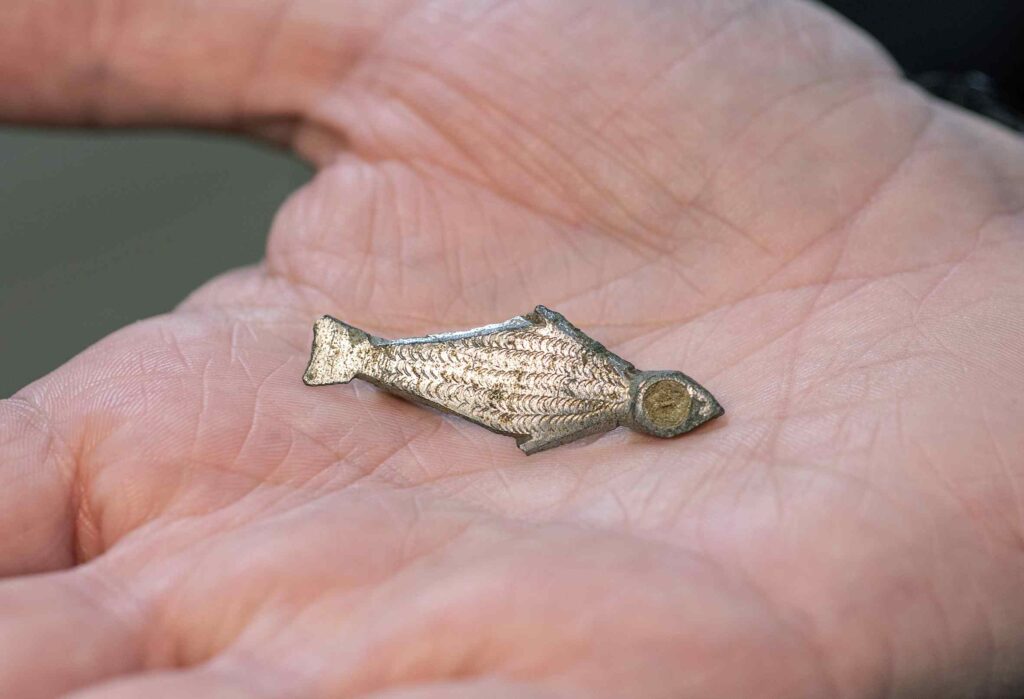
Another essential jewellery item for the Romans was the brooch. Several examples have been found across the project, but a few key finds stand out. One is a zoomorphic fish brooch made from copper alloy and coated in silver. It dates from the 1st to 3rd centuries AD and would originally have had an enamel eye, which has unfortunately been lost over the centuries, along with the brooch pin. Another example is a Hod Hill brooch made from tinned or silvered copper alloy. These particular brooches are linked to the Roman army and take their name from a hillfort in Dorset. Brooches like these were used to fasten clothing, and highlight how a single piece of jewellery can reveal so much about the person who wore it and the world they lived in.
Image: Roman zoomorphic brooch
Anglo-Saxon beads and burials
As we move forward in time to the Anglo-Saxon period, some of our most striking finds from the project have been uncovered at two cemeteries along the route of the new Sizewell Link Road near Theberton and Middleton. Within a selection of graves, individuals had been buried with beautiful beads that were likely worn as festoon necklaces in a draped loop. The variety is remarkable, with beads ranging in colour, size and pattern. Their presence helps archaeologists date a grave, and the glass beads uncovered from the high-status cemetery represent later forms from the 6th century AD. By this point, Anglo-Saxon communities were making their own beads, and some of the glass may have been reworked Late Roman material.

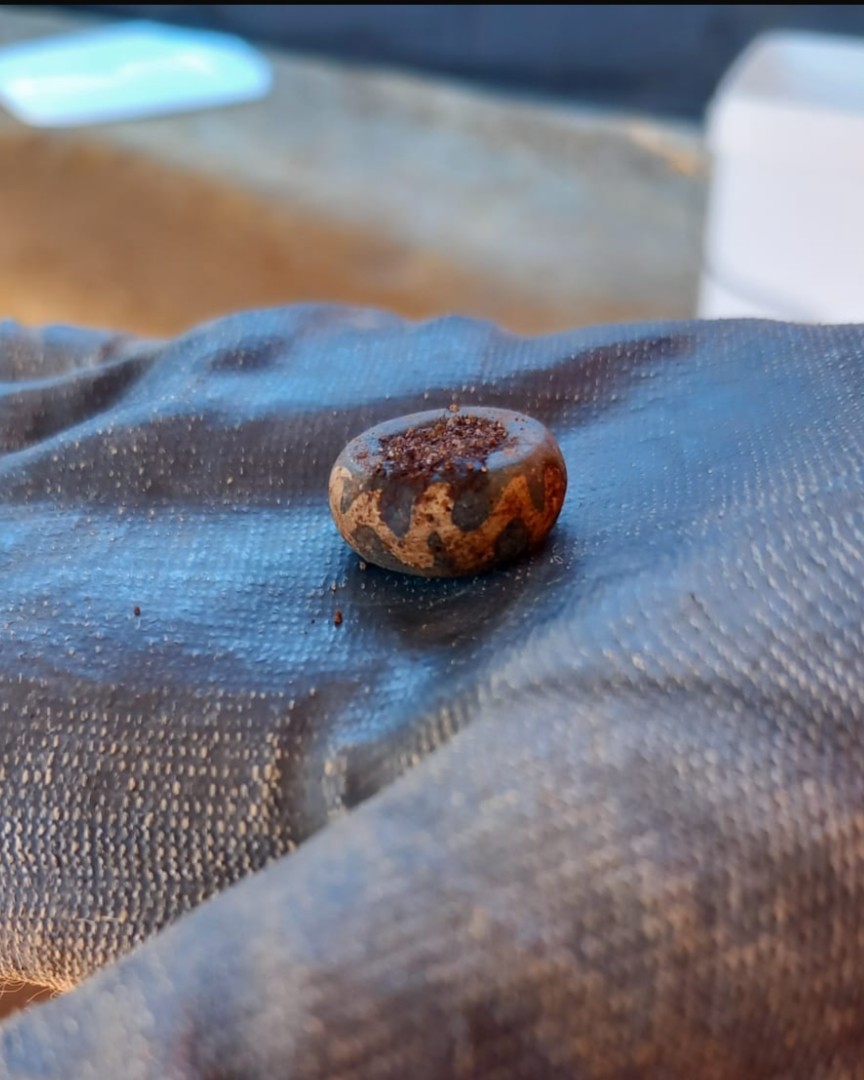
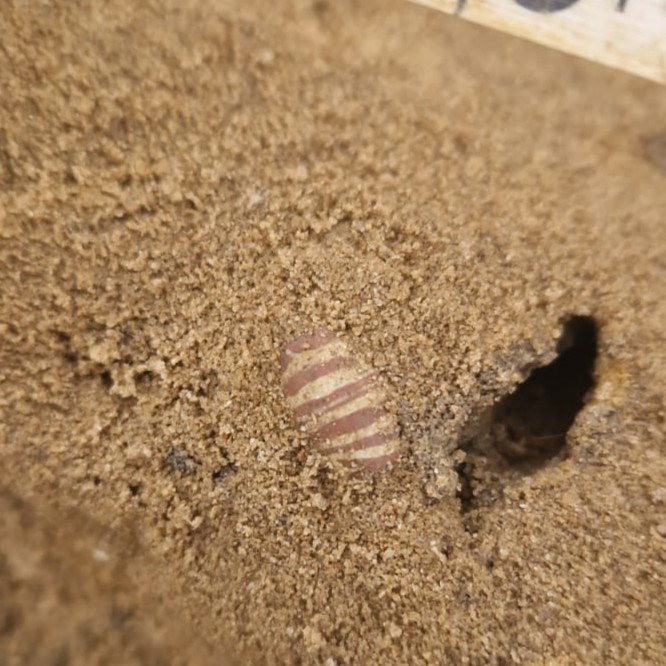
Images: Anglo-Saxon beads found within graves
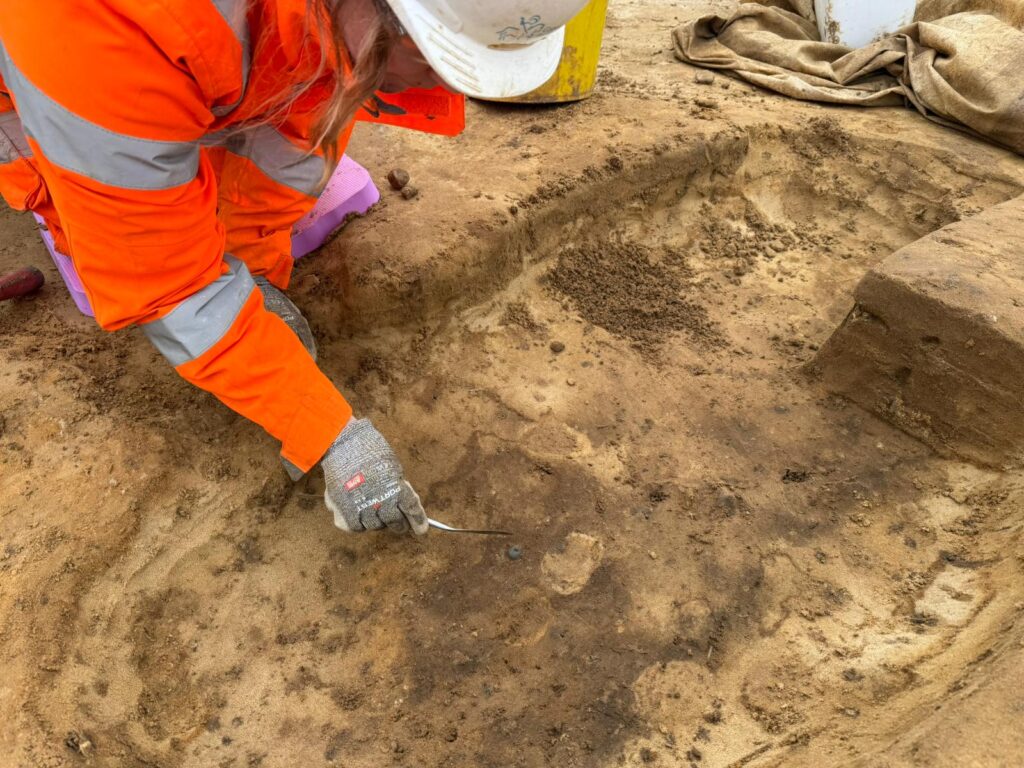
One grave from the other cemetery our team has been carefully working on has been exceptional for bead recovery. It produced seven beads, including two striped globular beads and a large white bead. Preservation within the graves has been particularly poor due to the acidic sandy soils, with the individuals surviving only as sand bodies. The beads therefore serve as a wonderful connection to the person who had been buried, especially when their physical remains have long since faded away over hundreds of years.
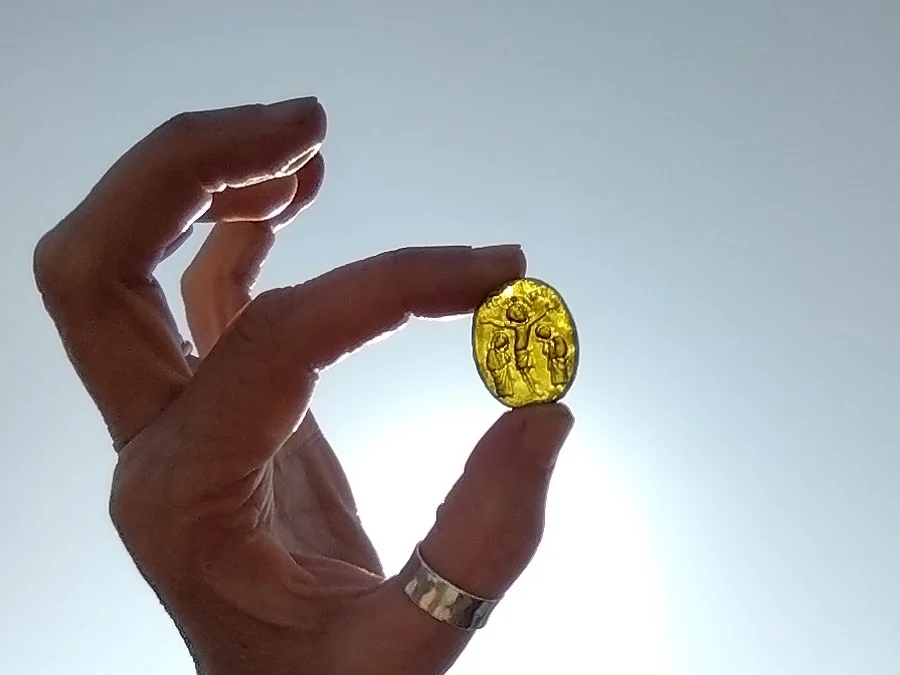
Glass intaglio
One of the most evocative discoveries to come from the excavations has been this intaglio, which would have been the central setting within a necklace or a seal. Moulded from Venetian glass, the image depicts the crucifixion scene and date to around the 13th century. Pieces such as these were often carried or worn by pilgrims, and therefore to be found within the fields surrounding Leiston Abbey conjures the idea perhaps someone lost it on their journey centuries ago. The object has unmistakable religious connotations and demonstrates how jewellery has always served as expressions of belief and identify.
Jewellery has always been more than decoration. It tells us how people expressed identity, status and affection, and sometimes reveals moments of cultural change. These recent archaeological finds from the along the Suffolk coast provide a vivid glimpse of how people in the past chose to adorn themselves in ways that still feel familiar to our modern daily lives.