Sizewell C
Sizewell Link Road, Theberton
Start Date
May 2025 - Ongoing
Location
Suffolk
Time Period
Anglo-Saxon,
Client
EDF,
The most significant discoveries made during the Southern Link Road (SLR) excavations were uncovered near Theberton, where high‑status burials dating to the 7th century were meticulously excavated and analysed by our dedicated team. The excavation process has been thorough, employing extensive techniques to record the site in detail. The results will now undergo rigorous specialist analysis.
Barrows
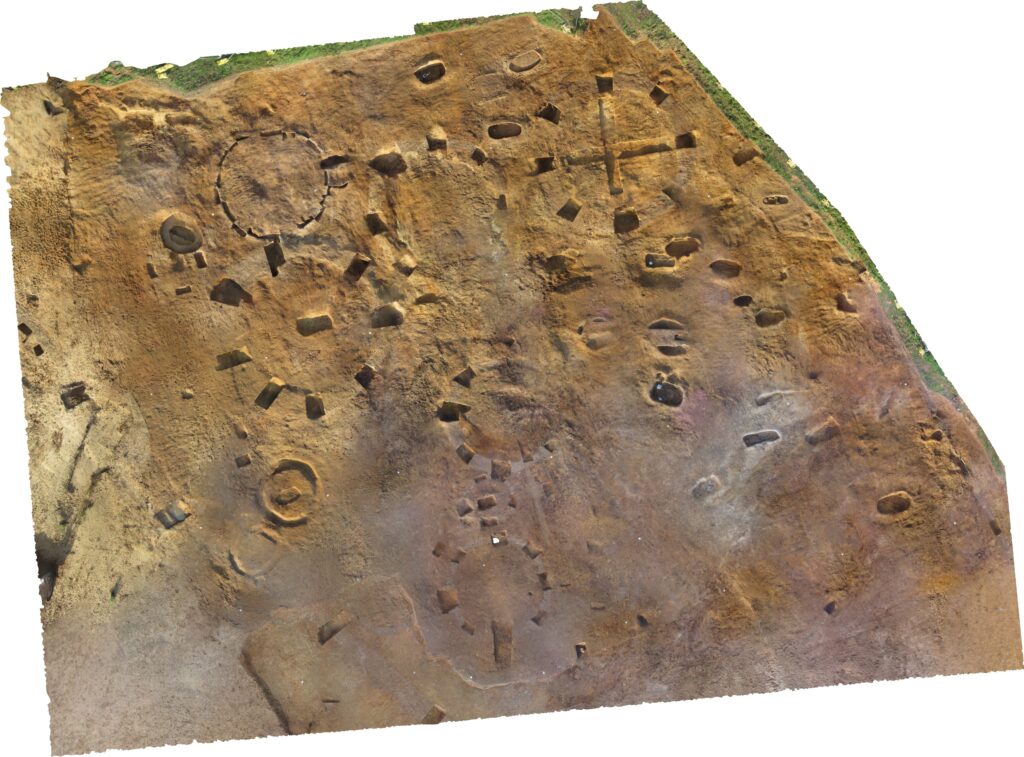
The cemetery occupies a topographically high point in the landscape and consists of 12 barrows alongside a series of mixed‑rite burials, including both inhumations and cremations. Each barrow has its own characteristics, varying in size and construction, which may reflect differences in status. Although the mounds themselves have long since vanished due to ploughing, their surrounding ring ditches survive and provide valuable information about how the barrows were arranged and maintained.
The barrows appear to respect one another, with minimal overlap, suggesting a well‑organised and carefully managed cemetery. Several graves lie outside the barrows, and although a few overlap, these may represent familial groups. All the ring ditches show evidence of “recutting,” where the ditch was re‑dug to restore its shape and possibly to add more material to the mound.
Image: a digital composited image of the barrow cemetery
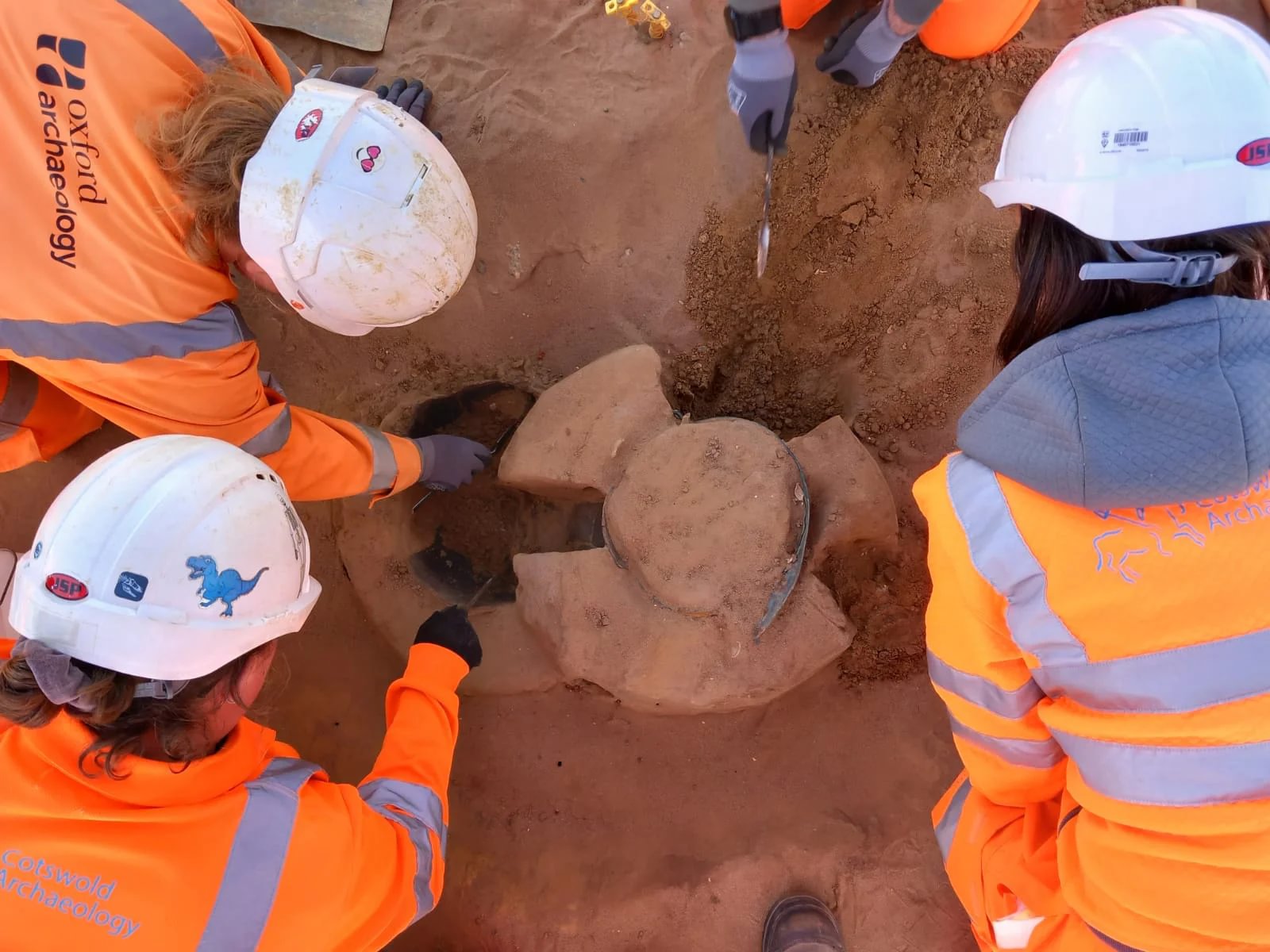
One ring ditch contained evidence of postholes. It appears that a trench was dug, posts were erected, and the trench was then backfilled. These posts may have supported the mound, helped stabilise it, or formed part of an architectural feature. At the centre of another ring ditch, a double‑urned cremation was found with a copper alloy bowl possibly from the Byzantium empire placed on top like a cap. The bowl will be analysed further, as it may contain an additional cremation. Another burial contained an urned cremation surrounded by material including human bone, animal bone and unusual artefacts such as gaming pieces, possibly representing grave goods placed on the pyre.
Image: an Anglo-Saxon shield boss uncovered on site
Sand bodies
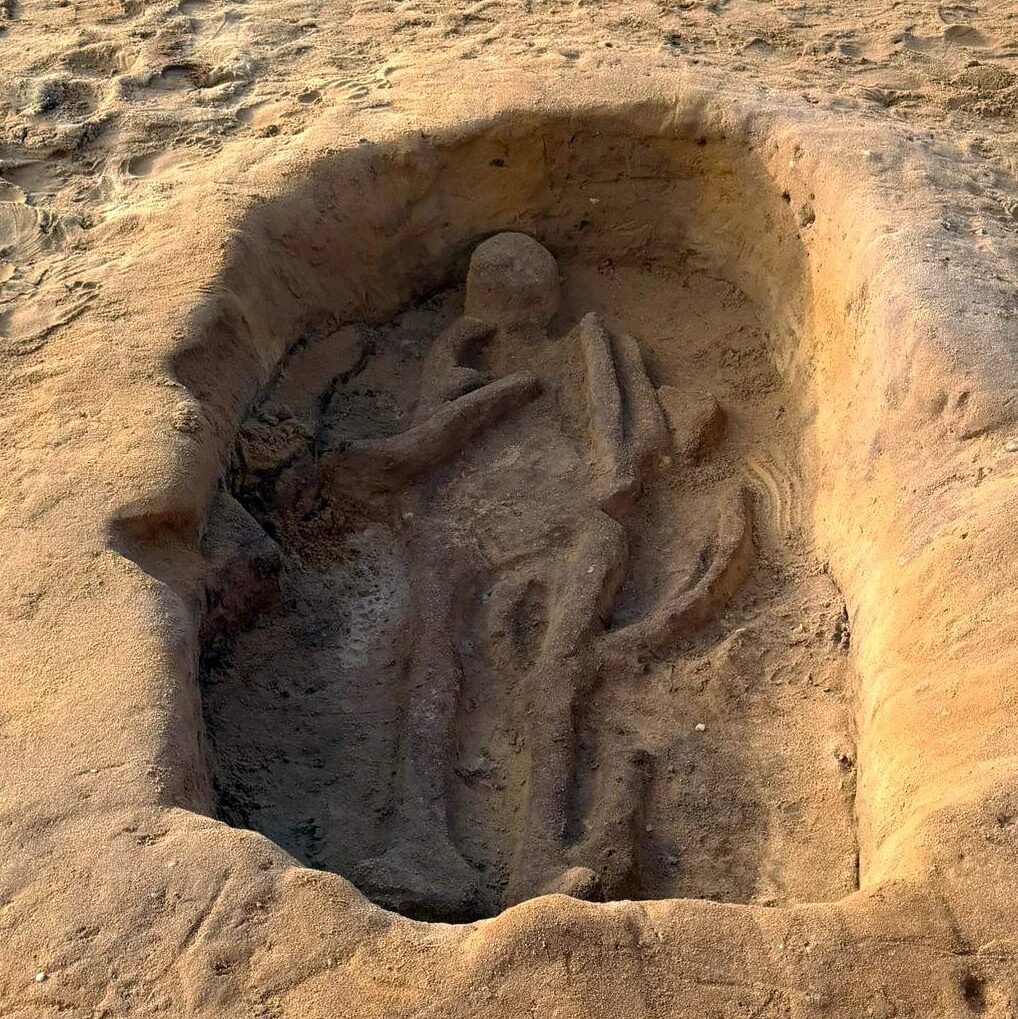
The human remains survive as sand stains. The acidic sandy soils in this area cause extremely poor bone preservation, so skeletons appear instead as darker, firmer patches within the surrounding sand, often forming clear outlines. Excavation is therefore extremely delicate. The team carefully recorded the exact positions of bodies and grave goods, with some artefacts block‑lifted for micro‑excavation and analysis in the laboratory. The positioning of the bodies varied across the cemetery.
Image: an adult and child uncovered on site, their remains survive as a sand stain
Horse and riders
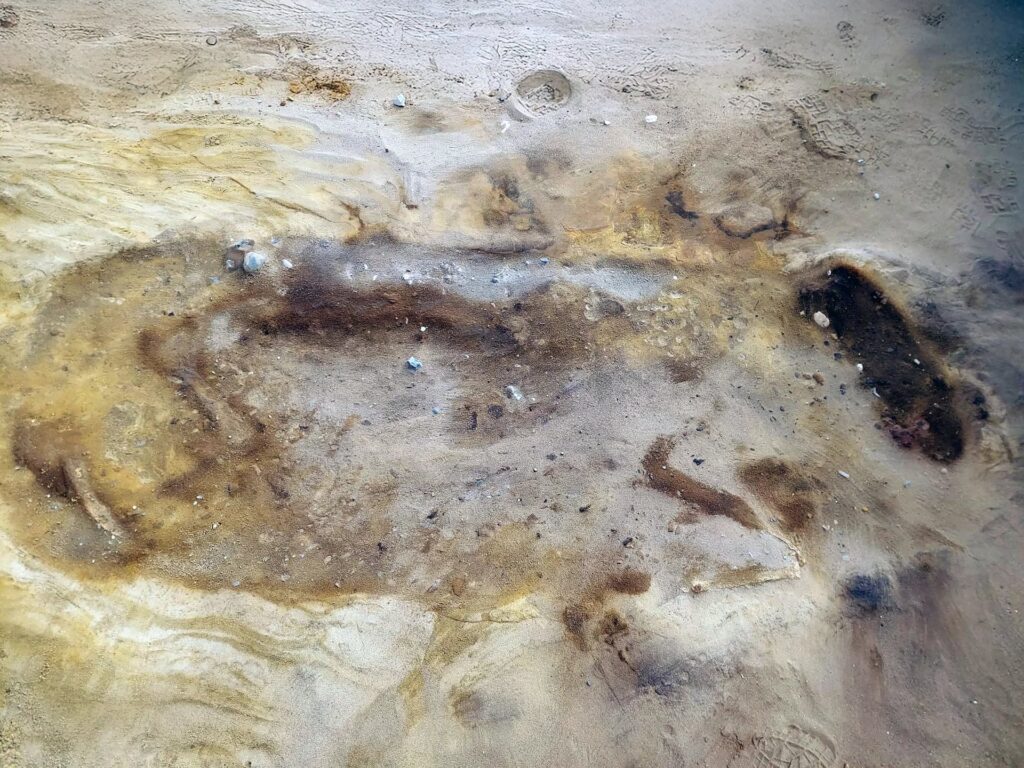
The most extraordinary burial contained two individuals laid side by side next to a horse. Although each had its own grave cut, all three were placed within the same ring ditch. Remarkably, the horse was buried complete with its bridle fittings and harnesses, with copper decoration running down its head and spine.
The individuals were buried with a range of grave goods, including shield bosses, a spear placed to the side, swords, and a small metal bowl and cup. It is possible that the grave goods were originally placed on a wooden lid covering the bodies. As the lid decayed, the artefacts may have settled onto the skeletons. This remains a theory, and further analysis will help clarify the burial sequence.
Image: stains in the sand, showing the shadow of a horse
Buildings
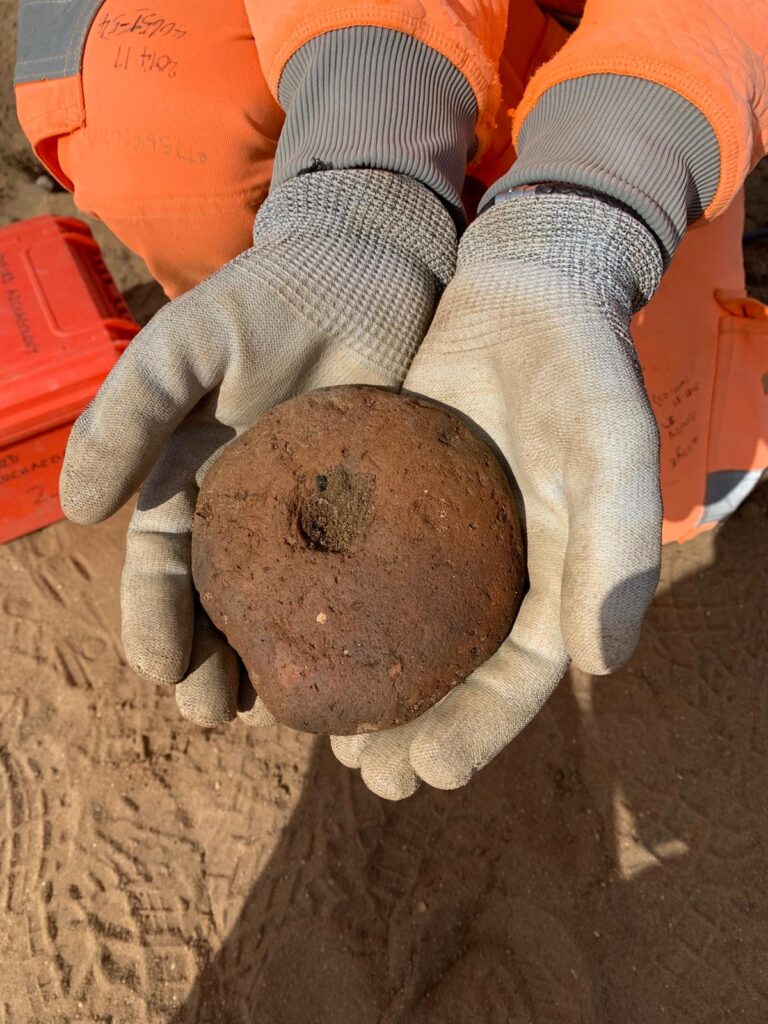
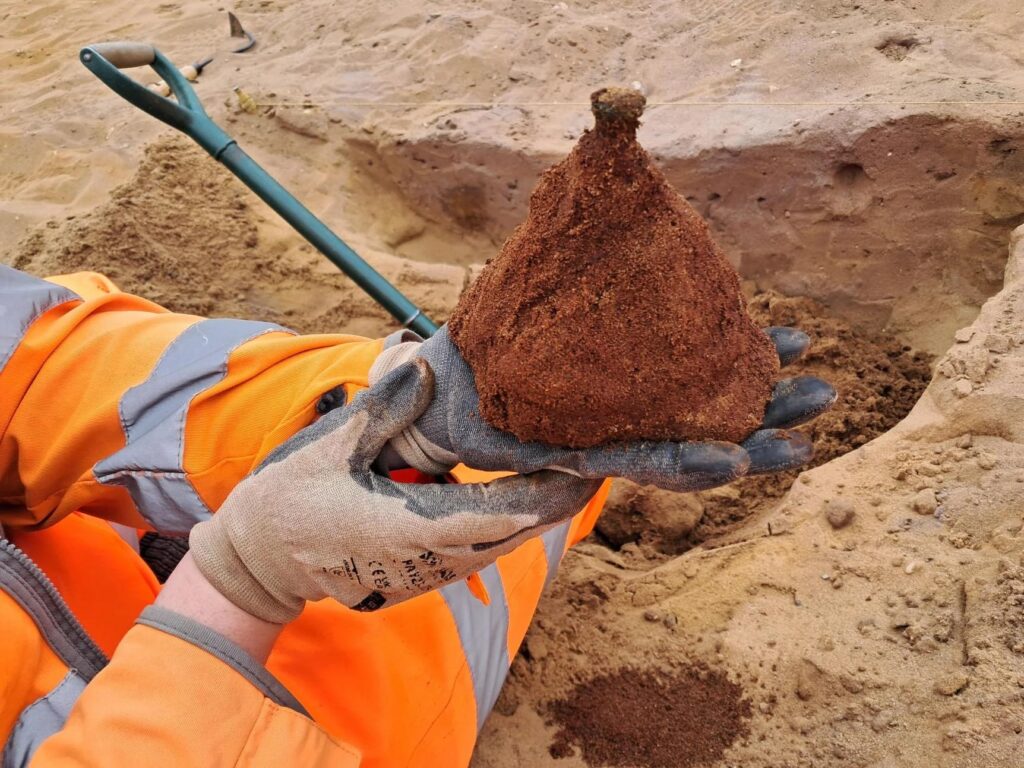
To the east of the burials, a series of posthole buildings and a Sunken Feature Building (SFB) provide a broader picture of the community that lived and worked in this landscape. These structures are likely contemporary with the cemetery and highlight the relationship between daily life and death in Anglo‑Saxon Suffolk. Loom weights found within the buildings suggest weaving took place here. The archaeology also indicates multiple phases of occupation, showing that people lived, worked and buried their dead in this area over an extended period.
The discoveries made by Oxford Cotswold Archaeology are both astonishing and highly significant. The extensive funerary landscape, combined with evidence of everyday life, will transform our understanding of Anglo‑Saxon communities and deepen our archaeological knowledge.
Image: a loom weight found at SLR Theberton