Sizewell C
Wickham Market
Start Date
September 2024 - Ongoing
Location
Suffolk
Time Period
Iron Age,
Medieval,
Post-medieval,
Roman,
Client
EDF,
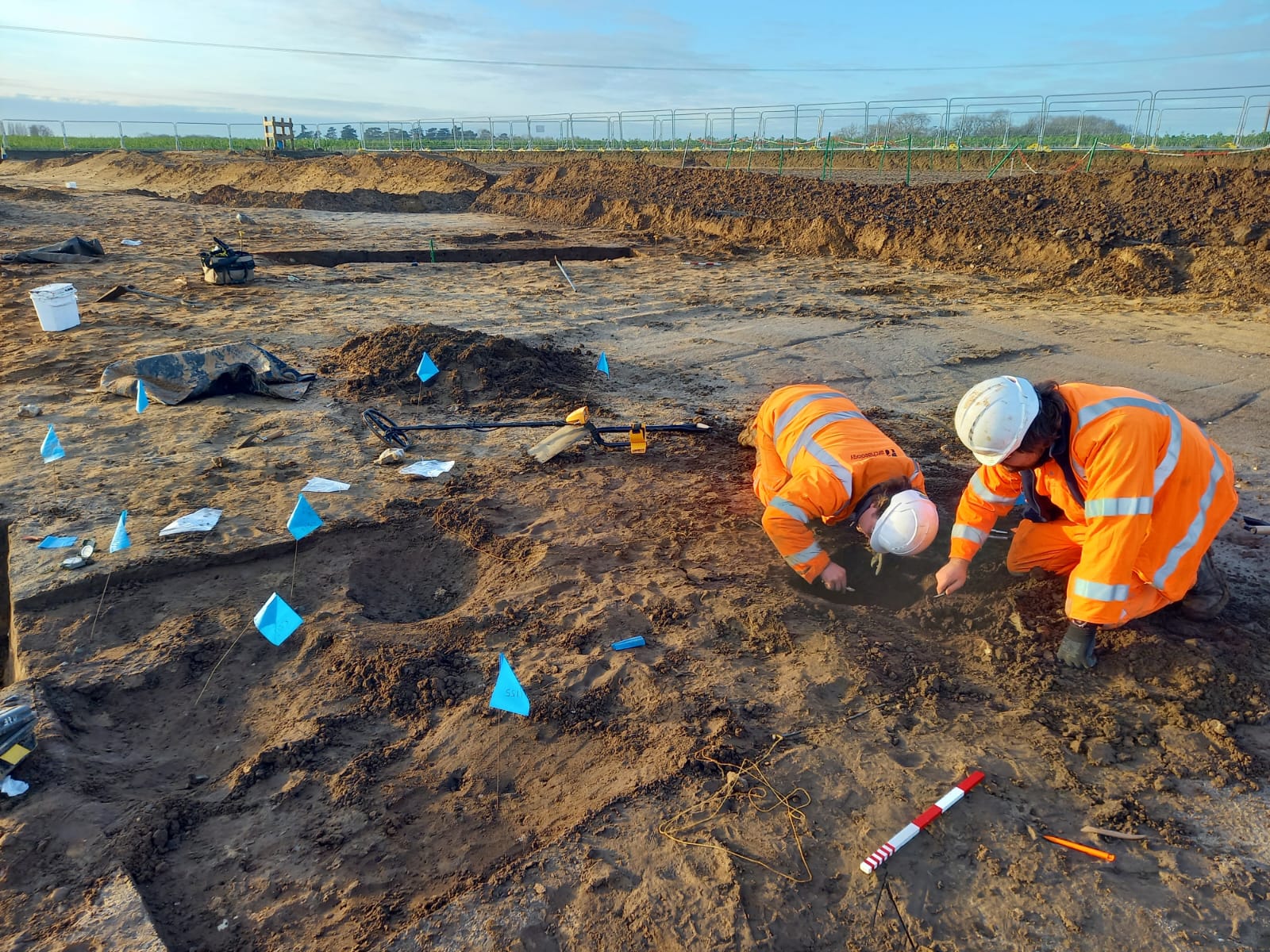
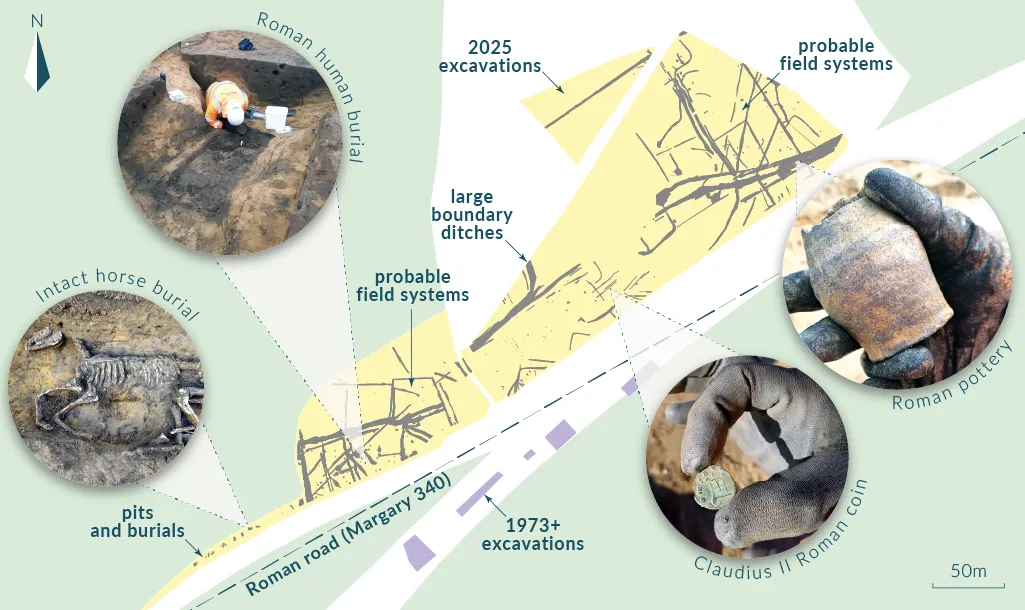
Oxford Cotswold Archaeology has been carrying out excavations near Wickham Market, alongside the A12—which closely follows the route of a Roman road—as part of the archaeological phase of the Sizewell C new nuclear power station project. Located north of the known Roman settlement at Lower Hacheston, this site offers valuable insight into how the Romans used the landscape beyond urban centres. While no buildings have been found, features such as agricultural enclosures, boundary ditches, pits, and burials suggest this was a working rural landscape. The findings help us understand how space was utilised at the edge of a Roman town, where everyday activity extended into the surrounding countryside.
Iron Age
Late Iron Age coins are generally uncommon at settlement sites, with both single finds and hoards usually deposited away from occupation areas. The small hoard of coins and associated artefacts we discovered thus represents a significant find.
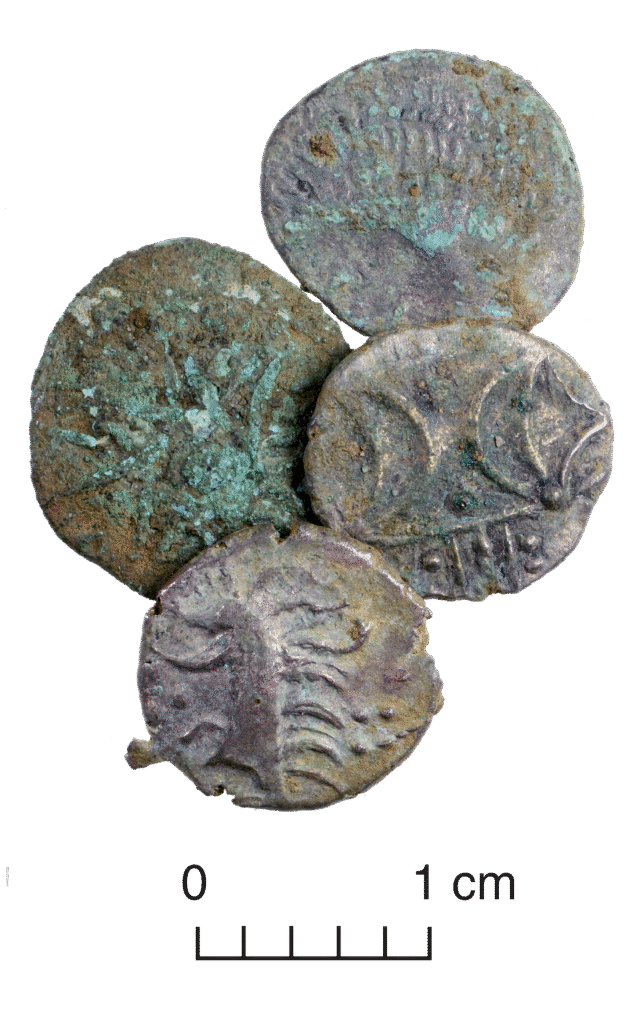
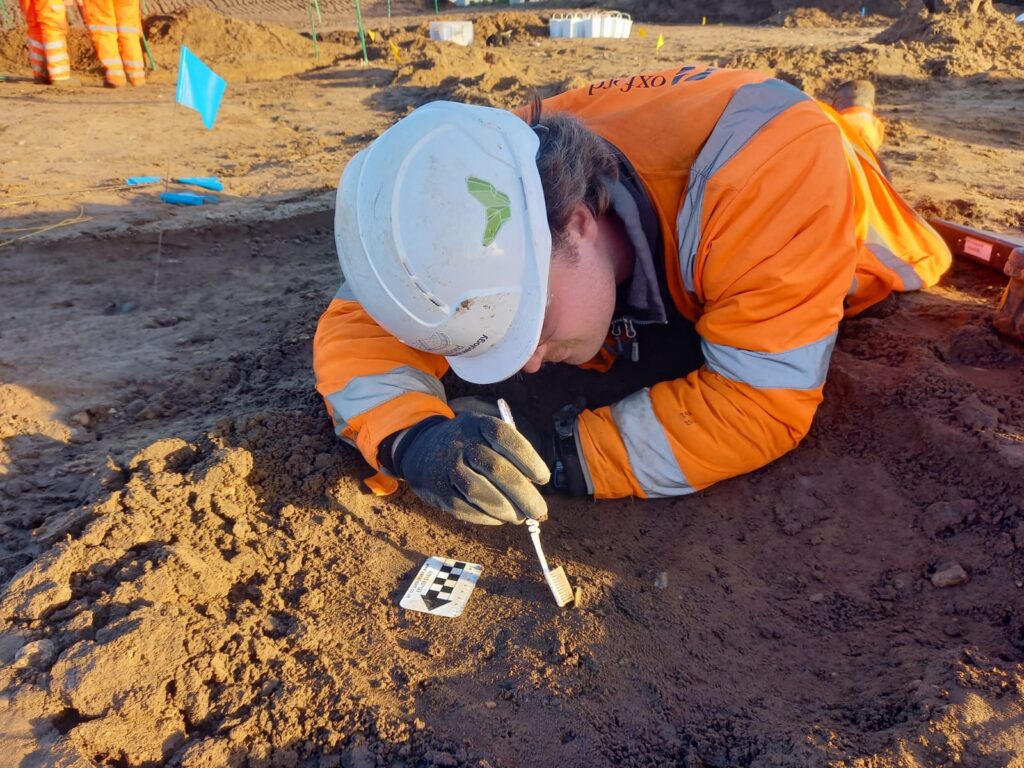
Images: a selection of the Iron Age coins found on site (L); Hadley carefully excavating a coin (R)
At Wickham Market, four Iron Age coins were discovered in a ditch alongside three Colchester-type brooches, a buckle plate and an iron knife. All the coins were struck between 20 BC and 45 AD. Three are silver East Anglian (Icenian) issues, while the fourth is bronze and originates from the North Thames (Catavellaunian) region. The brooches are of a type which was widespread in eastern England from AD 25-60. It is unlikely that these objects were accidentally lost or thrown away as rubbish. They were most probably buried together intentionally, possibly for religious reasons. A ‘sacrifice’ like this was perhaps intended to invoke powerful, otherworldly forces.
Coins first arrived in Britain via the Continent during the 2nd century BC. From the early 1st century BC, coins began to be issued in Britain itself – albeit on a geographically limited basis. However, the concept quickly spread. By the early 1st century AD, coins of gold, silver and bronze were being struck across numerous regions.
Coin designs varied widely across both time and space. Obverses (heads) of Iron Age coins often depict stylised human heads or geometric patterns, while reverses (tails) typically show animals. Horses occur commonly, but others also feature – including wolves and boars. These designs were probably important symbols of power, strength and identity.
Roman
The site unearthed mainly Roman activity, with features including an agricultural enclosure, boundary ditches, numerous pits and scattered burials. Our excavations appear to be at the very edge of the Roman settlement as there is a notable absence of buildings in this area.
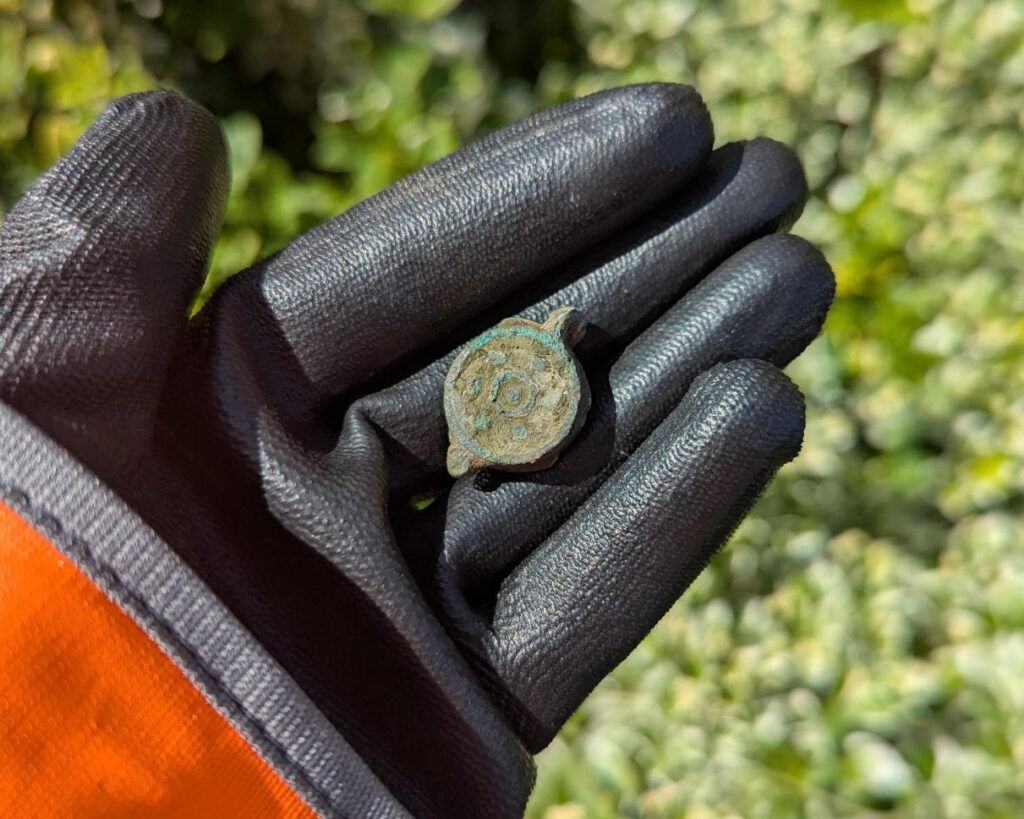
Roman Box Seal
Roman wax seals were made by pouring wax into a copper alloy box like this one, discovered in a ditch during the excavation. There are two basic components to the seal box, a decorated lid and a base. Box seals were used to secure containers or parcels and helped to ensure that goods remained unopened during transport. They were typically attached to string or wire wrapped around a box, with the seal impressed to show any signs of tampering.
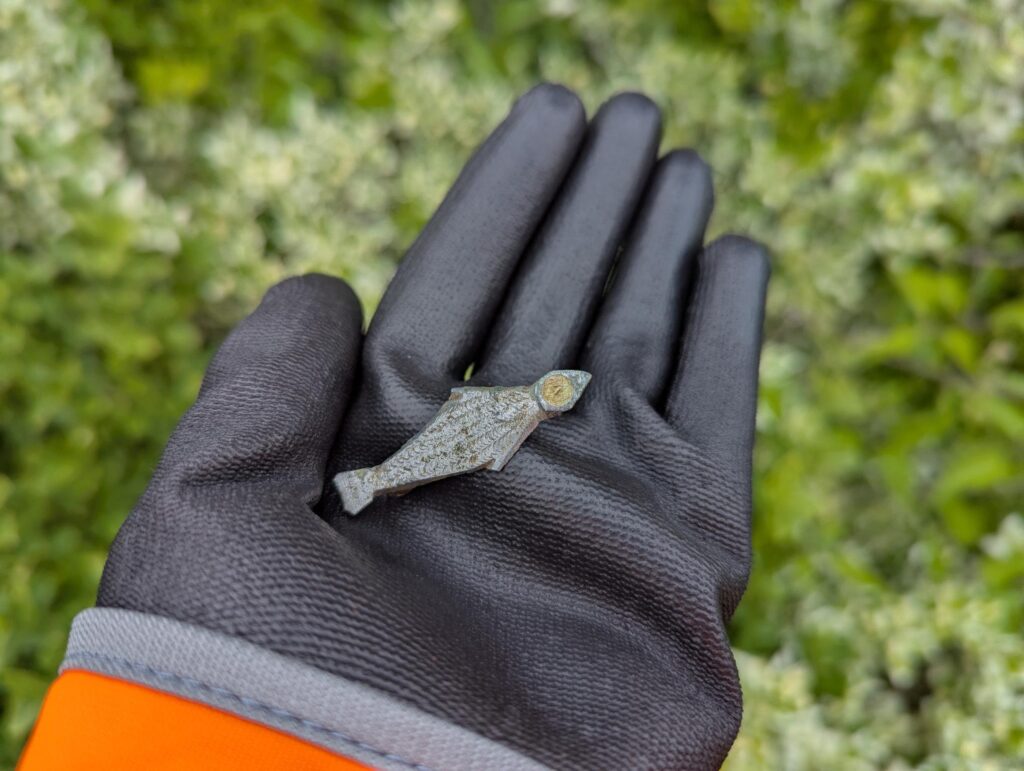
Silvered Fish Brooch – 1st-3rd centuries AD
One of the most common discoveries at Roman sites are brooches. They provide a fascinating glimpse into Roman Clothing and symbolism. Romans used these brooches (or fibula) to fasten their clothing as Roman lacked buttons, zippers or Velco. This zoomorphic (animal-shaped) fish brooch is made from copper alloy, coated in silver, and once featured an enamel eye. Romans liked to incorporate the use of animals, birds and fish, like this one into the design of their brooches possibly the use of such animals would have carried deeper meanings and may have symbolized gods or other ritual purposes.
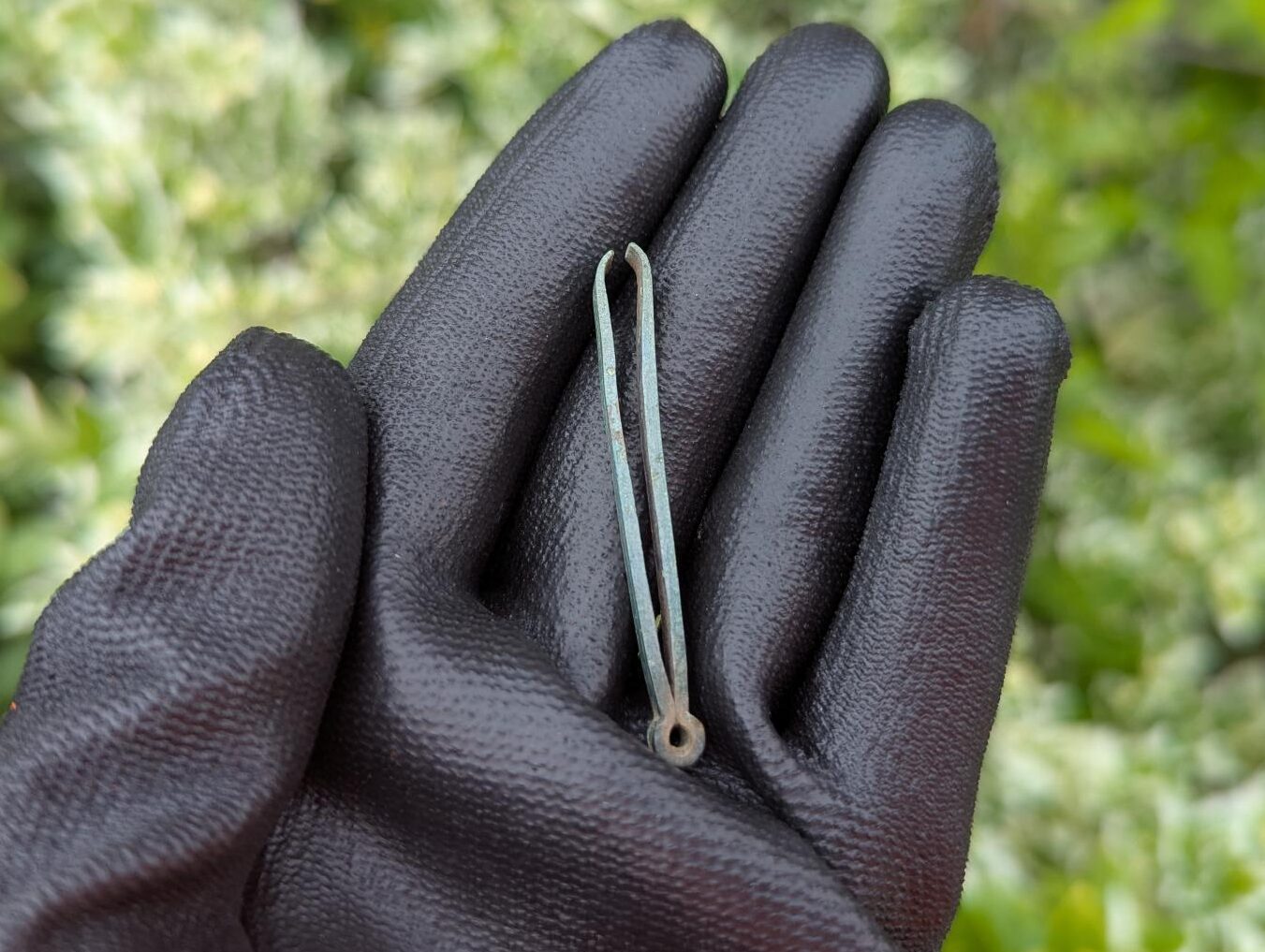
Roman Tweezers – 1st-3rd centuries AD
A pair of copper alloy tweezers provides insight into the daily lives and personal grooming habits of the Romans. Featuring a small ring at one end, these tweezers were likely designed to be attached to a necklace or chain, making them easy to carry and access when needed. While they were commonly used for grooming, such as plucking hair, they may also have served more precise functions, like working with small objects in candle making. Their design reflects the Roman appreciation for both practicality and portability in personal tools.
Burials
Another reason that indicates the area excavated was on the edge of the settlement, is the presence of burials – Romans almost never bury their dead within their settlements, instead burials are usually found in land just outside their towns and villages.
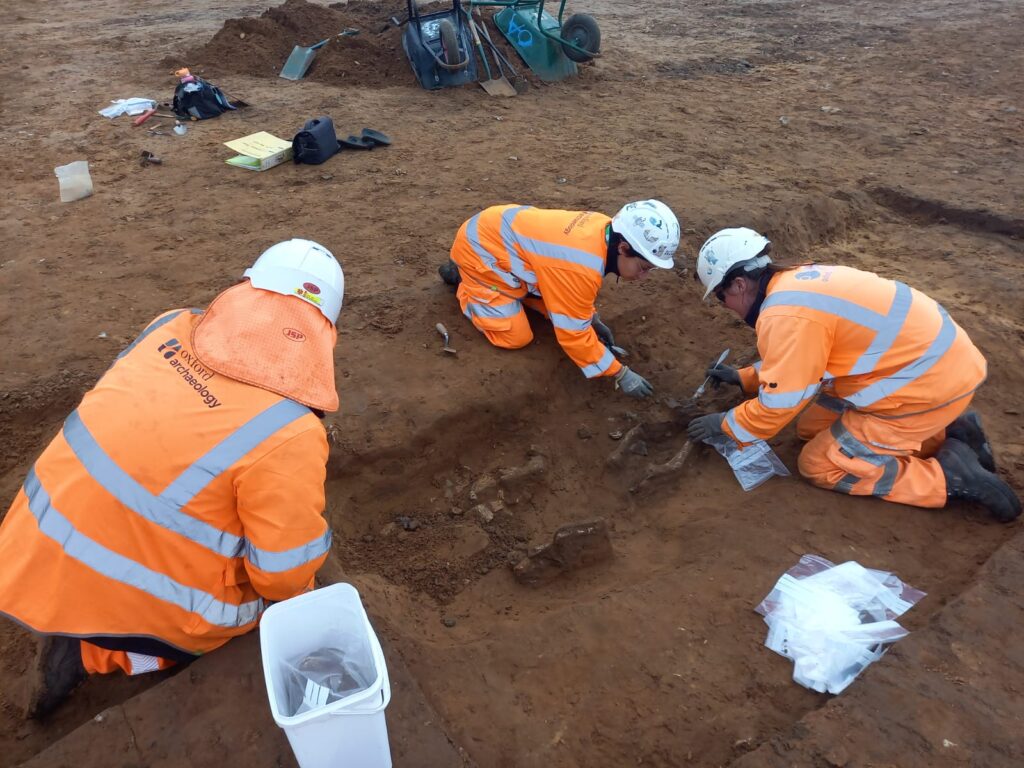
Our excavations revealed six graves and one urned cremation however, the natural acidic sandy geology of the area is not good for bone preservation. As a result, of the six graves we recovered, two had no remains present but four had surviving human bone.
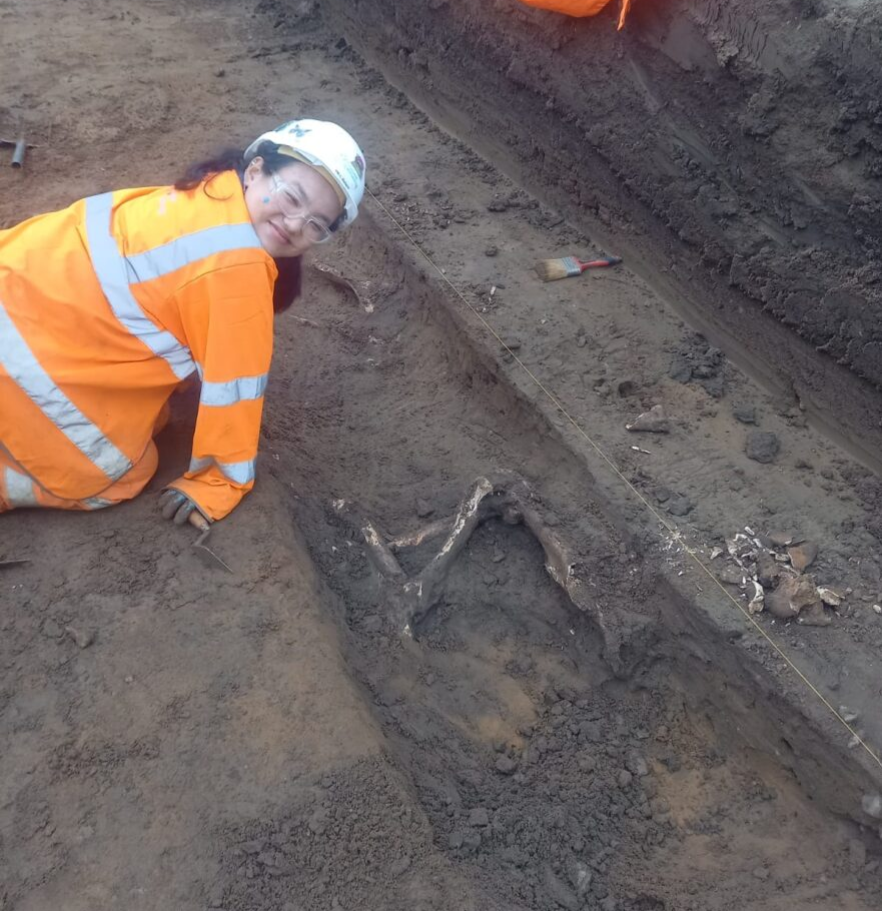
The best preserved of the graves was recovered from under the boundary ditch which ran north-west to south-east. This burial was interesting as the person was prone (buried lying on their front). This is an unusual practice now and in the Roman period. We do not really know why this happened, but archaeologists often interpret prone burials as either done in haste, or as a way of treating the person with disrespect.
Image: OCA staff members excavating one of the human burials on site
It was not only human remains exposed during excavations, we also discovered a horse burial. The entire skeleton was intact, lying on its right side with its legs curled gently under it.
We do not know for sure why the Romans did this or why the owner of the horse at our site decided to bury it. The Romans often buried their horses, and their burials are sometimes associated with the military. The practice demonstrates a sense of care for the horse – perhaps this horse meant a great deal to the owner, and they wanted to ensure the animal had a proper burial of its own.
Image: Megan excavating the horse burial