
Sizewell C
Goose Hill
Start Date
June 2024 - Ongoing
Location
Suffolk
Time Period
Bronze Age,
Iron Age,
Medieval,
Neolithic,
Roman,
WWII,
Client
EDF,
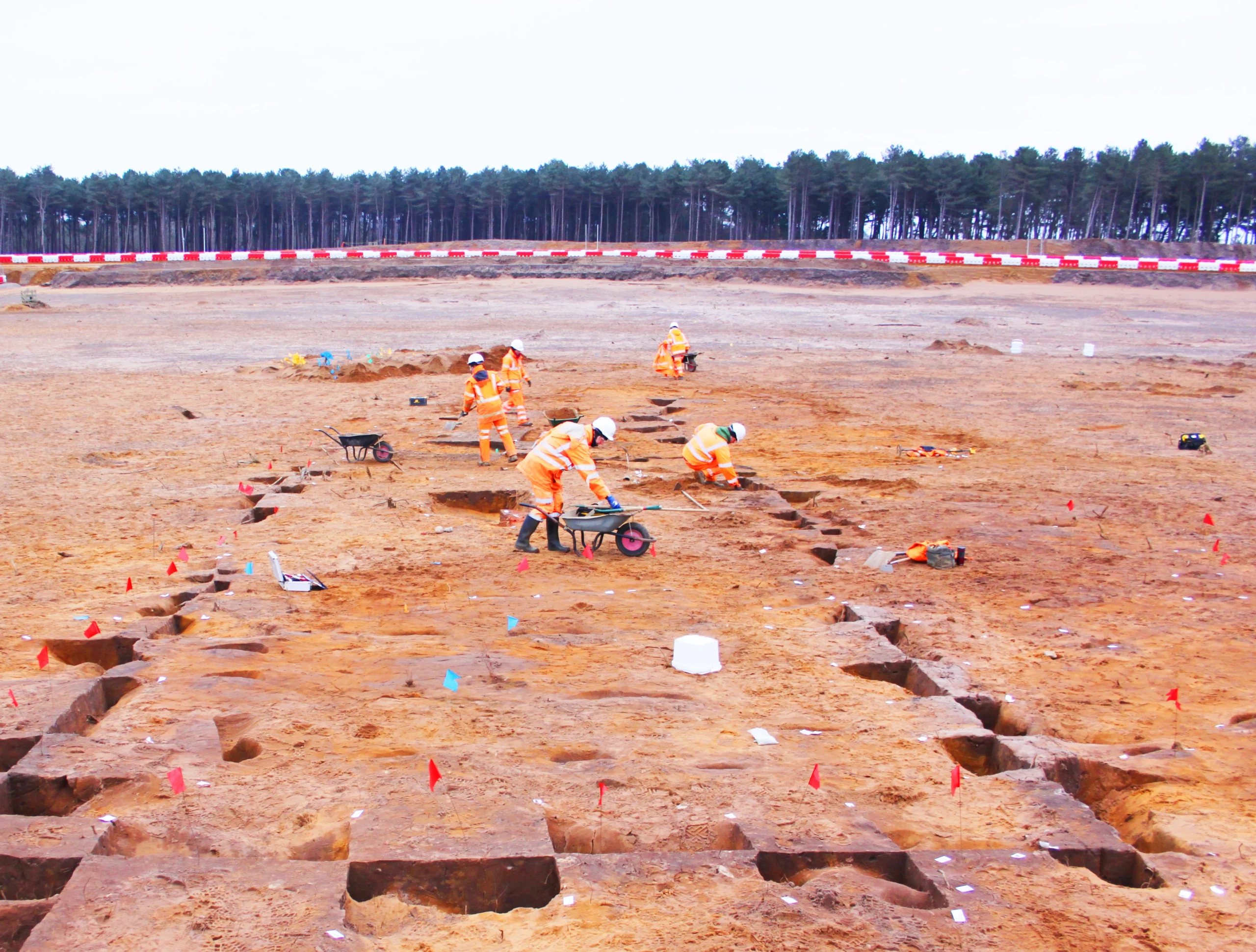
Excavations at Goose Hill have uncovered a vast range of findings. Goose Hill forms a promontory, a raised area of land that would have protruded out of a body of water, and thanks to its location close to the coastline of Sizewell beach, this site offers unique insight into many periods. The coastal and historically marshy, tidal landscape of Goose Hill makes it an ideal location for activity such as salt production during the Roman period and coastal defence during WWII.
Neolithic
There is not much evidence that the Goose Hill area was utilised during the Stone Age. Even with its light sandy soils, it doesn’t appear to have been farmed or occupied during the Neolithic period (c. 4000-2400 BC). This leads us to believe the area may have remained heavily wooded throughout this time. However, despite a lack of evidence of settlements in the Neolithic period, we have found flint tools such as scrapers, cores and even a polished axe, suggesting there was at least some small scale human activity during this time.
Image: Leo, Field Supervisor, with a Neolithic polished axe found on site


Bronze Age
By the Early Bronze Age, also known as the Beaker period (c. 2400–1950 BC), the land had perhaps been cleared for cultivation. This period is marked by the presence of distinctive beaker shaped vessels decorated with impressed marks, often created using combs, bird bones or the potter’s fingernails. The presence of activity during this period can be seen across Goose Hill in clusters of pits filled with domestic waste, such as pottery and worked flints.
Works on Goose Hill also uncovered a mound formed by discarded burnt flints, otherwise known as a burnt mound. This burnt mound was uncovered in a depression in the land, adjacent to a spring and what appears to be a water trough. The burnt flints that form the burnt mound had likely been used to heat water, possibly for the processing of the hides of cattle, culled before winter.
Image: fragment of beaker pottery found on Goose Hill
Iron Age
The remainder of the Bronze Age (c. 1150–800 BC) remains unoccupied, with the exceptions of a single pit group and a couple of cremation burials. This lack of occupation continues until the Middle Iron Age (c. 350–50BC).
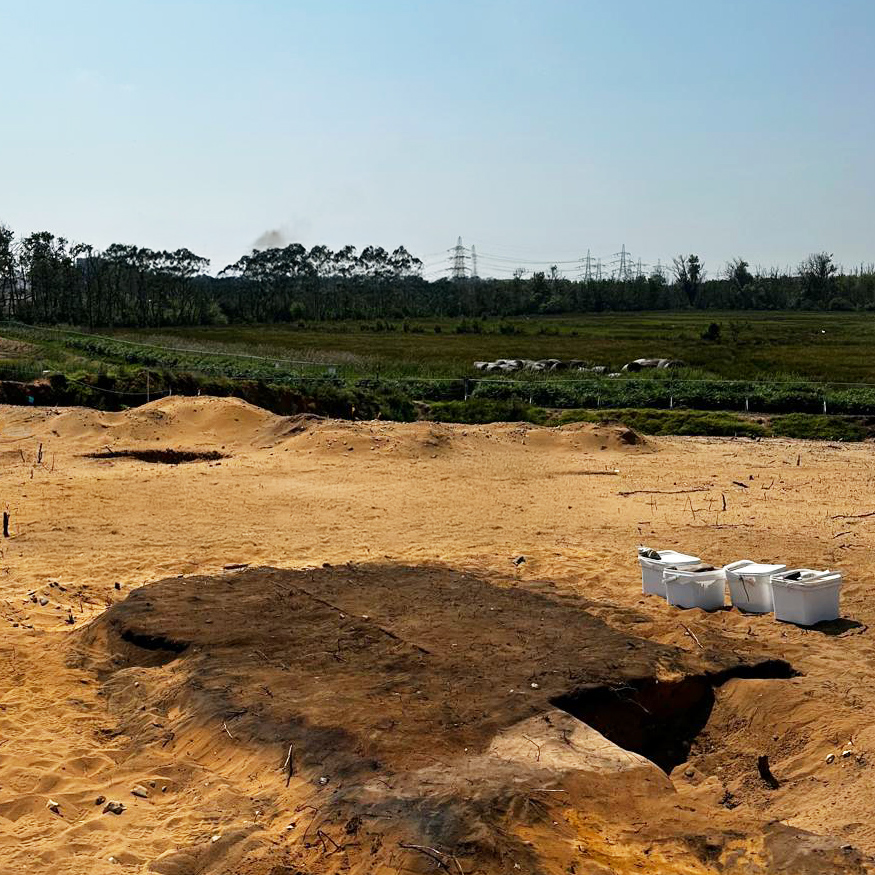
During the Middle Iron Age there is evidence of some emerging activity, including a couple of groups of pits and what may be an Iron Age cremation pyre within a ring-ditch enclosure. It is possible the ring-ditch marks an earlier Bronze Age barrow, but the exact date of this and the pyre itself are yet to be confirmed at this point in the excavation.
Image: pre-excavation view of the funerary pyre
Roman
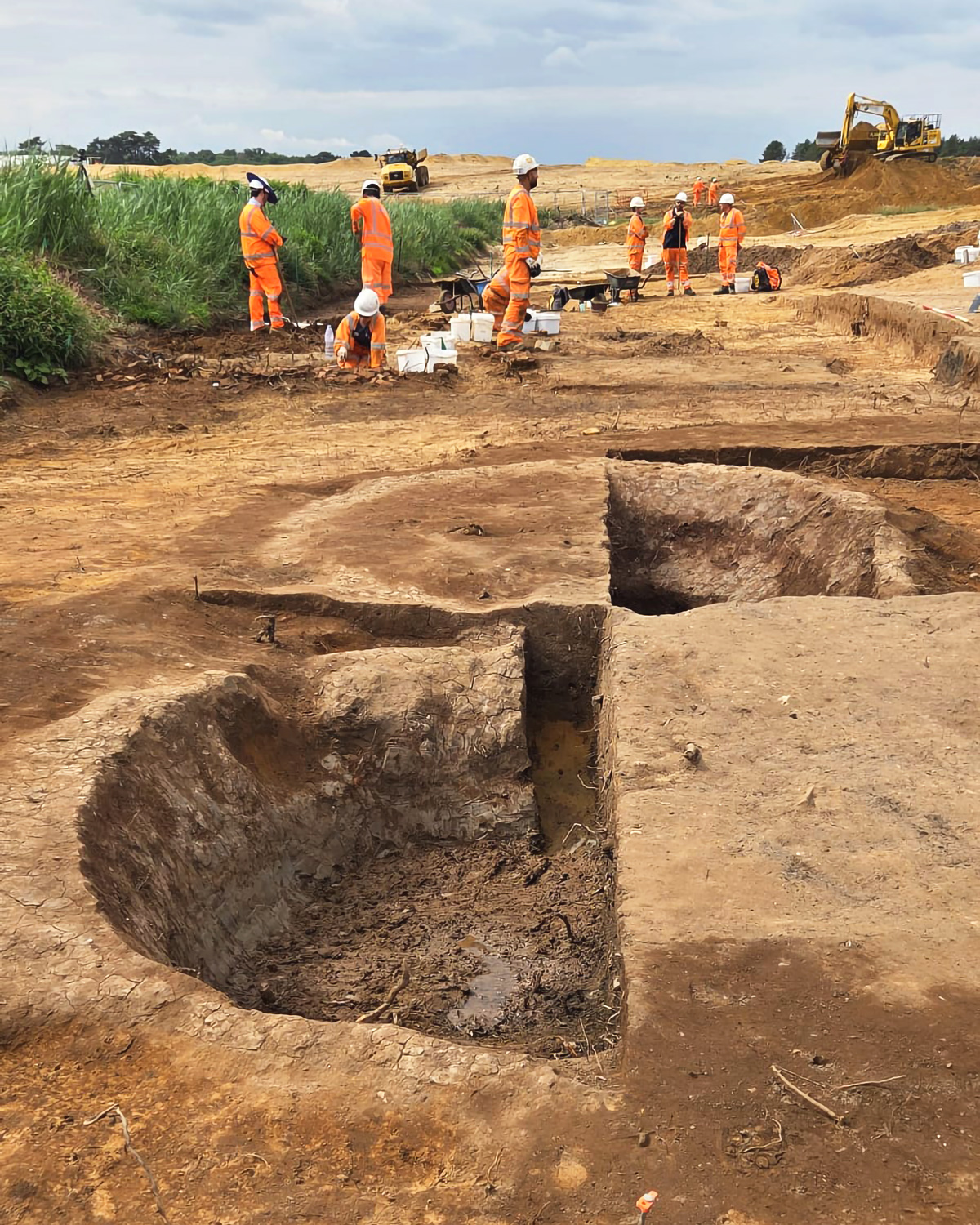
In the Roman period the tidal shoreline of the promontory was the site of a salt manufacturing industry. Brackish water would have been collected in clay-lined pits to settle, then heated in rows of large flat-based ceramic evaporation pans (the fragmented parts are known as briquetage), arranged over a hearth in a pit; all of which we have found archaeological evidence for in the features.
The salt produced would then have been scraped out of the pans, dried and potted (or bagged) for transport. Salt was a valuable commodity, used to preserve food, in cooking and even sometimes as payment (the word ‘salary’ derives from this practice).
Image: on-site excavations of the Roman salterns
Medieval
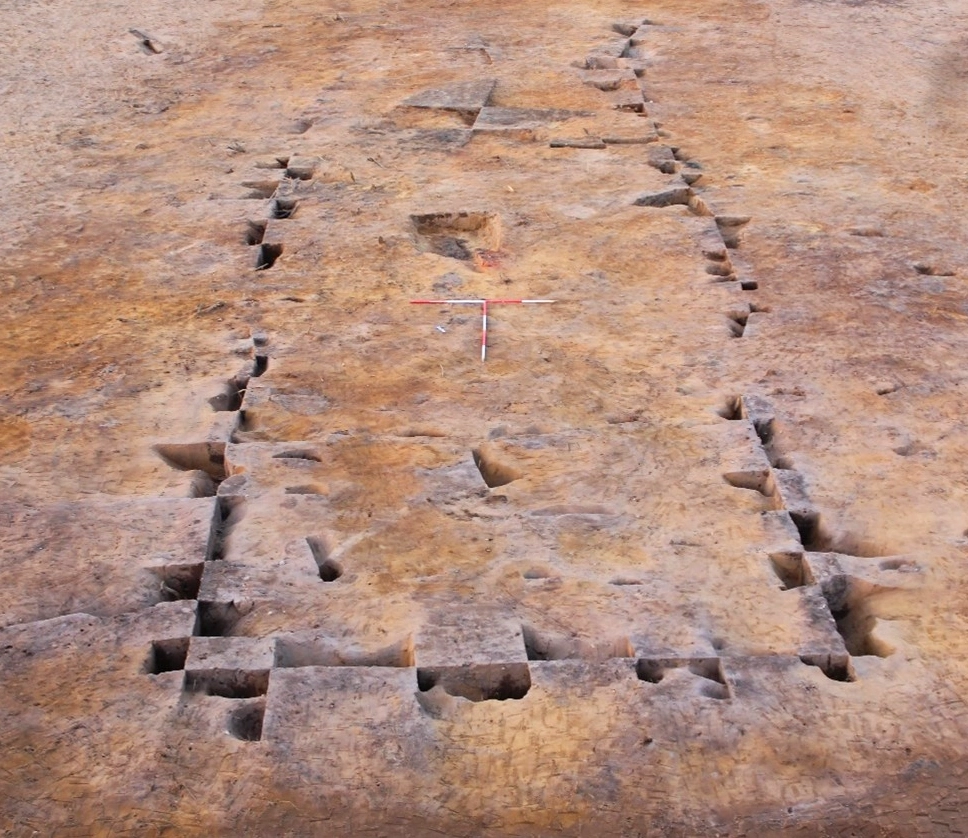
Leiston Abbey was later founded in the 12th century, from this period we see occupation return on our site. Remains of at least six buildings and multiple ovens constructed across the site show that this area was likely inhabited alongside the time of the abbey’s use. The buildings, which include both post hole and beam-slot construction, were set on different alignments between 100 and 350m apart.
Image: one of the medieval buildings, with beam-slots and postholes

On the edge of the land at Goose Hill, peat had formed across the marshland — providing an essential resource. We know from 18th century maps that ‘turf’ (peat) cuttings took place in this area. With this in mind, the ready availability of peat, dried and used for fuel, may explain why we have found so many medieval ovens across the site, though we do not yet know what the ovens were for. They probably relate to activities undertaken by nearby Leiston Abbey, which held much of the land locally.
Image: oven (half surviving) with a flint cobble base and clay wall
World War II
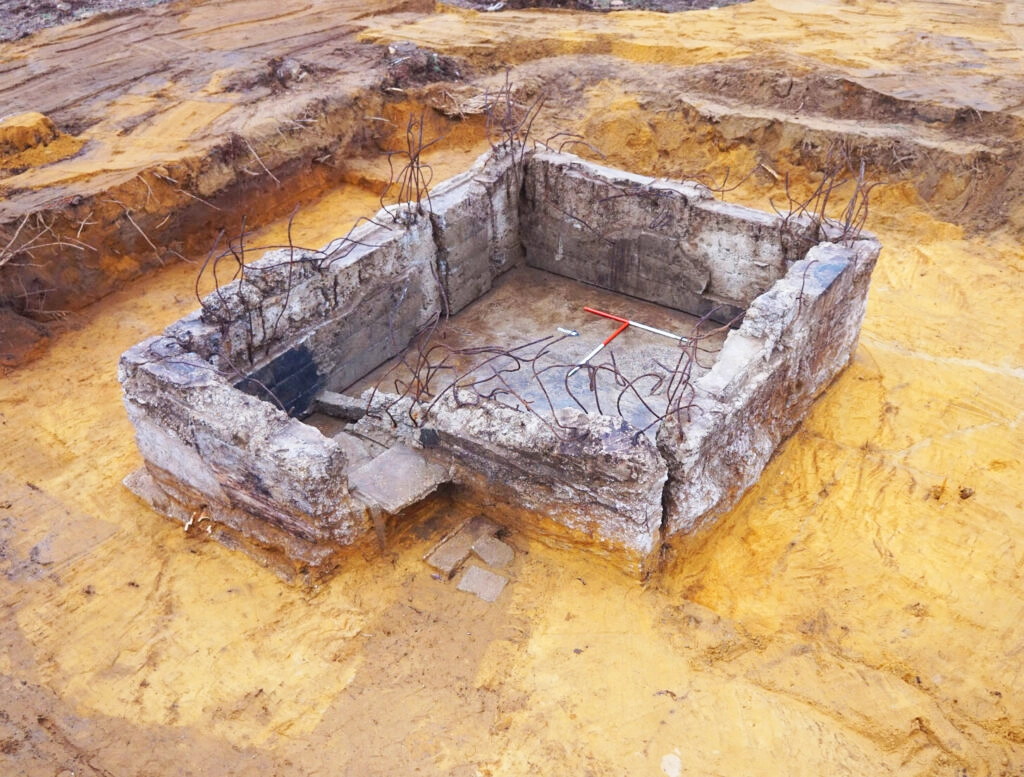
Our excavations have rediscovered a comprehensive landscape designed to defend the sandy beaches of Suffolk from invasion. In total, five ‘Suffolk Square’ pillboxes have been unearthed across the hills of the woods. These would have provided protection and strategic lookouts for troops stationed along the shoreline watching for the invading enemy forces. The quality and quantity of structures, trenches and defensive positions that we have found dug into the ground has underlined that the threat of invasion was indeed very real along this part of the East coast in the early stages of the war.
Alongside the recording of these war defences, we have found traces of the military training that occurred in the woods after the threat of invasion reduced. Operational exercises were undertaken in the later stages of the war for the imminent D-day landings. It has been sobering to consider that the troops running around these woods on exercise would within weeks have been landing on mainland Europe as the push for liberation began.
The woods have also provided a fantastic insight into what it must have been like to be posted to the beaches of Suffolk. Nissen hut bases where soldiers lived, cooked and slept have been excavated, and the rubbish pits left behind have produced many items linked to the lifestyle and fashion of the 1940’s.
Image: Suffolk Square pillbox

Items such as hundreds of tins of unopened fish and empty bottles of wine and scotch found in disused firepits have given the impression that when soldiers were off duty, fun was certainly had. Full bottles of beer, local Leiston and Ipswich stamped glassware and the even rarer find of an American coke bottle have underlined that this was a collective war effort on a local and international scale.
Judging by the sheer quantity of empty Bryl cream bottles discarded all over the woods it can also be presumed that the local dance halls of neighbouring towns and villages must have been well stocked with soldiers smartly dressed from far and wide.
Across the many periods of occupation identified in the woods, the World War discoveries highlight the significance of this local landscape on a national level and closes the final chapter of living and use leading up to the arrival of nuclear power.
Image: WWII helmet found on Goose Hill
