
Medieval mayhem and mystery: The new questions shaping Sizewell C’s story

As our excavations have progressed, we’ve uncovered an ever‑richer picture of medieval life (1066–c.1550 AD) across the project area. Evidence of settlement and agricultural activity appears across many of our sites, including enclosed plots, yards, buildings, ovens, pits and wells. These features are complemented by thousands of artefacts. For instance, a medieval roadside settlement at our East of Eastlands Industrial Estate site alone has produced over 88 kilos of pottery sherds!
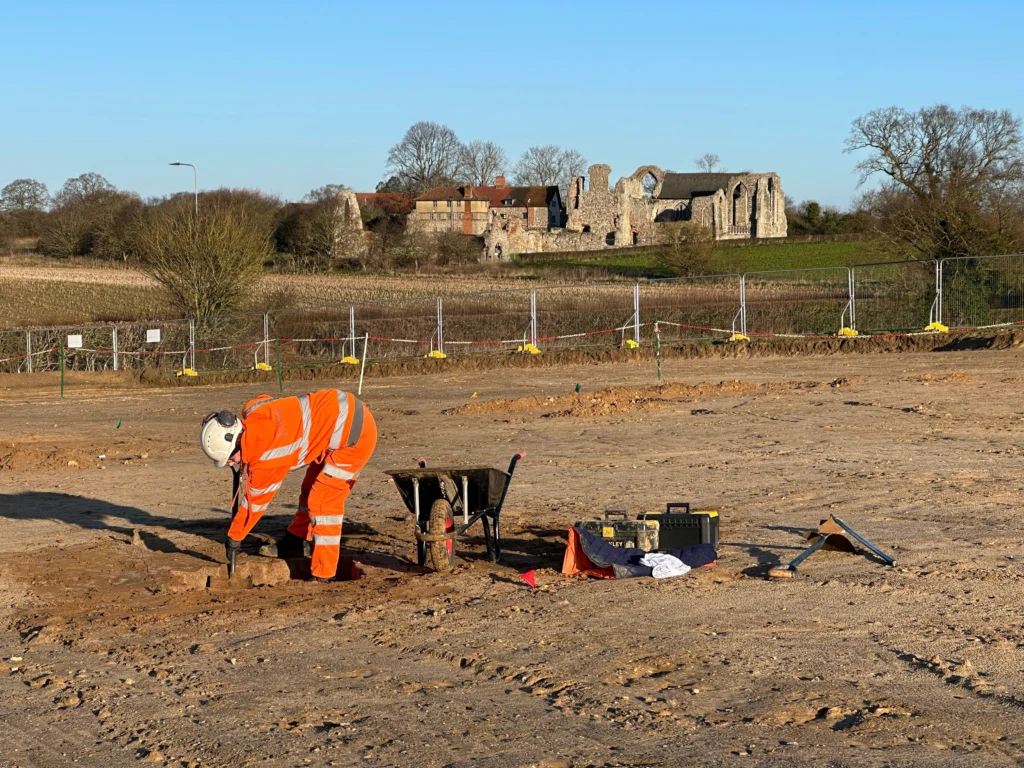
A significant proportion of the overall Sizewell excavation area also overlaps with land once owned by Leiston Abbey. Founded in 1182, the abbey was supported by founder Ranulph de Glanville, who granted the abbey the Manor of Leiston, which remained central to its estate. This historical context adds depth to our understanding of the medieval landscape revealed through excavation.
As we begin to analyse this wealth of material, several key research questions are emerging. This article introduces some of these ‘big questions’…

Question 1: What was the landscape like before the abbey?
A manor is a landed estate, and at the time of the Domesday survey in 1086, a hundred years before the abbey, Leiston was already a large, compact holding in East Suffolk. It included two additional manors, three churches and land in the nearby parishes and hamlets of Aldringham, Thorpe, Carlton and Fordley in Middleton.
Image: marshland at Minsmere. Photograph – Airwolfhound

Archaeology can enrich and refine what we already know from the Domesday Book. The distribution of Late Anglo‑Saxon remains across our sites hints at a possible centre of the pre‑Domesday estate, with activity spread around the 12th‑century moated site to which the abbey later relocated in the 1360s. At our Long Walk site, the ditches of enclosures and the remains of buildings and ovens dating to this period point to an already well‑established agricultural economy. One of our standout discoveries, a hoard of silver coins from the 1040s, offers a tantalising glimpse of local power and status and may even reflect a moment of turbulence in the local political landscape.
3D model: the Sizewell C coin hoard
Questions about what happened after the Norman Conquest (1066) still remain. We have found less evidence dating to 1086–1182, the century before the abbey was established. It has been suggested that a deer park might have been established by 1086 somewhere between Theberton and Leiston but this is largely an area outside of our investigations.
Question 2: How did the activities of the abbey change the landscape?
The community of canons at Leiston was largely dependent on its home estate, and their landholdings were (for the most part) relatively compact within Leiston and the surrounding parishes. As part of the ethos of the Premonstratensian order, the canons were generally expected to sustain themselves and their mission through labour rather than by raising cash rents from their land
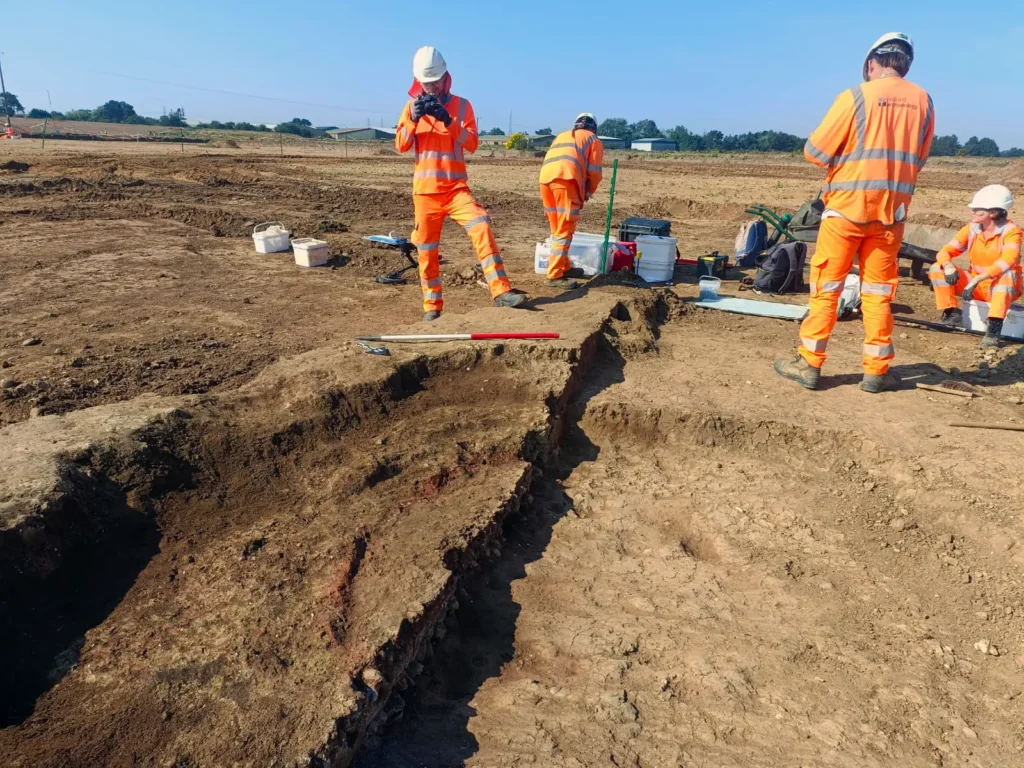
The Sizewell project therefore affords us the very rare opportunity for large-scale excavations in a tight monastic estate. It is a chance to explore its workings and how the landscape was utilised to support the brothers, their retainers and guests, and keep the abbey running. This is important, as there are gaps in the documentary evidence about how the order at Leiston was using the land, such as where and what crops were grown, and how livestock was managed.
Image: recording via photographs an oven excavated at Sizewell
Many of our sites show a density of archaeological features showcasing a flourish of activity between the 12th and 14th centuries. As ‘landlords’ and ‘farmers’, it is most likely that the abbey community was the driving force behind this. In the core estate, agricultural work-sites appear to be located along earlier routeways, suggesting fairly intensive use of the local Sandlings lands.
Occasional buildings were dispersed throughout this landscape with clay floors and walls of wooden posts and cob (i.e. clay walls). A number of ovens or kilns similar to those of the Late Anglo-Saxon period, suggest that there was continuity of agricultural tradition that survived the political upheavals of the 11th and 12th centuries. Some of the ovens might have been for drying grain or flax.
Image: the excavation of a medieval oven

The community was also engaged in reclamation and exploitation of the Minsmere marshland. At our excavations at the Wetland Habitat Creation site, there was evidence for multiple enclosures, almost certainly for livestock grazing, with repeated ditch clearing (recutting) evident at the marsh edge. Sections dug through some of the ditches show a build-up of deposits from repeated episodes of flooding.
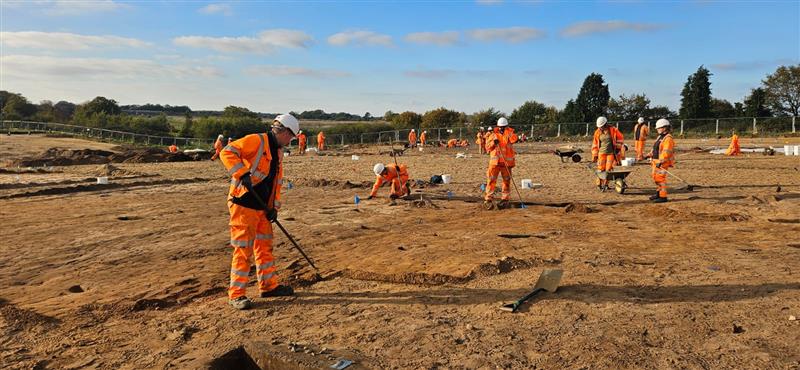
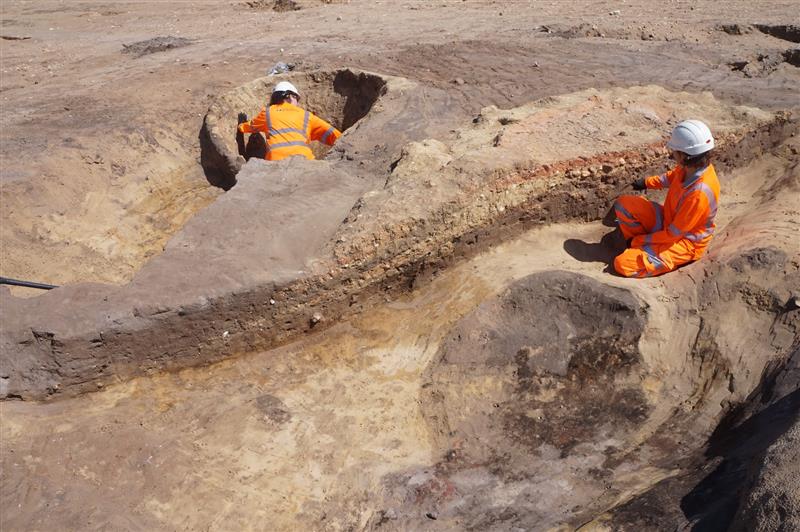
Images: archaeologists excavating clay floors (left), archaeologists excavating medieval ovens (right)
Question 3: How did things change in the 14th century?
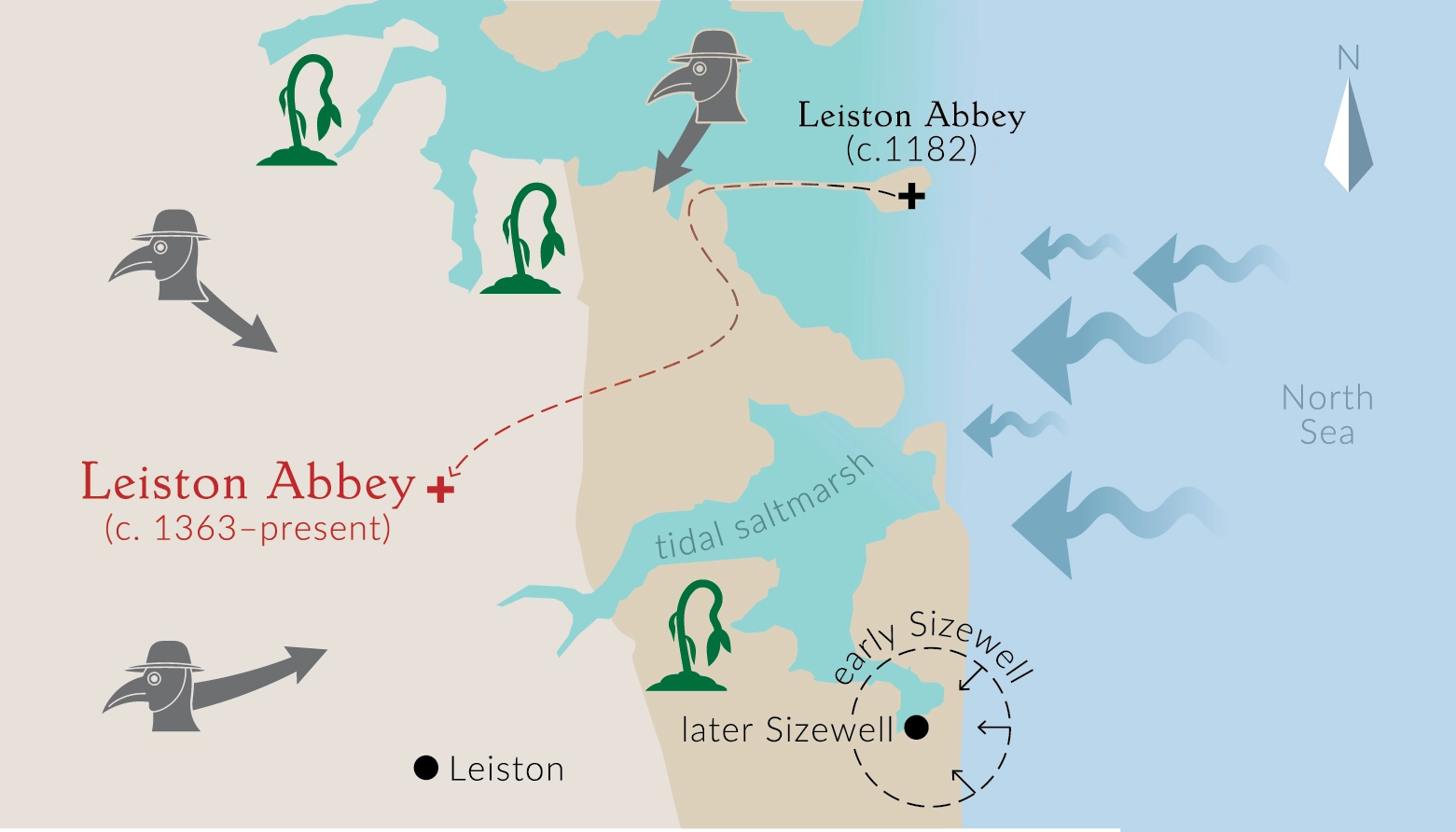
Climatic and coastal change, like today, had an impact on medieval Suffolk. Originally, Leiston Abbey was on a small island located in the channels and marshes of Minsmere, but by the 1340s increasing storm surges had affected the site and its lower lying coastal lands, so the abbey was moved inland, closer to Leiston.
The intense medieval activity appears to cease across our sites located within and around the abbey estate at the mid/late 14th century, suggesting a sudden change. This change could have resulted from a major change in land use following the loss of lands to flooding recorded in the historical record. It also coincides with the Black Death (1346–1353) and a period of widespread poor harvests.
Question 4: T’abbey or not t’abbey?…
Not all of our sites need have been directly related to the activity of the canons of Leiston Abbey. Future documentary research may be able to reveal the names of tenants or other people living locally, and archaeology can also help to reveal the ordinary local population. Ceramic specialist, Sue Anderson, is looking at medieval coarse wares from across the sites, and has remarked that ‘it is becoming increasingly clear that different sites were using different ranges of fabrics, suggesting that some might have been made by/for the abbey and others may have been made for the occupants of non-monastic land’.
Next steps
As we progress, analysis of the artefacts, animal bones and plant remains will tell us more about the types of crops and animal husbandry, as well as about changing environments and habitats, to explore these ‘big questions’..
You can read more about the medieval archaeology at Sizewell C here: