

Sizewell C
Stone Walk
Location
Suffolk
Time Period
Medieval,
Neolithic,
Roman,
Client
EDF,
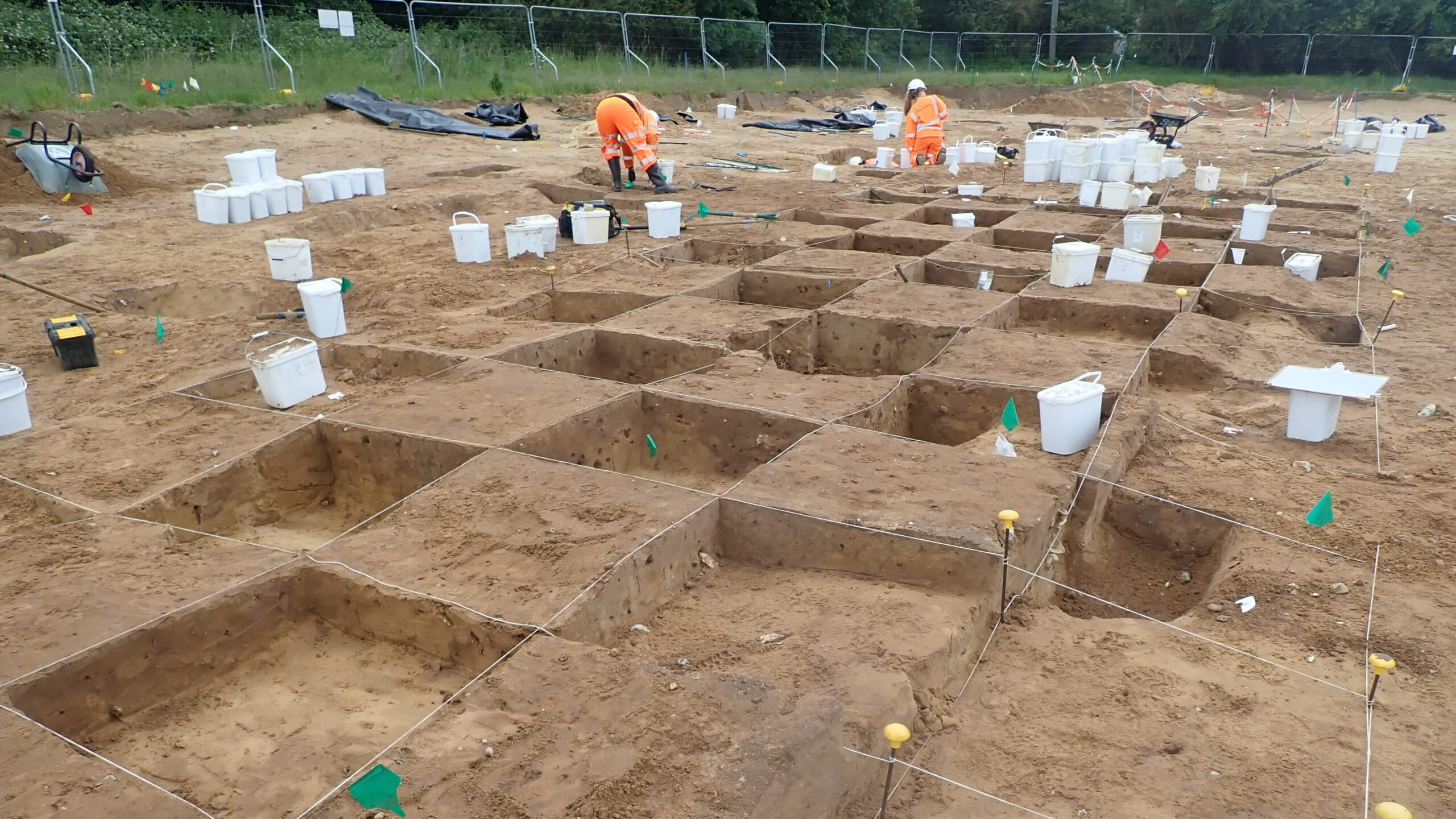
The Stone Walk site sits on a gentle south facing slope within the Temporary Construction Area (TCA) of the Sizewell C project making way for the new nuclear power station. Oxford Cotswold Archaeology has been meticulously excavating this patch of the Suffolk coastline to uncover the rich history of this landscape
From early Neolithic farming communities to Roman cemeteries, medieval domestic activity and now, modern infrastructure, OCA has been able to trace how this land at Stone Walk has been used and adapted by the people living here for over 6,000 years.
Neolithic
Carinated Bowl
Some of the earliest pottery ever used in the country was recovered from a pit at Stone Walk. This discovery made by our field team is significant not only because of its age, but also because such pottery is regionally rare. This type of pottery is known a Carinated Bowl. It has smooth, undecorated sides and would have been used for everyday tasks like cooking and storing food. Dating to the Early Neolithic (c. 4000–3650 cal BC), the small group of sherds found within the pit likely came from four different vessels.
Image: example of a Carinated Bowl used to illustrate what the pot sherds found at Sizewell Stone Walk may have looked like. No photograph of the Sizewell Carinated Bowl sherds is available because the fragments are extreme fragile.
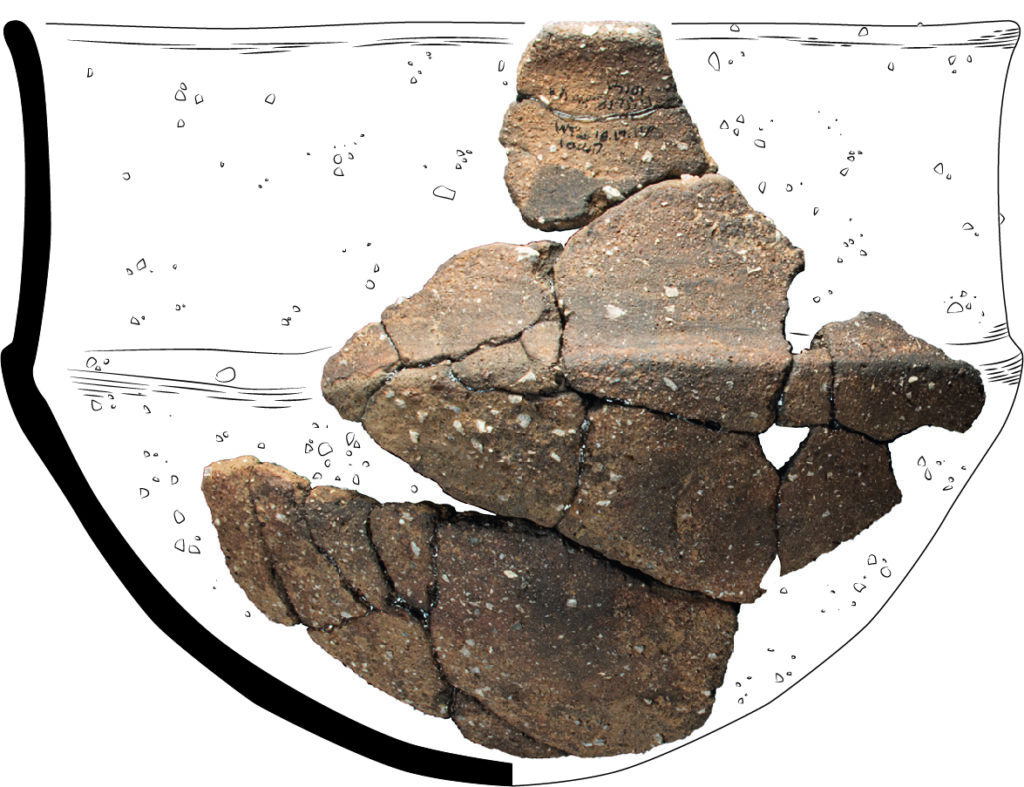
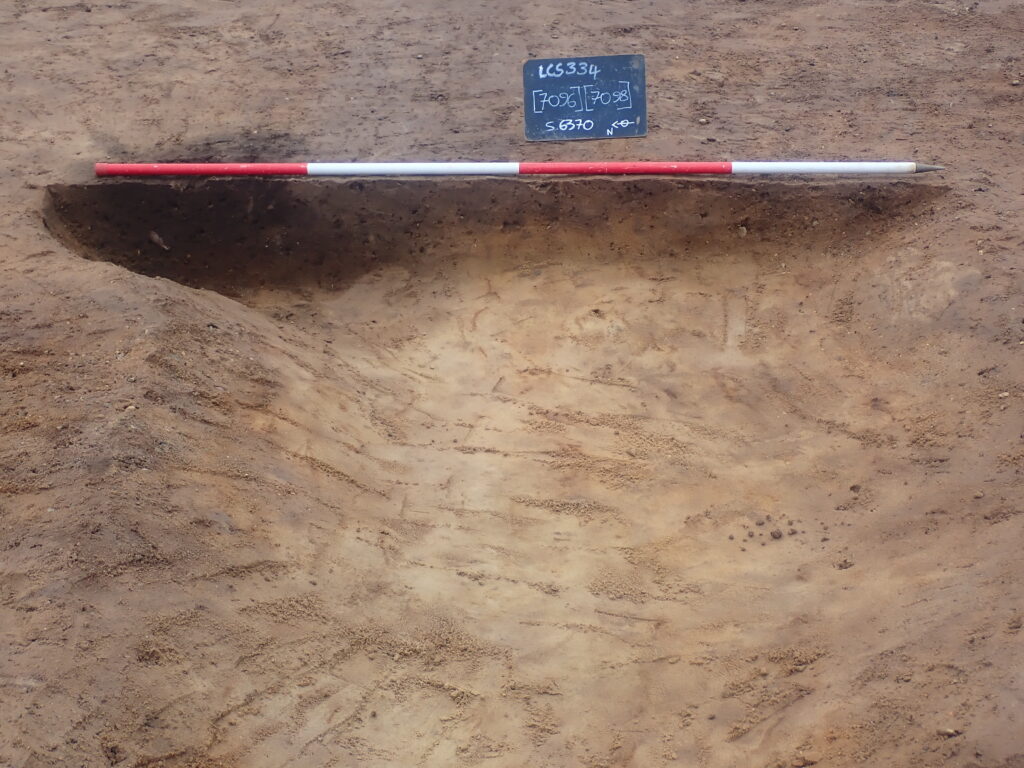
Analysis by our specialists shows that one of the vessels had a deeply concave neck. It was made from a fine flint‑tempered fabric, meaning it was made from clay mixed with tiny pieces of flint, a technique used to help strengthen the pot. Currently, only one other example of this type has been recovered, found during excavations along the Sizewell Link Road. As such, the pottery is highly fragile and prone to damage. Its discovery adds another important piece of archaeological evidence to the rich Neolithic landscape emerging across the Sizewell C project.
Image: 2m section showing the pit the carinated bowl was recovered from on the left.
Neolithic Enclosure
Continuing with the prehistoric landscape, one of the largest features uncovered on the Sizewell C project is a Neolithic long enclosure at Stone Walk. This elongated earthwork is a rare and significant monument, consisting of two substantial ditches curving northwards to form a long rectangular shape measuring c.50 x 20m. Long enclosures are believed to have served ceremonial purposes and would have been a significant marker within the landscape for the prehistoric communities living near modern‑day Sizewell around 5,000 years ago.
During early excavation, it was questioned whether the monument was another type of Neolithic earthwork called a long barrow, which is a burial mound surrounded by ditches and associated with funerary practices. This feature, however, is likely to be a long enclosure due to the presence of postholes within the centre of the enclosure, suggesting that the interior was open and the posts may have been put in place at the same time the ditches were dug.
Image: OCA archaeologists preparing to take an aerial photograph of the interior of the long enclosure
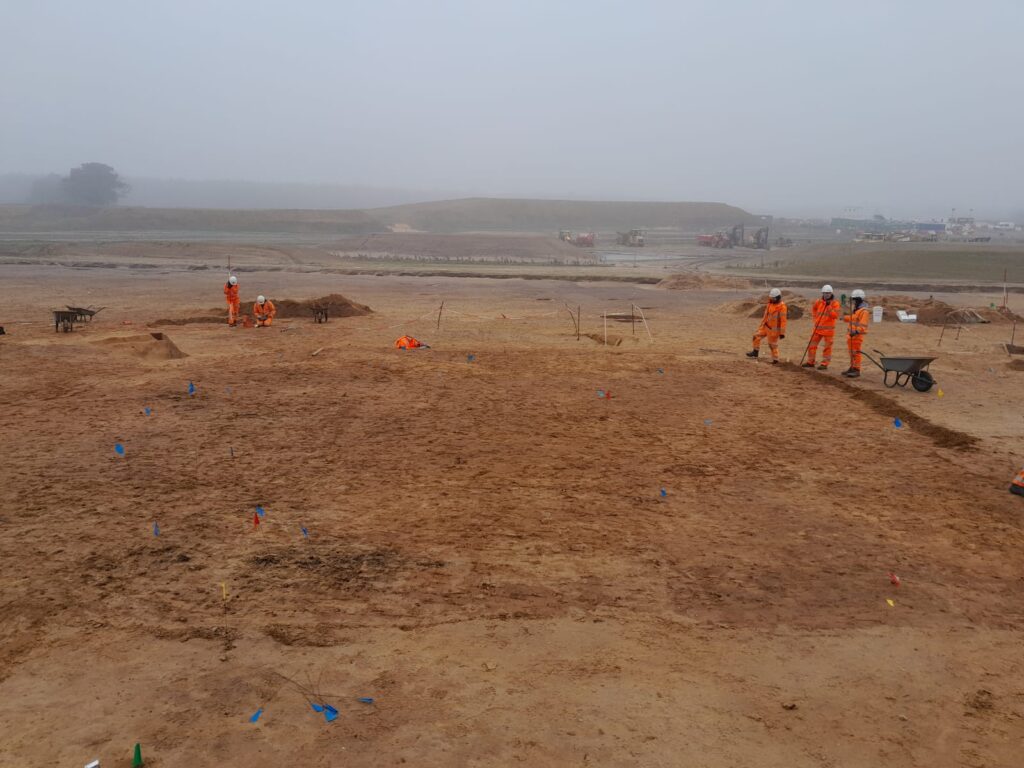
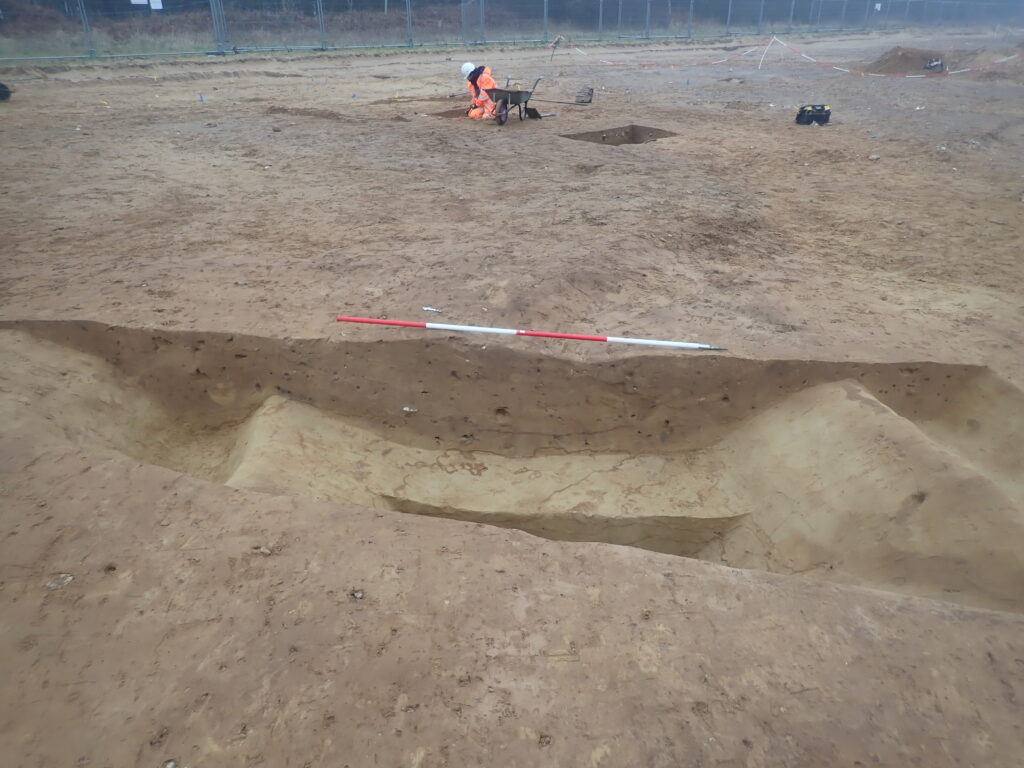
The sandy, acidic soil made interpreting the archaeology difficult. Our OCA team had to carefully decipher small changes in soil colour and texture to uncover the precise location of the ancient ditches. Because of these challenges during excavation, analysis of scientific samples was particularly important and helped us confirm that the enclosure dates to the Early Neolithic period.
Image: a section of long enclosure ditches with an archaeologist working in the background
Roman
Towards the high point of the slope at the north of the area, our field team delicately excavated a small Roman cemetery made up of five ring ditch burials. As with other burials found across the Sizewell C project, the bone preservation was very poor due to the local acidic sandy geology, leaving only minimal evidence of pathology. Human remains were confirmed in four of the graves through excavation and soil sample analysis. The fifth feature may also be a burial, but further work is needed to be certain.
Image: sand body remains of an individual in a Roman grave with hobnail shoe by left femur.

One grave showed unusual treatment: the head had been removed and placed by the feet. In another burial, dental enamel revealed that the individual was 14–16 years old at death and had experienced a significant illness, malnutrition, or other physiological stress around the age of four, which was severe enough to temporarily interrupt their enamel formation.
Image: remains of enamel within a Roman burial.
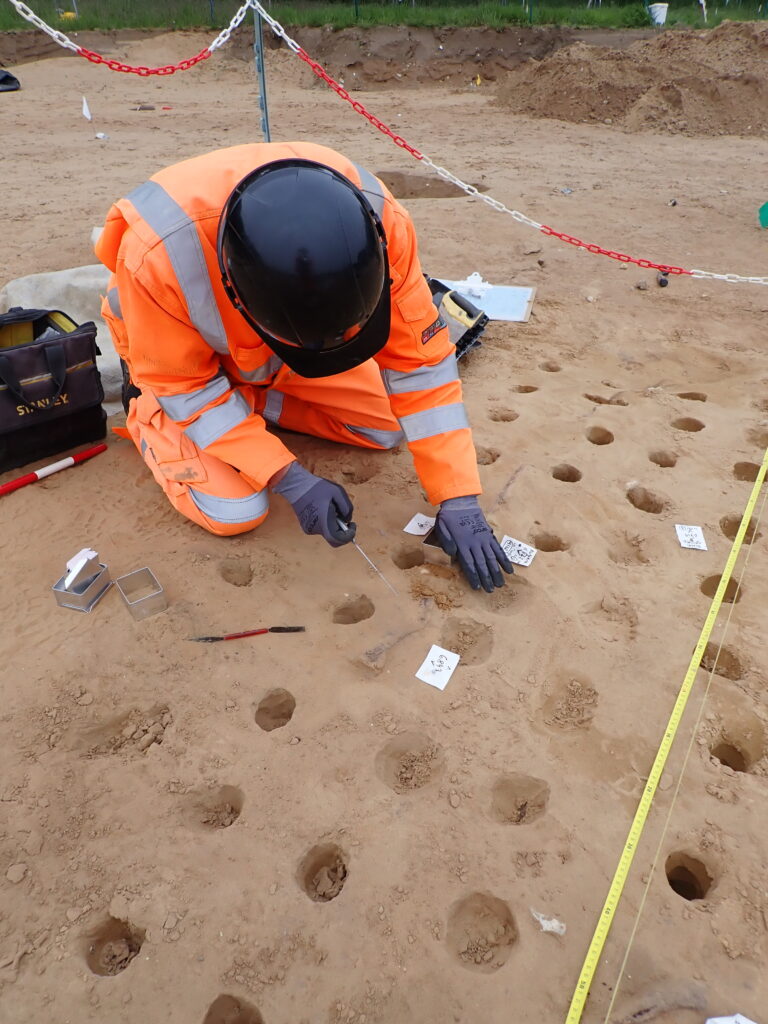
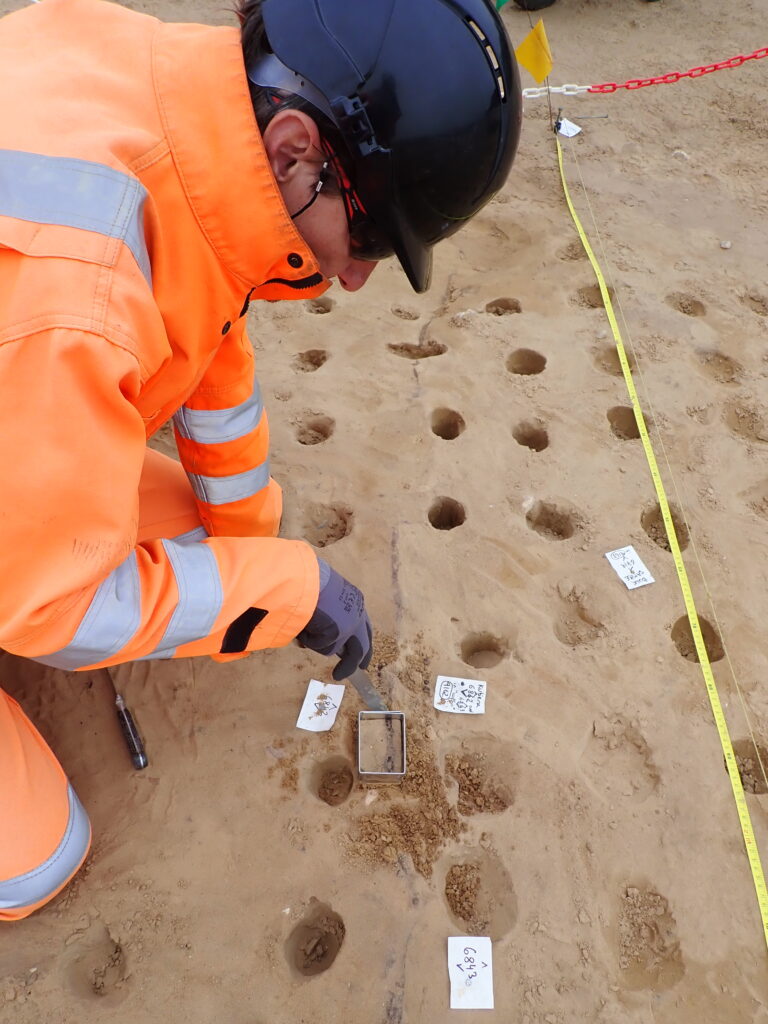
Images: specialist Kubiena sampling of a Roman burial
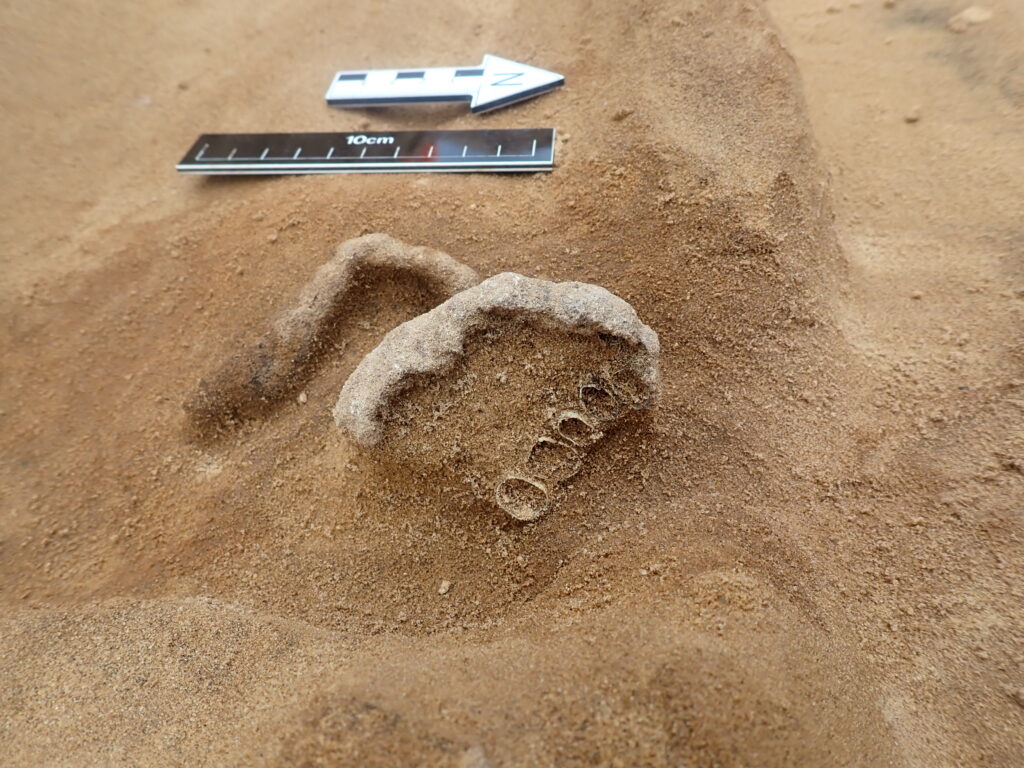
Despite the fragile skeletal remains of the individuals, we could observe the metal objects buried with them. One grave produced nineteen iron hobnails arranged in a curved line above the left femur (thigh bone), representing a shoe placed in the grave.
What is a hobnail shoe?
This technique involves installing small nails into the soles of shoes in a regular pattern to improve the durability of the sole and provide additional traction.
In another grave, an incomplete iron hook was found beside the pelvis. This would have been a suspension hook used to hang a purse or a small bag.


Images: close up photographs of hobnail shoe within Roman burial
Medieval
Moving over to the eastern side of Stone Walk, a cluster of medieval activity revealed a busy domestic area within a medieval settlement. There was a small building constructed with cob walls which had been built around the 13th or 14th century. Cob walls are a traditional way of building houses, made by mixing clay, sand and straw with water. Inside the structure was a simple clay‑lined hearth, which people would have used for heating or cooking, highlighting the domestic nature of this small settlement
Nearby lay a group of postholes, which may have been part of a larger structure or replaced an earlier one. Our OCA archaeologists also discovered a large shallow pit that appears to be the remains of a robbed‑out oven, which people in the past may have dismantled to reuse its materials. This feature contained a substantial amount of medieval pottery, along with finds such as a whetstone, a roofing tile fragment, nails, and a small piece of lead
Image: archaeologist excavating pottery from within medieval structure

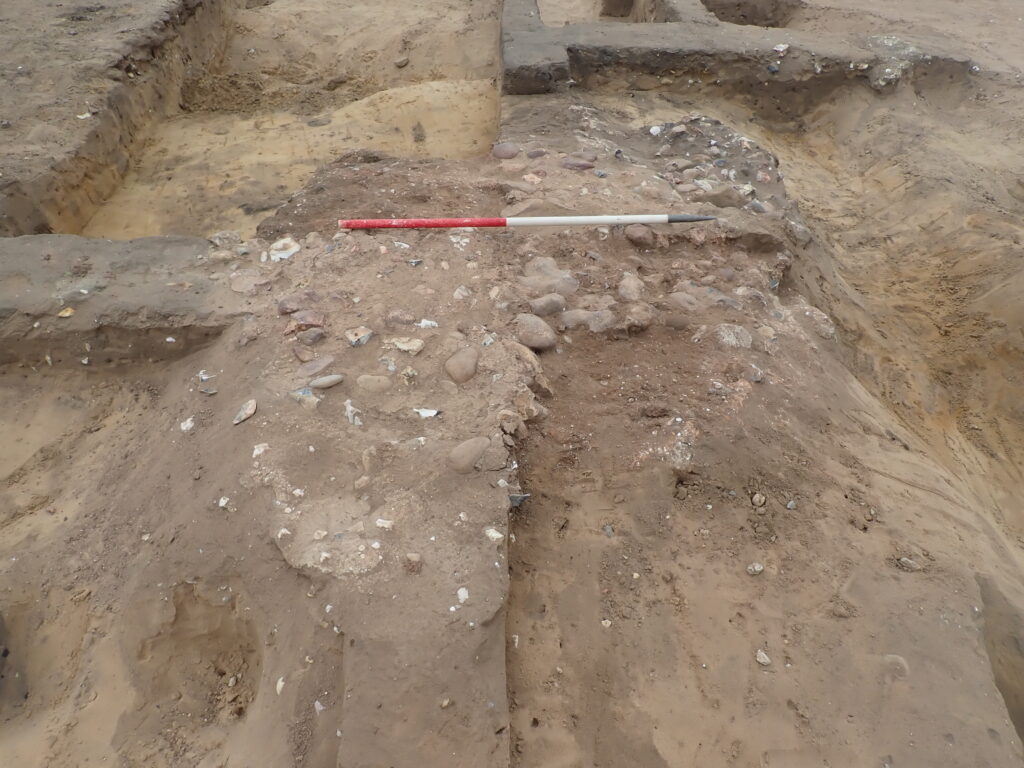
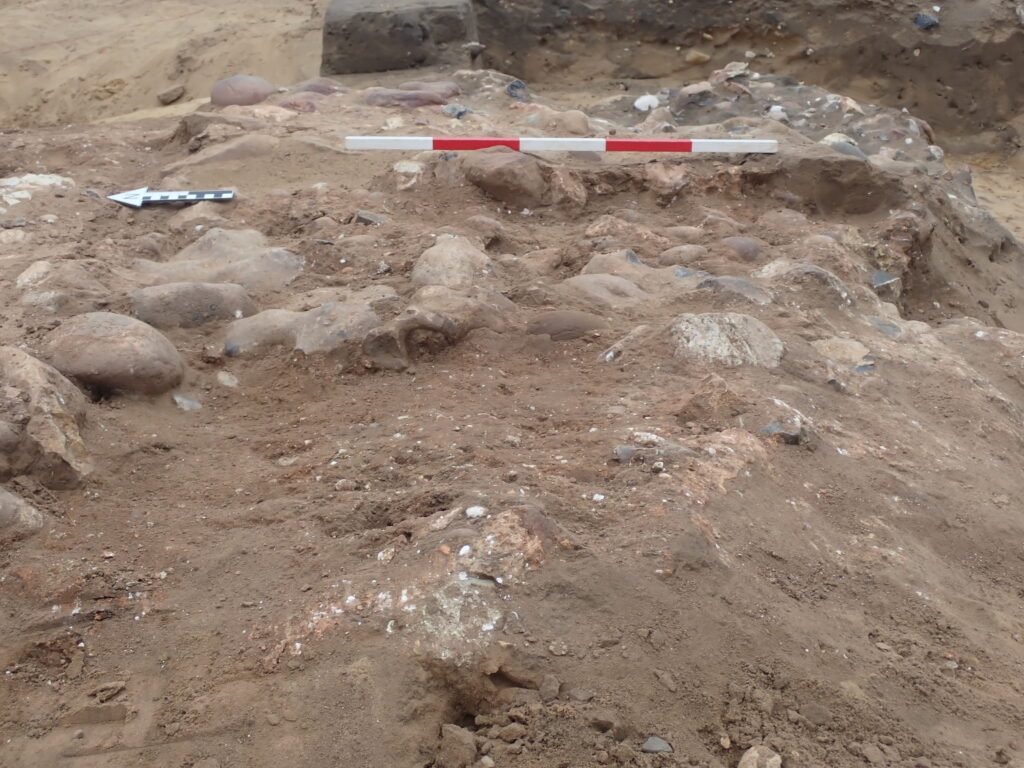
Images: remains of a medieval oven with cobbled surface
A thorough environmental sampling strategy is employed across all our sites, and the samples taken from the building, hearth, and oven revealed charcoal used for fuel, as well as gorse charcoal that was probably used as tinder. Smaller amounts of cereal grains were also present, possibly relating to what was being cooked. Analysis of the charcoal helps us understand what trees were being harvested and help us understand what the surrounding environment may have looked like. These small remains highlight how different types of archaeological evidence help build a picture of how people lived and worked in this busy medieval settlement.