
What the Light Revealed: Illuminating A Neolithic Long Enclosure at Sizewell C
Date Written
7 July 2026
Projects
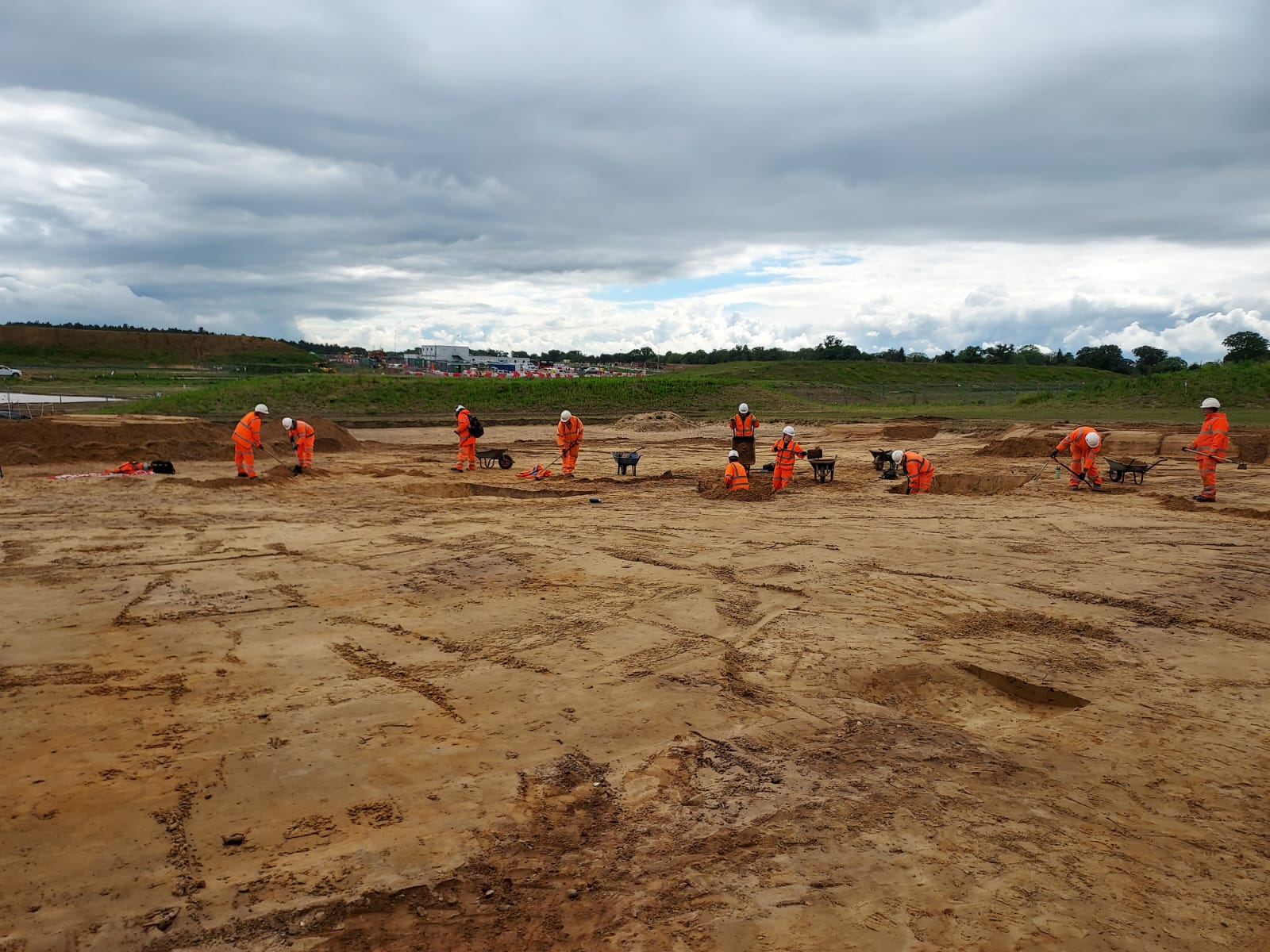
The Oxford Cotswold Archaeology (OCA) team has discovered a rare Neolithic long enclosure ahead of the new Sizewell C nuclear power station project on the Suffolk coast.
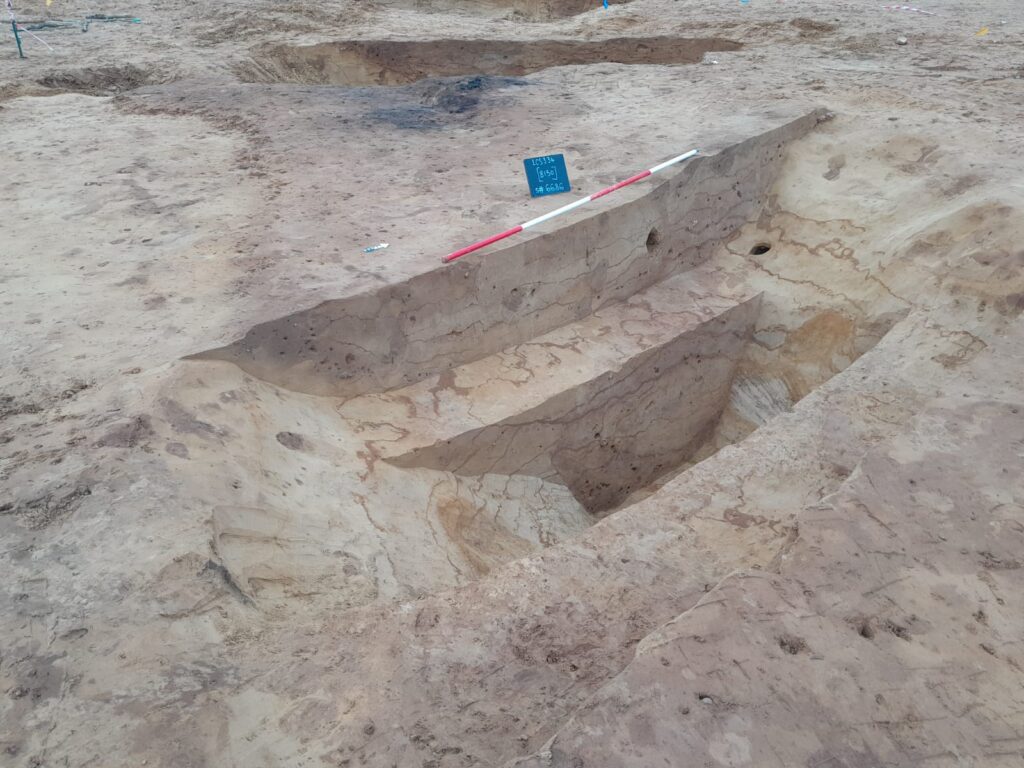
This large rectangular earthwork c.50m by 20m is an ancient monument comprising of a ditch with a flanking bank which marked a place of importance for people living in Britain’s first farming communities in the Neolithic period, around 5000 years ago. The monument had almost faded back into the soil, offering only a faint glimpse into the culture and practices of the prehistoric people who created it.
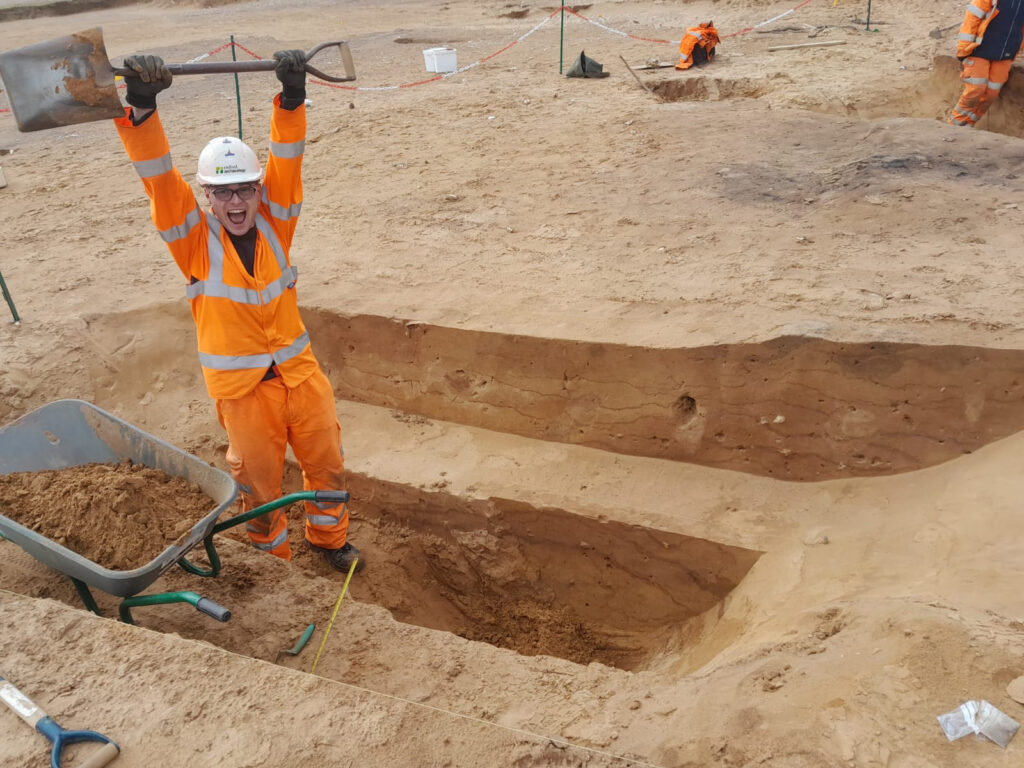
How do archaeologists from OCA know the earthwork is that old? The answer lies in the way modern scientific techniques work alongside traditional excavation to inform and support our interpretations. In this case, an advanced sampling method called optically stimulated luminescence (OSL) was used to test when grains of sand within the earthwork last saw sunlight, helping to illuminate the story of this fascinating feature.
The Neolithic period in Britain was from roughly 4000–2500 BC. During this time, people moved away from a hunter-gatherer way of life towards settled farming communities. People began cultivating crops, keeping animals, making pottery, and building ceremonial monuments, shaping the landscape in lasting and deliberate ways.
The long enclosure was built by a Neolithic community around 3800 BC by digging large rectangular ditches, which probably had ceremonial importance. Over thousands of years, the outline and shape of these ditches had blurred: their edges made indistinct by weathering and by the acidic soil slowly breaking down the archaeological remains.
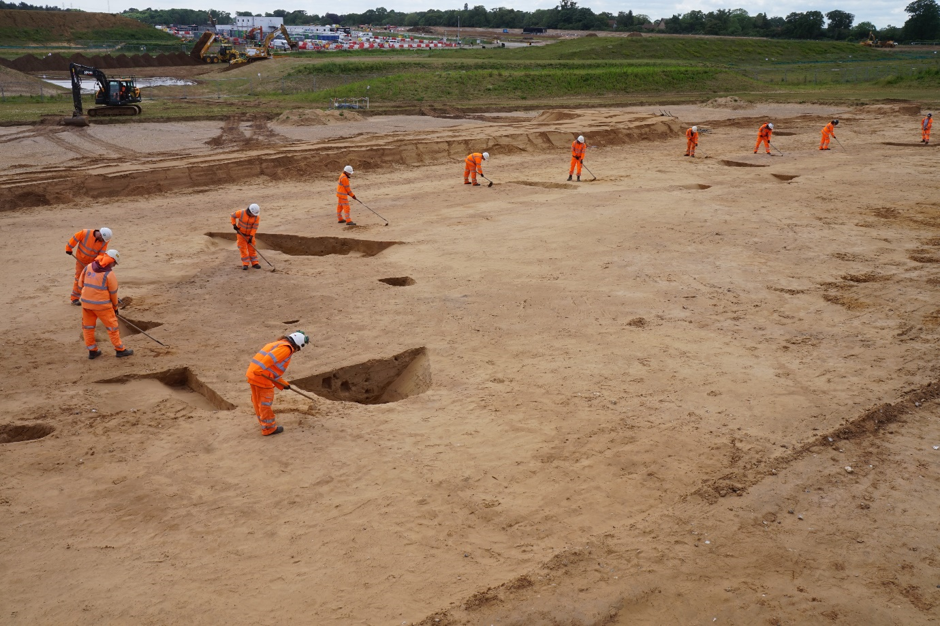
Image: OCA field archaeologists working on excavating the enclosure using tools such as shovels, wheelbarrows and hoes.
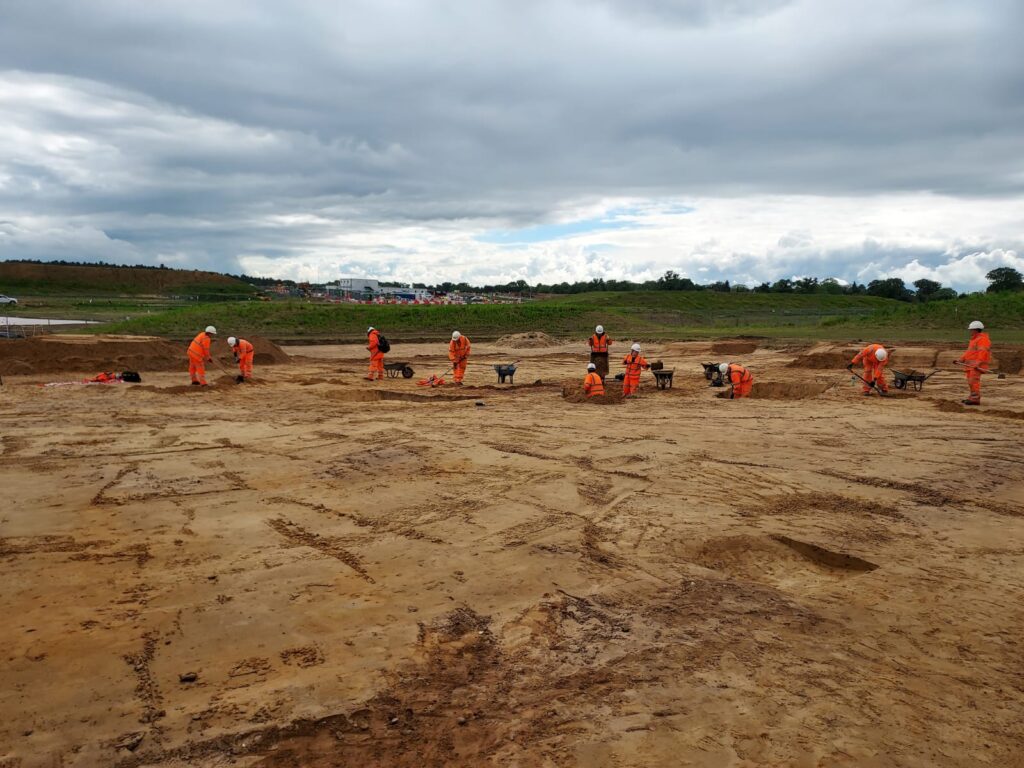
Our OCA field team took on the challenge of excavating the long enclosure. They had to rely on subtle changes in soil colour, texture, and compactness to understand the shape and size of the feature. This was especially difficult at the northern ends of the ditches, where erosion had reduced them to the point that hand excavation alone couldn’t confirm their full extent. Winter conditions only added to the challenge, with heavy rain and water runoff affecting the excavation.
The team initially questioned whether the feature was a long barrow rather than a long enclosure. Both are monuments built by Neolithic communities; however, a long barrow has a large burial mound, while a long enclosure is an open space defined by ditches and typically lacks funerary evidence. The presence of internal postholes, which were most likely contemporary with the monument, suggested that the interior was open rather than covered by a mound, making the long enclosure interpretation more convincing.
With only limited archaeological evidence visible in the ground, scientific sampling and modern techniques became essential for dating the feature and understanding its place within the landscape.
How do we take an OSL Sample? OSL samples are taken by collecting sediment from an archaeological feature within a light-proof metal tube. This is then analysed by geoarchaeological specialists who measure when the grains of sand were last exposed to sunlight which helps date archaeology.
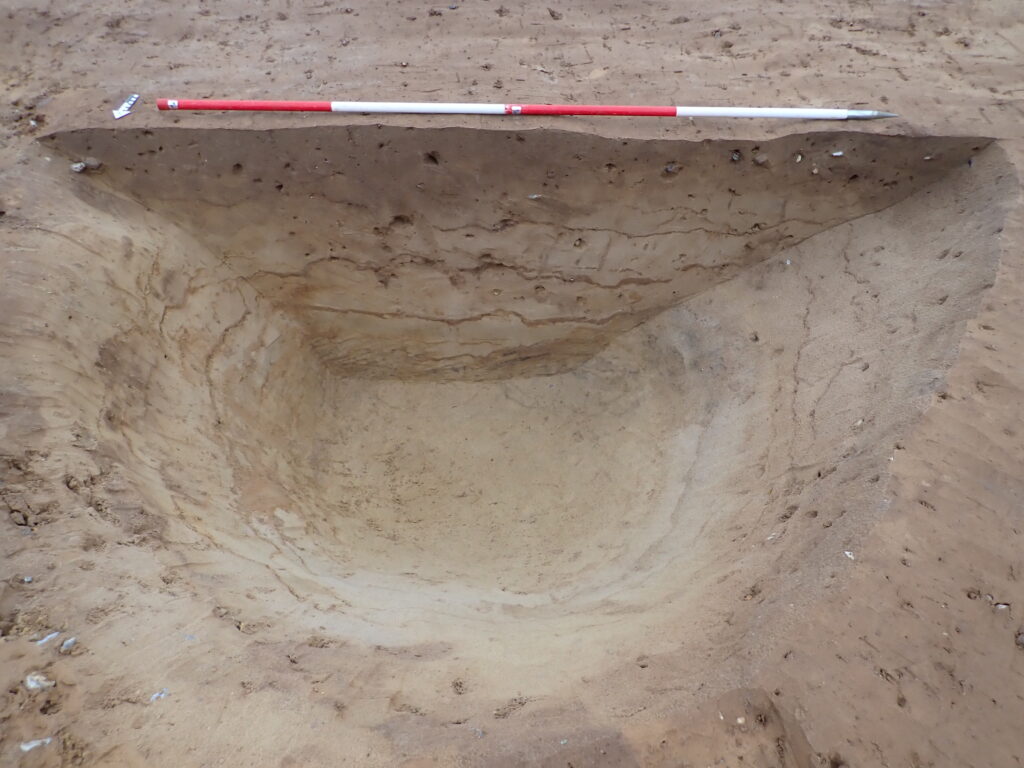
This is where optically stimulated luminescence (OSL) became essential. Samples were taken to understand when the ditches were originally cut and when the sediment had fallen into the ditch to fill it up. The results showed that the monument was created in the Early to Middle Neolithic, while the upper layers of the ditch fills dated to the Beaker period or Early Bronze Age. This revealed a long history, with the enclosure continuing to accumulate material long after its initial construction. The assistance of scientific dating anchored the monument firmly in time and builds on the growing picture of the Neolithic landscape around Sizewell and Leiston.

Additional dating evidence came from a small assemblage of finds recovered from the ditches. A small amount of pottery suggested Early Neolithic and Early Iron Age activity, and thirty-one worked flints were recovered, though none were distinctive enough to date precisely. These types of features are characterised by having very few finds, and this example was no exception, highlighting the importance of combining our specialist knowledge to inform interpretation.
This Neolithic long enclosure is a rare and significant find, showing us how people over 5000 years ago shaped the same landscape now being used to build modern technology for Sizewell C. The excavation by OCA demonstrates why combining careful hand excavation, scientific analysis and geoarchaeology is so important. The archaeological traces of this ancient monument were so faint and fragile, understanding something this old depends on using the most advanced techniques available today.