
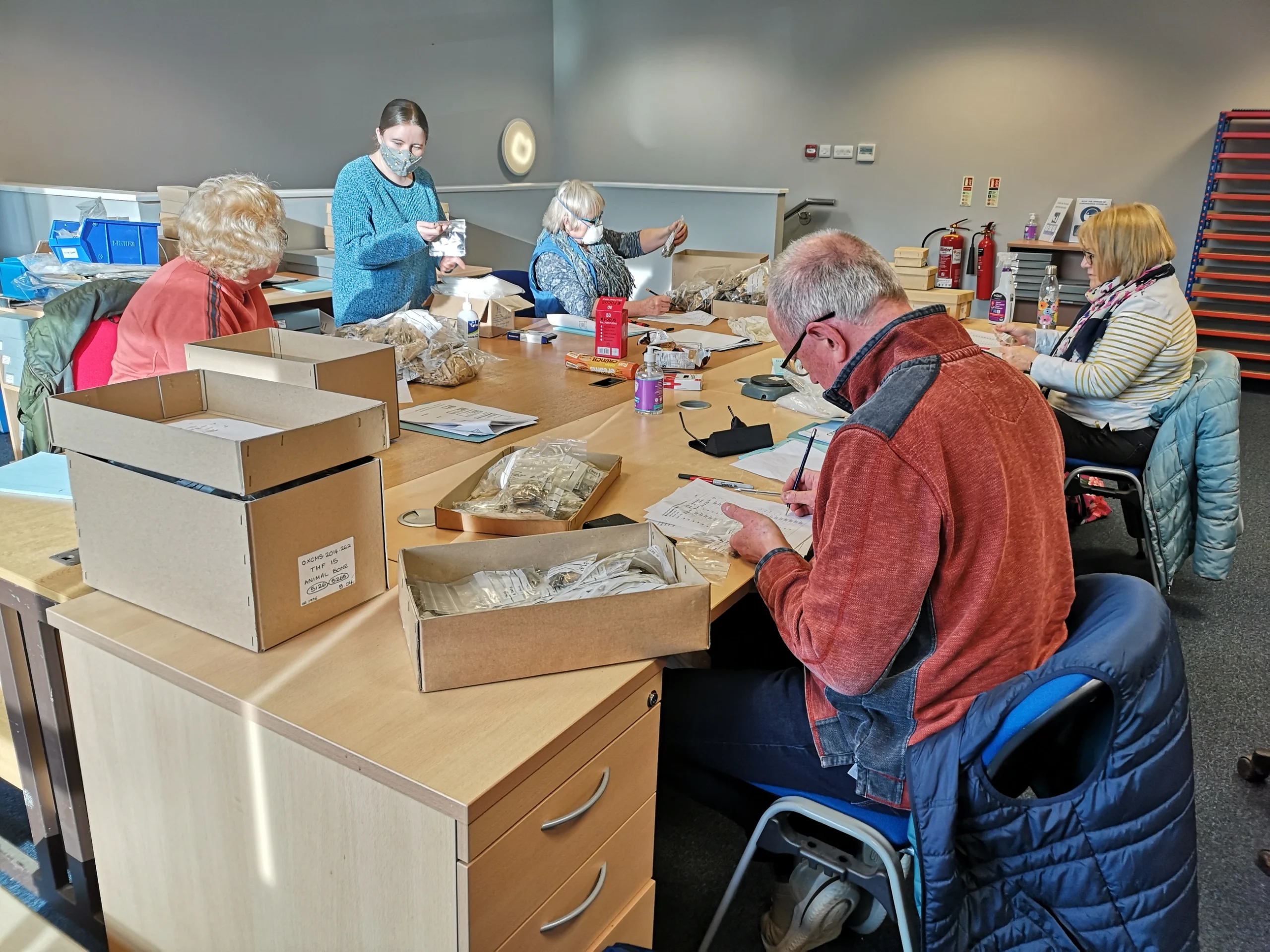
From 2022 to 2024, volunteers at the Milton Keynes office have collectively contributed an astonishing 753 hours to processing a vast collection of finds from a site in Thame, Oxfordshire, excavated by Oxford Cotswold Archaeology in 2015.
The excavation, conducted ahead of a new housing development by Bloor Homes, revealed a multi-period site, with evidence of nearly 5000 years of activity, from the Neolithic to Saxon periods (4000 BC – AD 700).
During the Neolithic (4000 – 2400 BC), a causewayed enclosure was constructed, with settlement evidence unearthed for the Early Iron Age (700 BC – AD 43). In the Roman period (AD 43 – 410) there was a sequence of farm trackways, enclosures and corn drying ovens. From when the Anglo-Saxons occupied the area, 13 ‘sunken-featured buildings’ were found, dating to the 6th to 7th centuries. Most were probably workshops, where weaving took place, as indicated by the loom weights and spindle whorls that were found.

In the office, volunteers have been integral to the project, assisting with the processing of finds on a weekly basis. Tasks have included marking, packaging and boxing artefacts, preparing them for depositing with a local museum.

“I was very pleased with what my small volunteering contribution has made to the archaeology of Oxfordshire, and to archaeologists and the public in the future. For myself, I have learnt that small finds are as important as larger finds, in understanding how people and communities lived in the past.”
Patricia
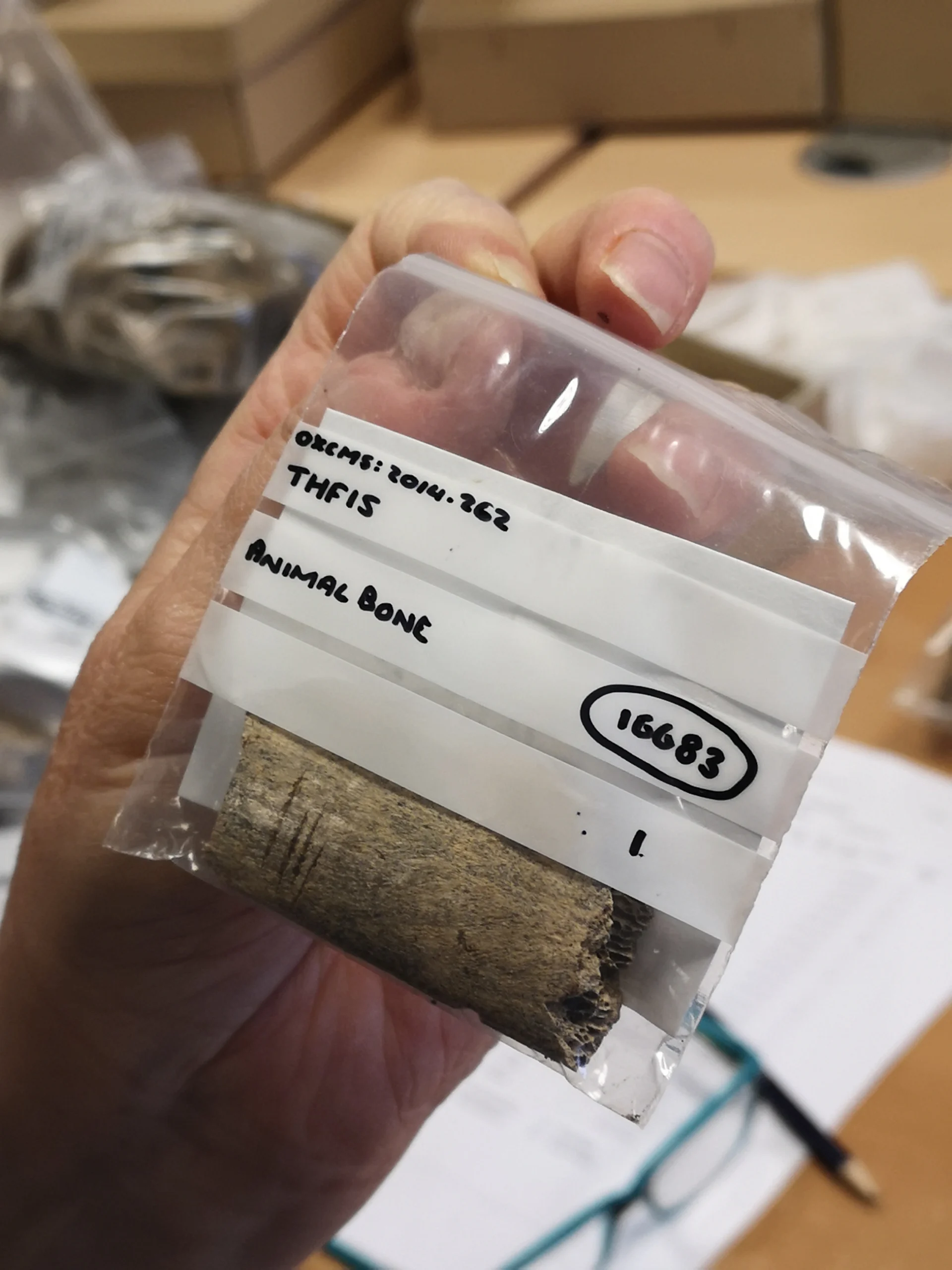
Have you ever wondered why you see small modern writing on artefacts when visiting museums? Using special ink and delicate pen nibs, volunteers mark codes on the finds, which identifies the sire they came from (site code), the context number (e.g. social layer) and usually includes a museum accession number.
Image: a fragment of animal bone
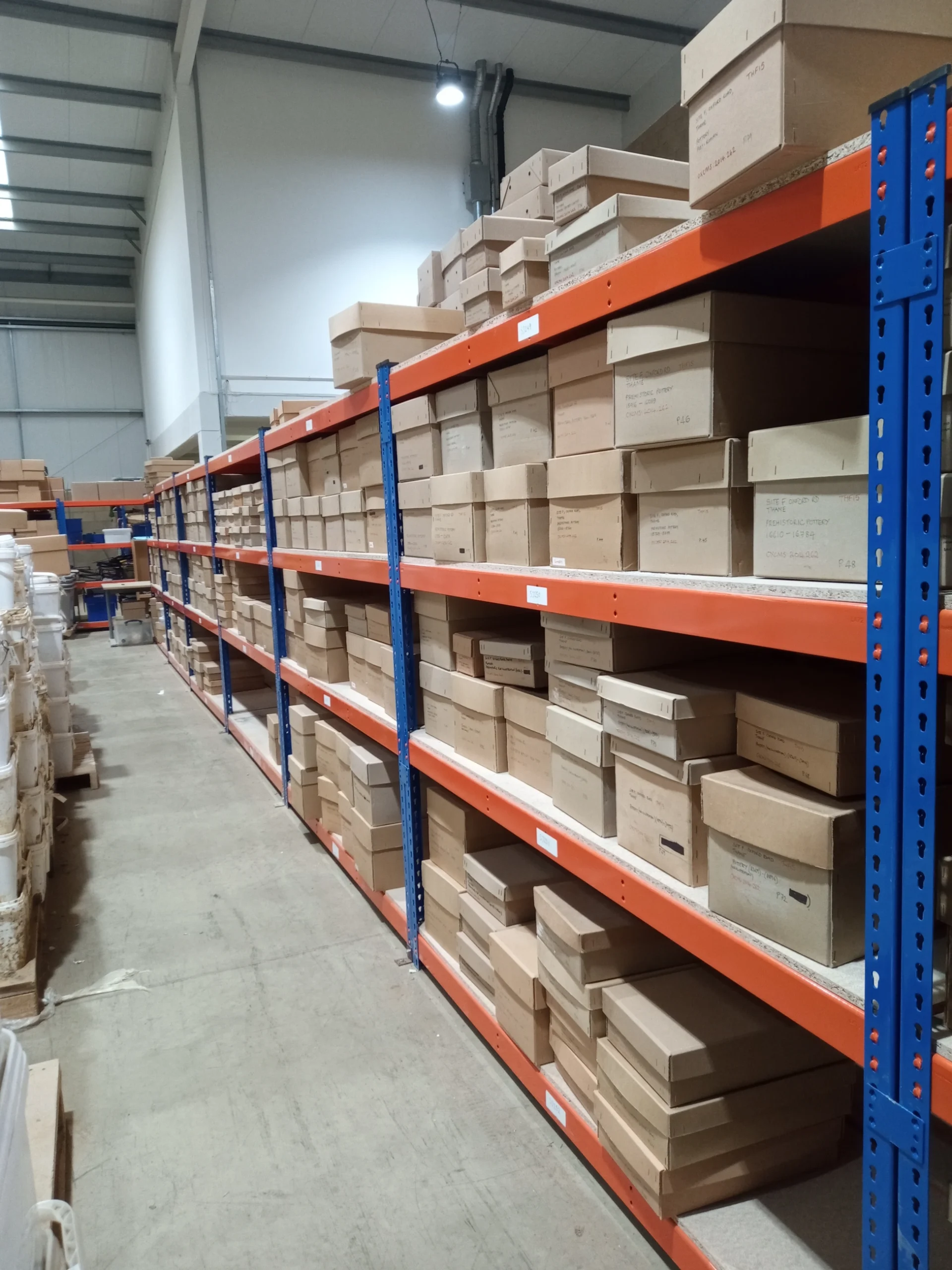
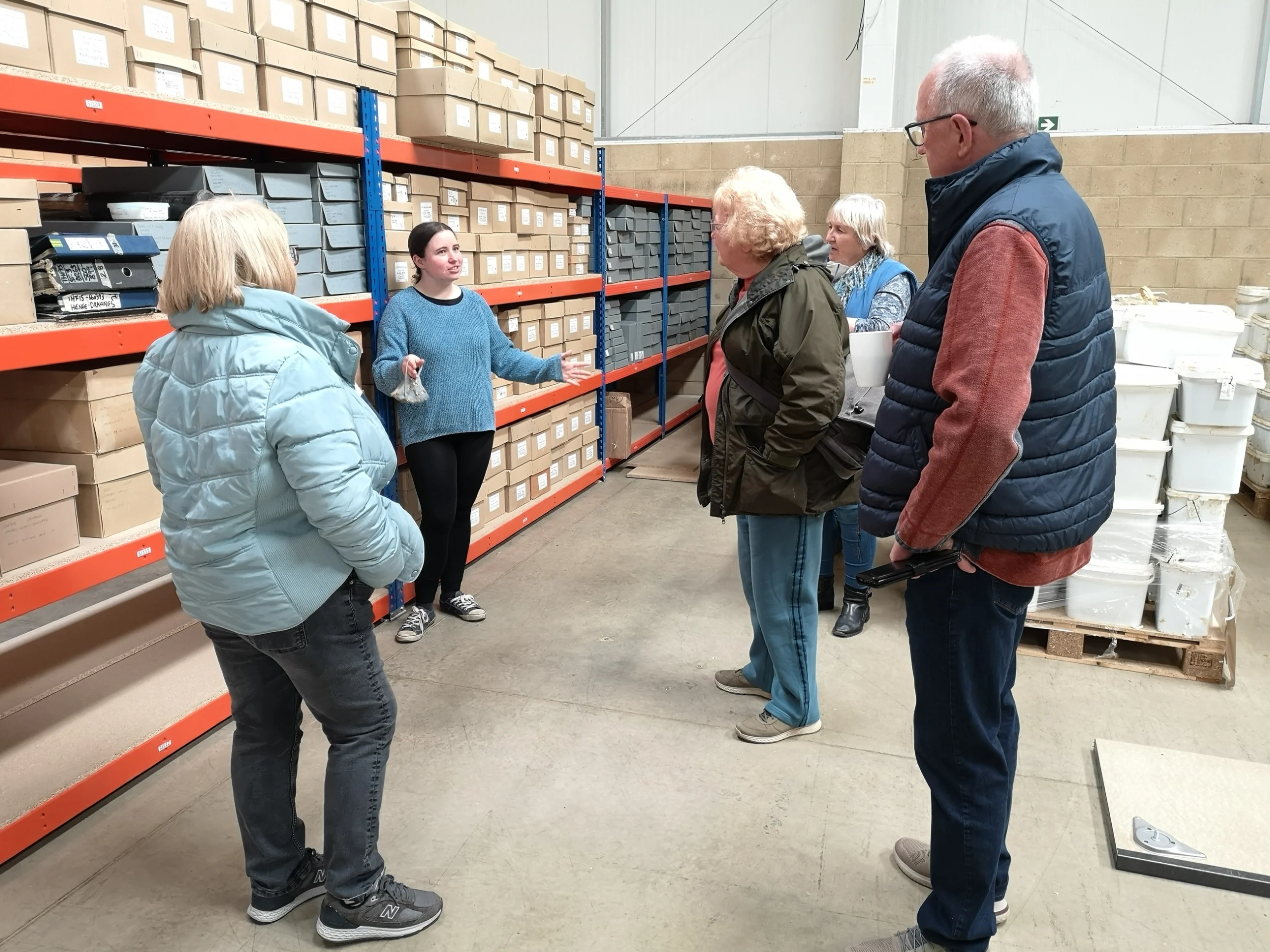
Clare Bond was the Archives Officer overseeing our Thame volunteers. She recounts that the volunteers particularly enjoyed working with reconstructed pottery vessels and fired clay loom-weights. At the project’s conclusion, a staggering 289 boxes of finds were prepared for deposition, a testament to the dedication and hard work, Clare summed up their invaluable contribution: “Huge thanks goes to the small army of amazing volunteers who have massively helped to put this altogether, they have all been an inspiration! They are hardworking and committed to the job, always enthusiastic to learn new skills and to find out more about the sites we are working on”.
Image: the Thame archive in the archaeological store
Throughout the duration of this project, 51 individuals contributed to the preparation of the archive. Among them, Stephanie, has shared her reflections on her involvement: ‘I started volunteering at the beginning of 2022, back when the mass amount of animal bone from the Thame site was being finds marked to prepare it for deposition. It was completely rewarding to be able to see just small portions of the excavated artefacts and work preparing them for deposition (there was so much!). The [OCA] employees that help with volunteers were all so lovely and when a position opened in the Post Excavation department, I quickly jumped on the chance to work with them.’ Stephanie now works for Cotswold Archaeology and added: ‘it’s been so lovely to continue working with the volunteers helping to guide them as we finished the Thame deposition and sent it off to the museum.’
“I had a great experience at the MK office. I got a chance to see and handle pottery, bones, flints, and all sorts of archaeological remains. It was great to learn some interesting things from Clare.”
Aprajita
The success of the project owes much to the commitment and enthusiasm of these volunteers, whose dedication ensures that the rich archaeological heritage of Thame is preserved and shared with future generations.
“It’s been wonderful to handle so many different finds, and fascinating when the professionals can tell us something about the more unusual ones. Most moving of all was when I was writing finds numbers on the bones of a child. I felt very privileged to get an insight into their life through their bones.”
Lexi