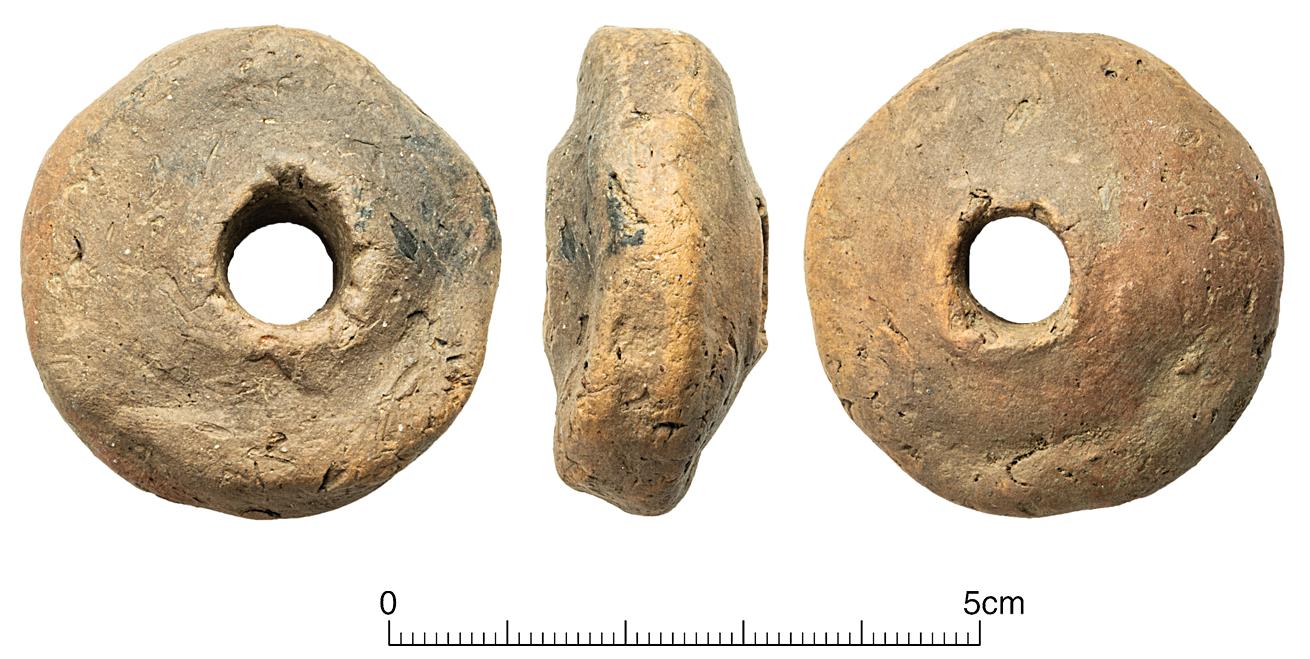
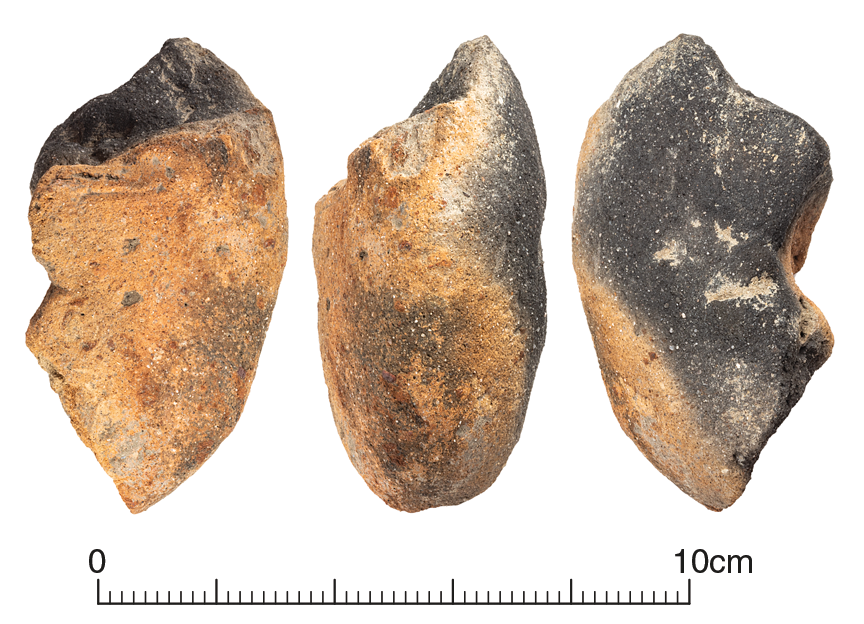
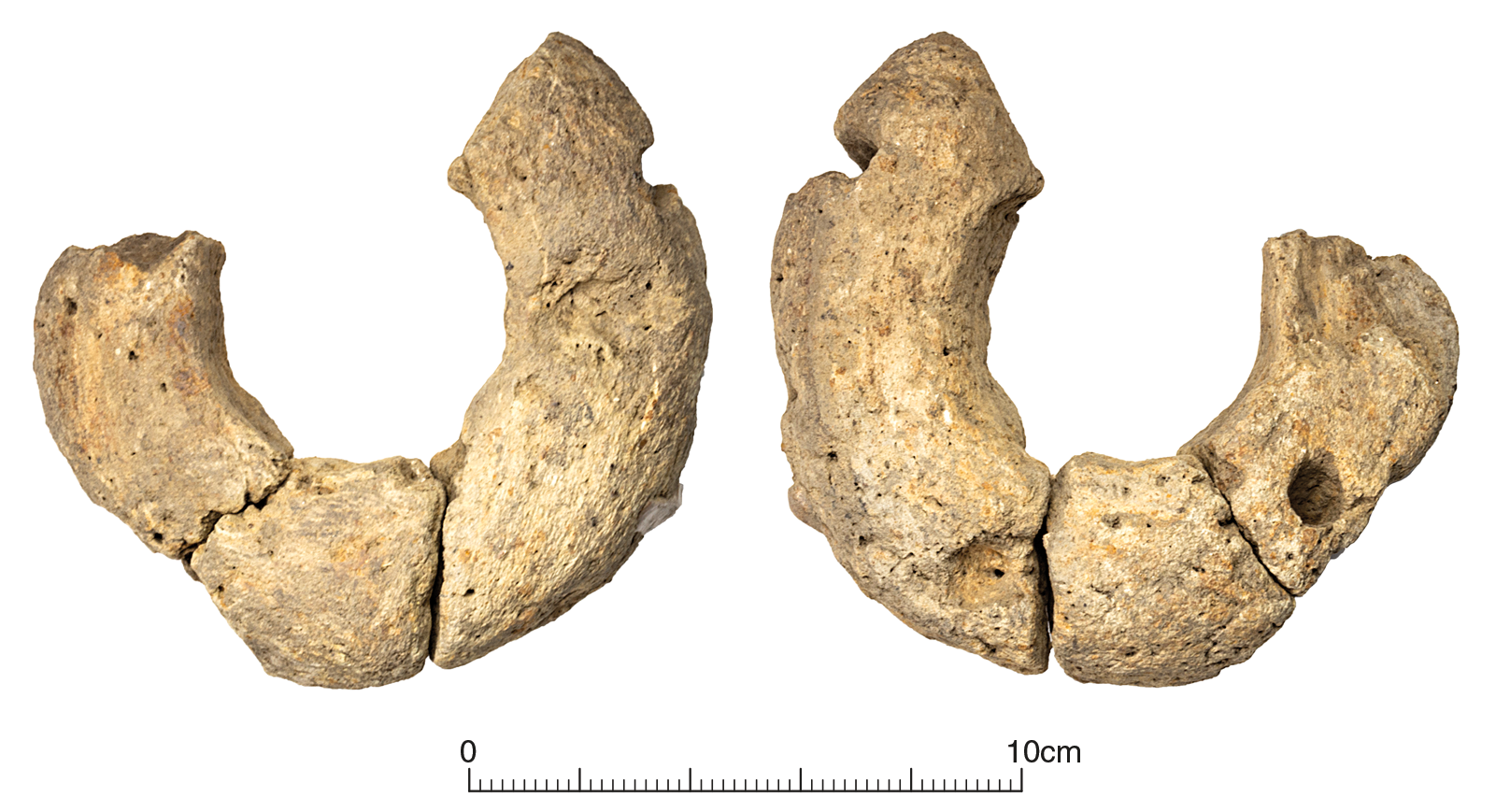
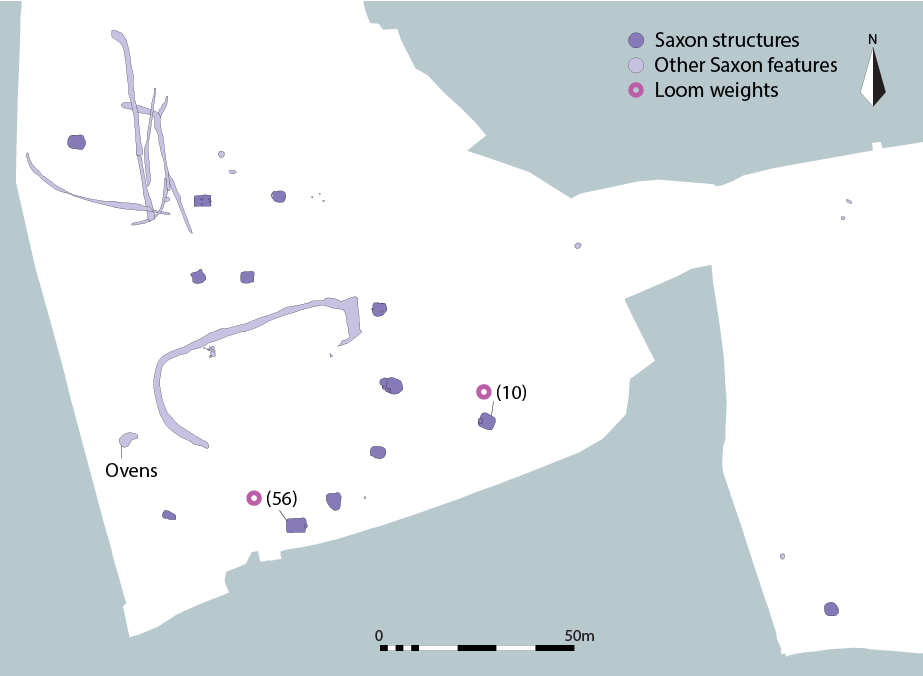
Excavations by Oxford Cotswold Archaeology (OCA) near Thame, Oxfordshire, took place in 2015. These revealed extensive archaeological remains, including part of a Neolithic causewayed enclosure, Iron Age storage pits and Roman corndriers. However, despite the fantastic prehistoric and Roman archaeology present, the site was also noteworthy for a quantity of early medieval features. These included two later 5th to early 6th century inhumation burials, a group of 13 structures dating from the later 6th to early 8th centuries and an enclosure of the 9th to 11th centuries associated with several ovens. This web article will focus on the group of 6th-8th century structures, or ‘SFBs’, and specifically on one object type recovered across several of these – clay loom weights.
SFB – what’s in a name?
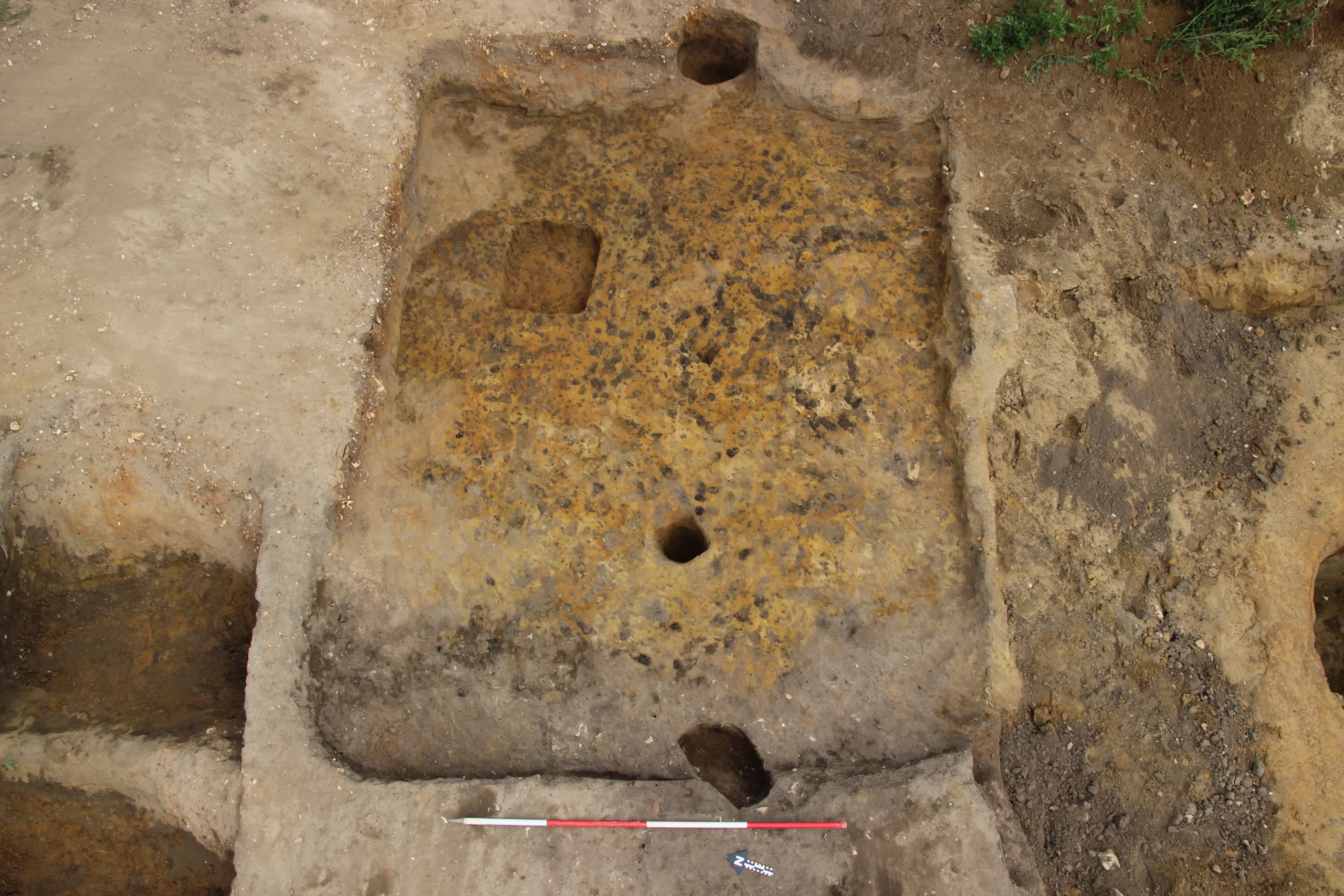
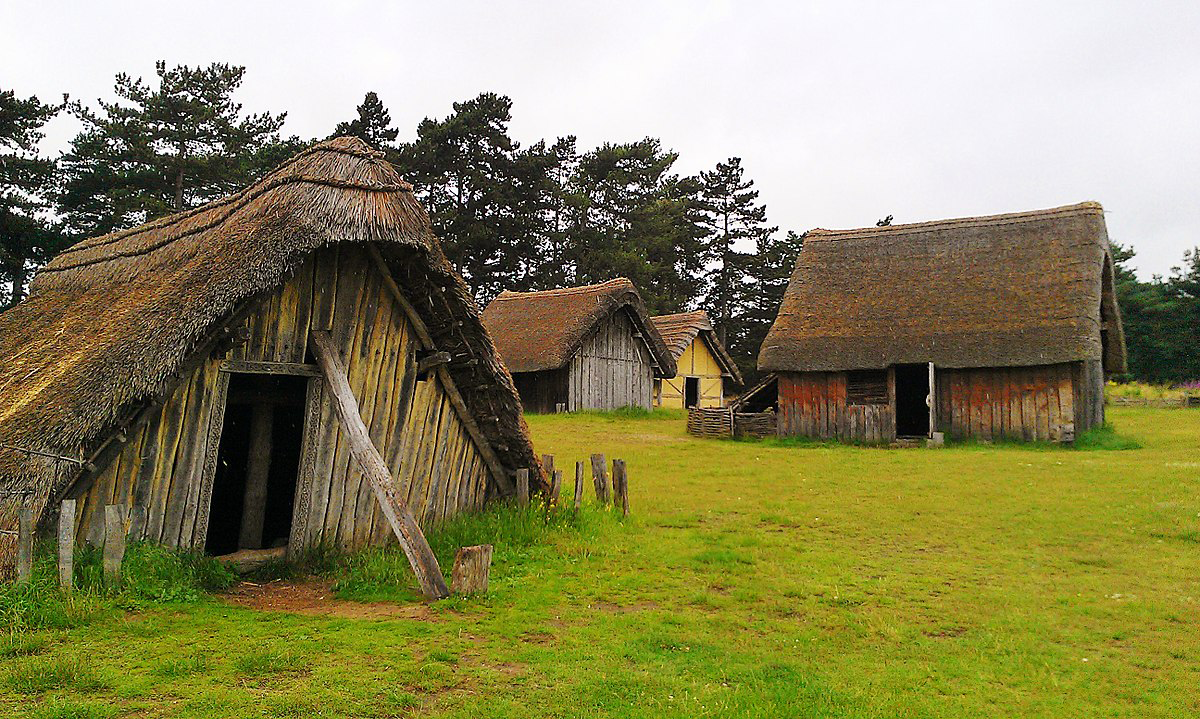
The ‘SFB’ or sunken-featured building, is a widespread type of early medieval archaeological feature found across north-western Europe. Mostly dating between the late 5th and 8th centuries, they are usually rectangular and vary in length from 2m to 6m. The remains comprise of a central pit associated with multiple post holes for roof-support. Their walls were sometimes constructed from woven wattling, while the floors were either of dirt or in some cases covered with layers of clay, crushed chalk or gravel. Some archaeologists have suggested that they had suspended, wooden floors, though this is difficult to confirm archaeologically.
Image: fully excavated SFB at Thame, where two rows of loom weights were found
Though known about for a relatively long time, the purpose of these buildings has been hotly debated. Historically, they were thought to reflect domestic living spaces set partly into the ground. Such interpretations fitted well with previously accepted theories of a primitive ‘Dark Age’ Europe existing after the collapse of the Roman Empire. However, archaeology has played an important role in relegating such myths to fiction. Although some SFBs may well have been lived in, others show clear signs of everyday use as working spaces or for storage.
Excavated examples of these features have produced large, diverse finds assemblages, ranging from animal bone, pottery and plant remains to metalwork, glass and specialised craft equipment. However, rather than directly reflecting waste from occupation, left by ‘messy’ people who cared little for cleanliness, it is now understood that this material mostly relates to debris that got into the buildings only after abandonment. Sometimes this was due to deliberate backfilling after falling out of use, in other cases due to natural infilling over years and decades. Nevertheless, evidence for deliberate artefact deposition does occur, such as the find of a 7th century iron plough coulter found in an SFB at Lyminge, Kent. This valuable, rare object had been placed on the building’s floor prior to backfilling.
Looms and loom weights
Given their associations with general occupation and backfilling, it is perhaps unsurprising that the most archaeologically object-rich phase of early medieval activity at Thame relates to the SFBs. Aside from pottery and animal bone, a major input into the finds assemblages from these features comprises loom weights. These objects come from warp-weighted looms used for textile production, the weights serving to hold the threads taut. Because their mass relates to that of the thread being woven, heavier loom weights generally indicate the weaving of thicker or coarser cloth.
Image: reconstructed SFBs at West Stow Anglo-Saxon Village. Source: Wikimedia Commons
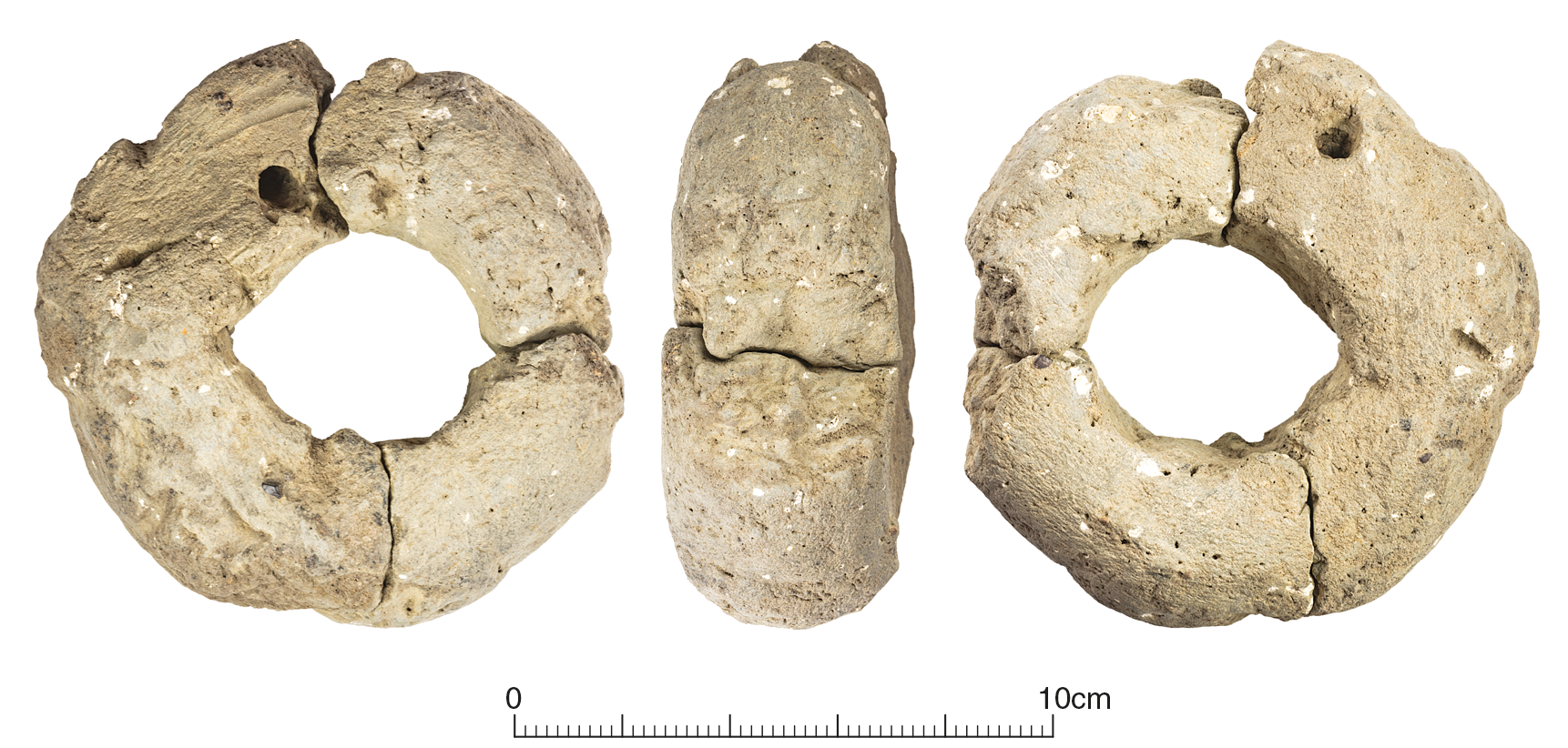
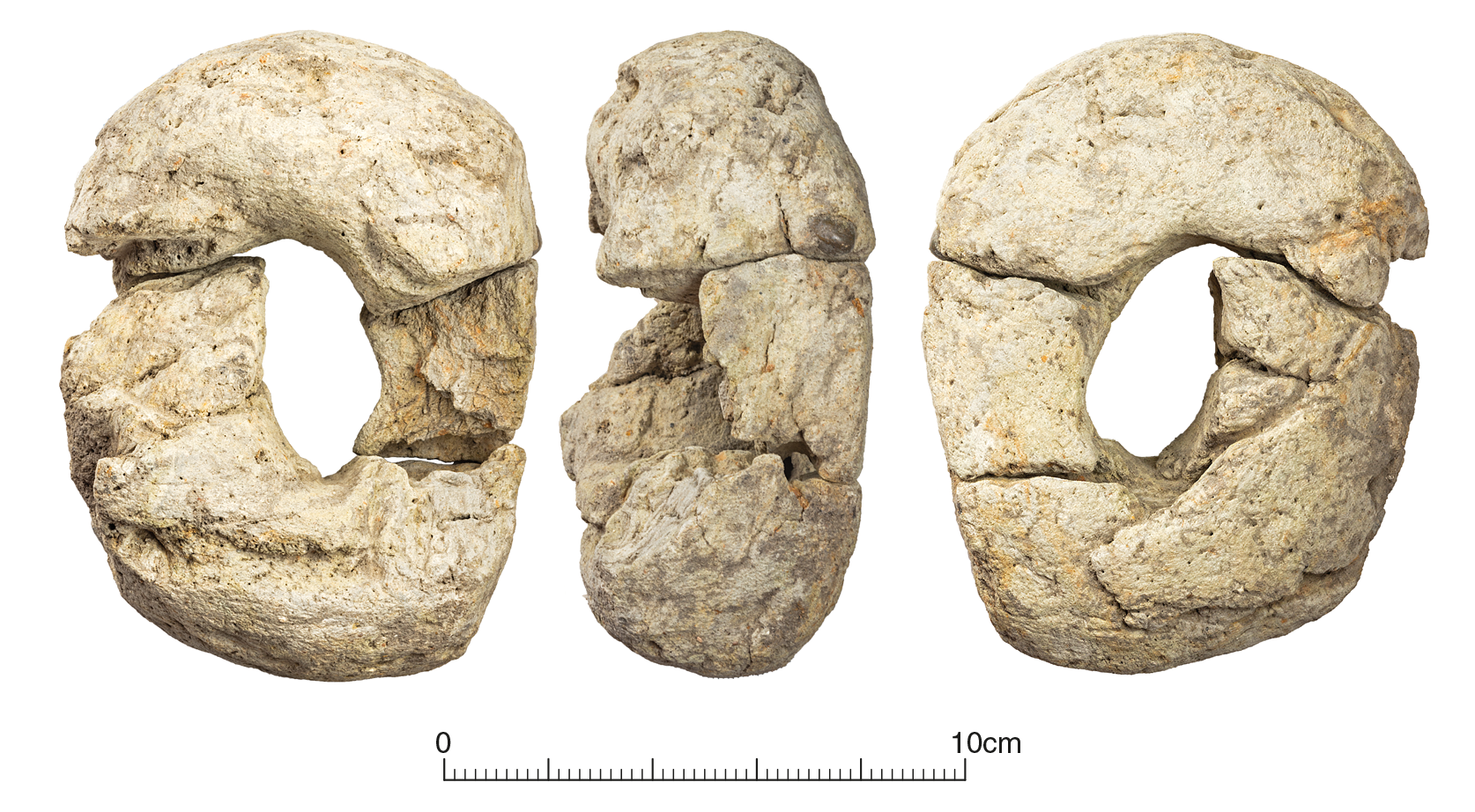
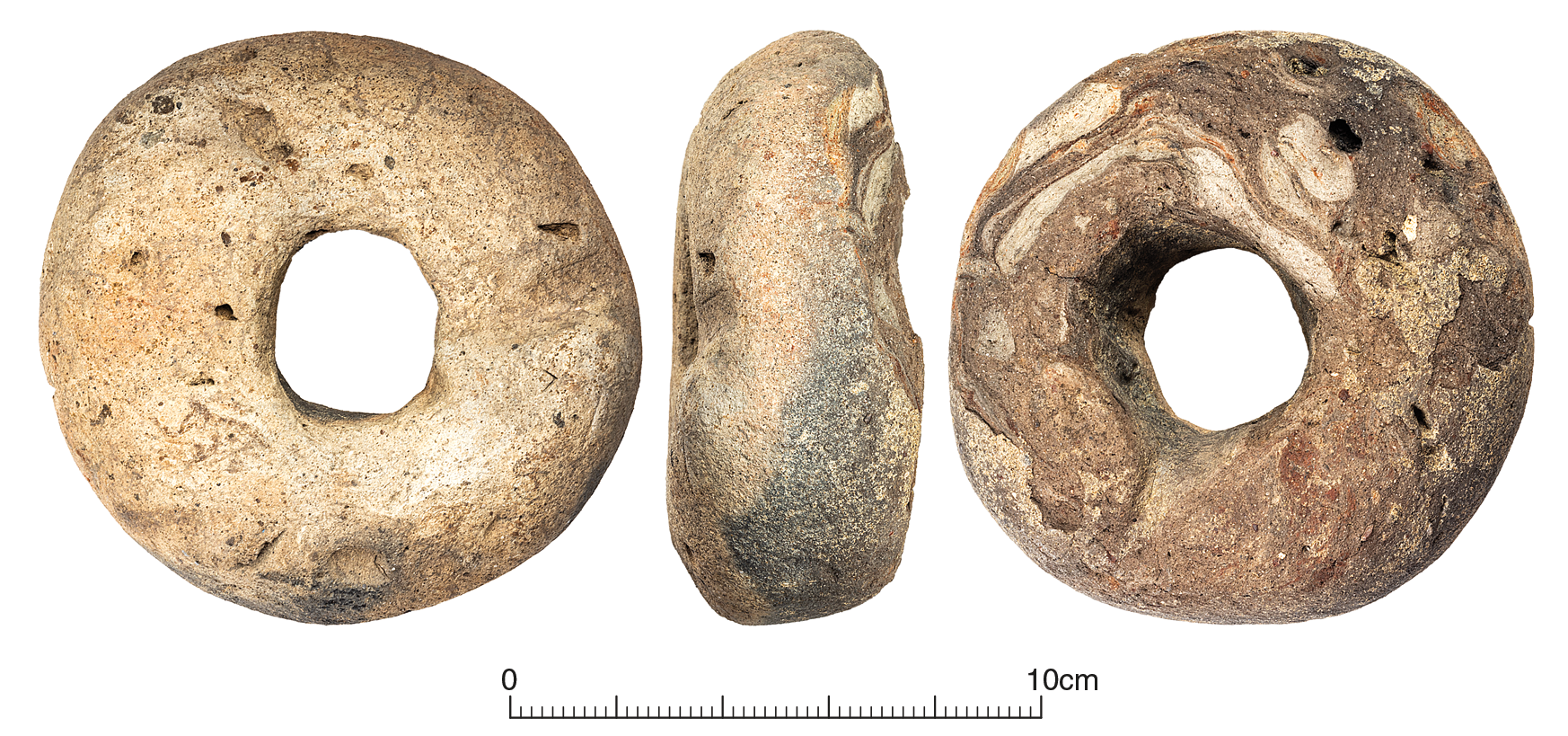
Although the technology of warp-weighted looms was probably a Neolithic invention, use of ceramic weights to hold threads taut is only evidenced from the Late Bronze Age onwards in British contexts, occurring until the 10th century AD. Iron Age examples tend to be triangular, while in early medieval contexts they are annular (ring-shaped), being broadly circular with a central hole of varying size. Informally, this design is sometimes known as the ‘doughnut’ type – for obvious reasons!
Loom weights at Thame
The loom weights found at Thame were manufactured from both fired and unfired clay, with at least 72 recovered in total. These came from just four out of the 13 SFBs, with 56 excavated from just one! That building was the largest of those present at Thame, being approximately 6m long. The presence of charred timbers within it suggests it had burned down after abandonment, with radiocarbon dates indicating the structure was in use from the very end of the 6th century up till the mid 7th century. Its size, along with a large, preserved section of wooden wattling from the walls, suggests it was a solid structure well able to withstand the howling gales and torrential rain of an average British summer.
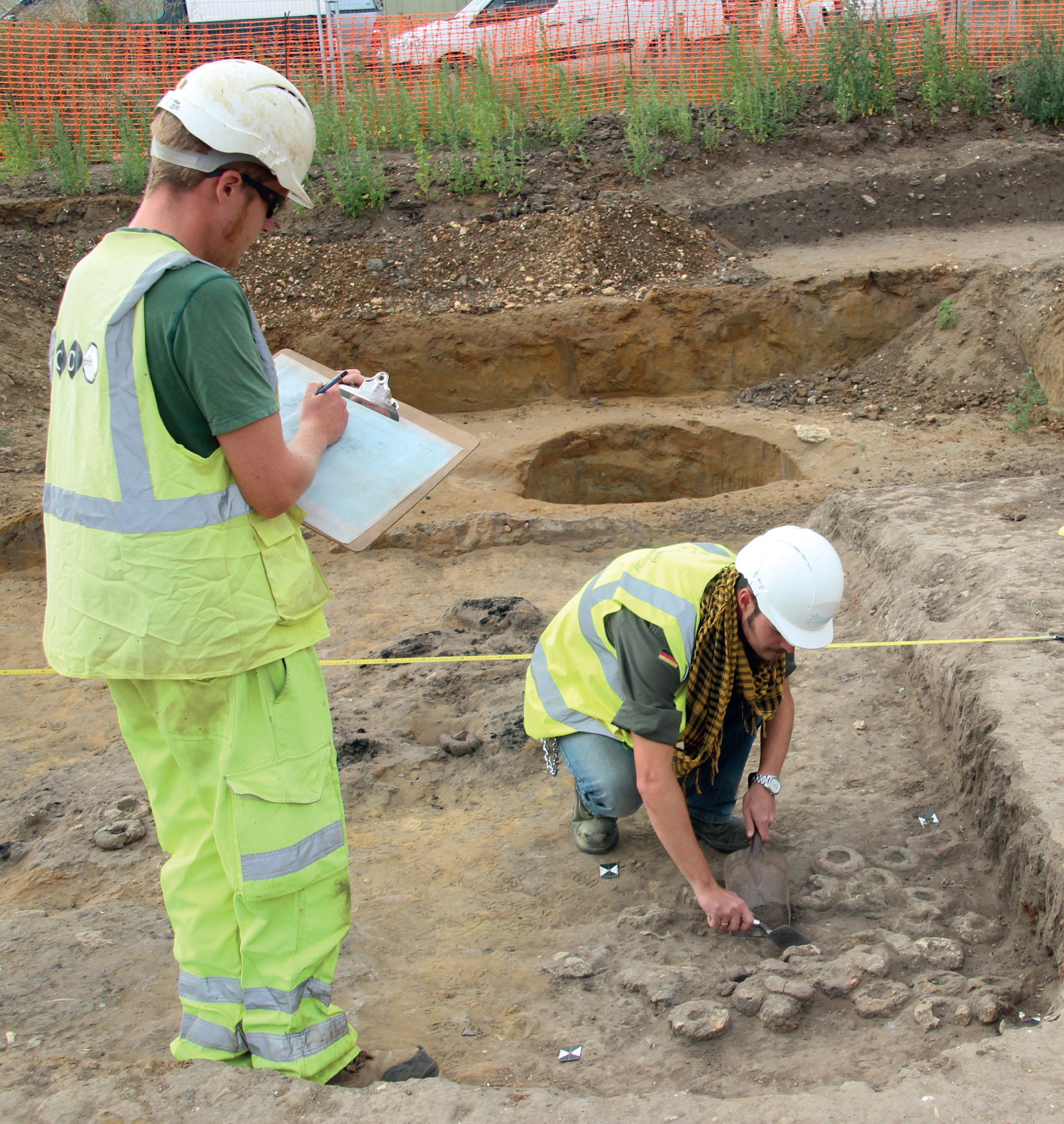
Image: the ‘cache’ of loom weights found in one of the SFBs
However, the building’s construction method is just one aspect of the early medieval archaeology at Thame – we’re also interested in knowing what it was used for. The large quantity of loom weights found within the SFB are a valuable clue in this regard. They were found in two distinct groups within the feature, both numbering 28 in total; one group was laid out in two rows of 14 weights each, while the second group had been buried or ‘cached’ together in one corner of the building. Such a layout is significant, the weights arranged in two rows most likely reflecting the location of a loom. However, the second ‘stashed’ group is also important, with the possibility that this represents a spare set for the loom. Many of the weights found also had telltale signs of scorching on their surfaces, a feature which suggests that they (and the loom) were burned with the building. It is therefore likely that this SFB was used specifically for textile manufacture.
While important, the rows of in situ loom weights at Thame are not unparalleled. For example, a substantial group of over 50 weights arranged in rows was found at Grimstone End, Pakenham (Suffolk) by archaeologist Basil Brown in the 1950s. These indicated the original presence of an extremely large loom, again set within the remains of an SFB.
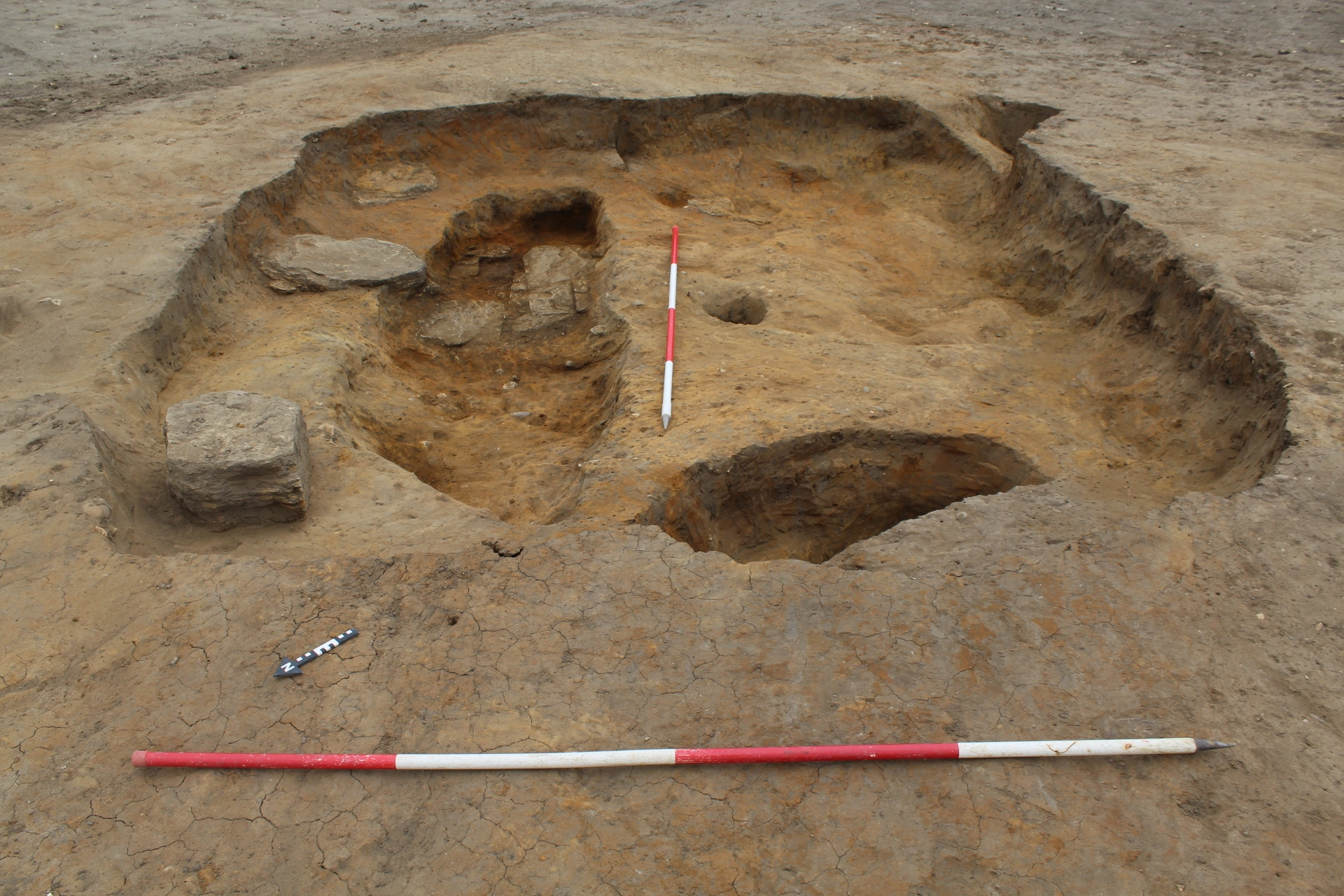
One of the other SFBs at Thame produced a total of 10 loom weights, which had an equally interesting distribution. Within the pit of the building, a rectangular ‘slot’ with a flat bottom had been dug, within which the weights were found.
Image: SFB after excavation, showing the distinctive ‘slot’ with loom weights in situ
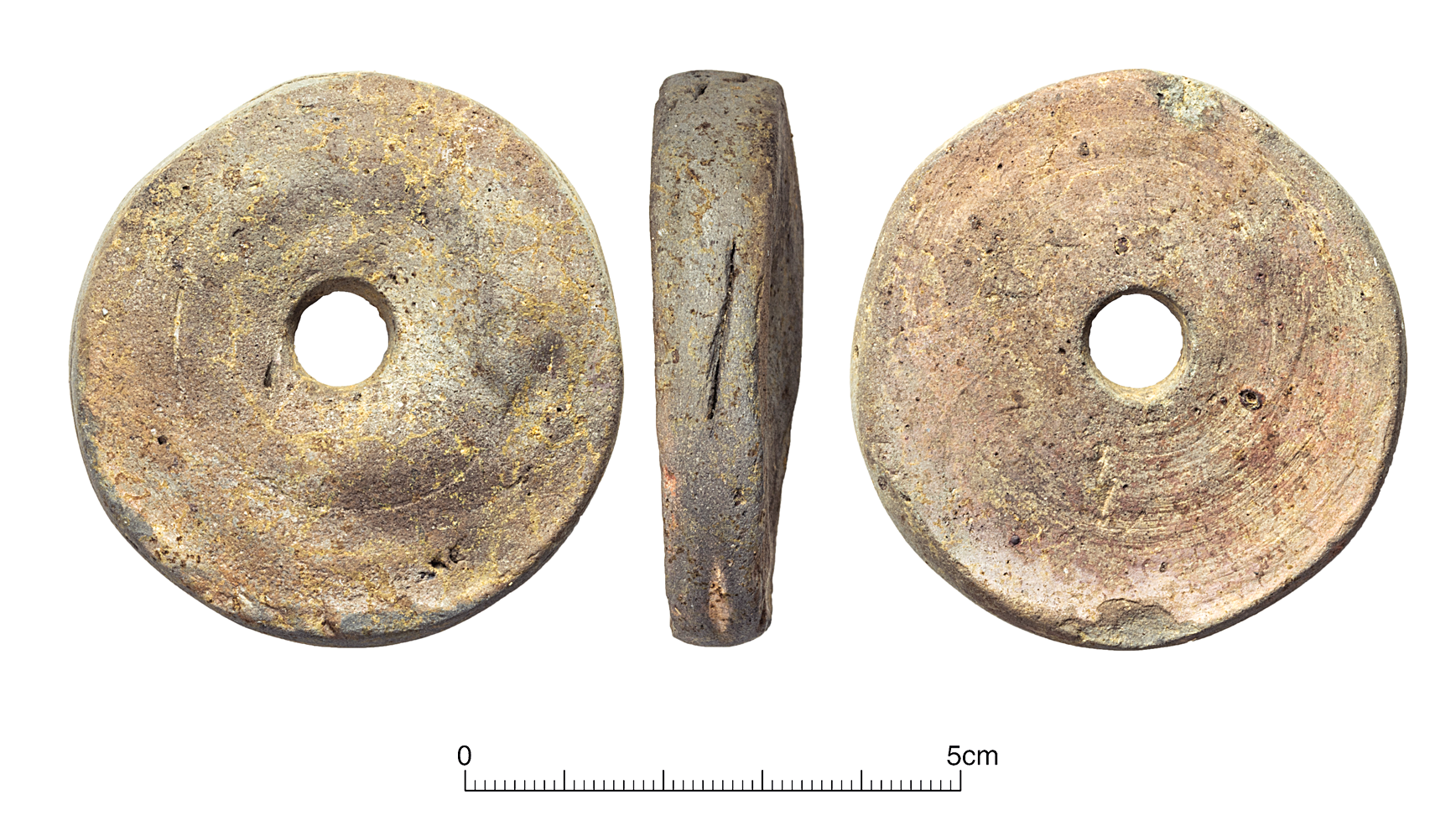
Other finds from the same SFB included a bone needle and a spindle-whorl (used for spinning textile thread). It seems that the rectangular slot had been created to house another warp-weighted loom, though this building did not burn down and as such it is unclear whether the loom was dismantled and moved (with the weights being left in situ) or simply was abandoned. The finds from this building again imply it was used for textile production, with several parts of the process perhaps evidenced: the spinning of wool into thread (i.e. the spindle wool), the weaving of cloth (i.e. the loom weights) and perhaps also sewing (i.e. the bone needle).
The evidence for textile production at Thame indicates both the importance of this craft activity to a small, rural community, as well as demonstrating a degree of organisation within the settlement. The fact that most of the loom weights derive from two specific buildings suggests that these were dedicated areas for textile working. By contrast, loom weights were not found in any of the other buildings – perhaps indicating they had other purposes.