
New book reveals centuries of life in Bristol
Date Written
26 September 2025
Author
Dan Stansbie (Principal Post-Excavation Manager) and Jon Hart (Senior Publications Officer)
Projects
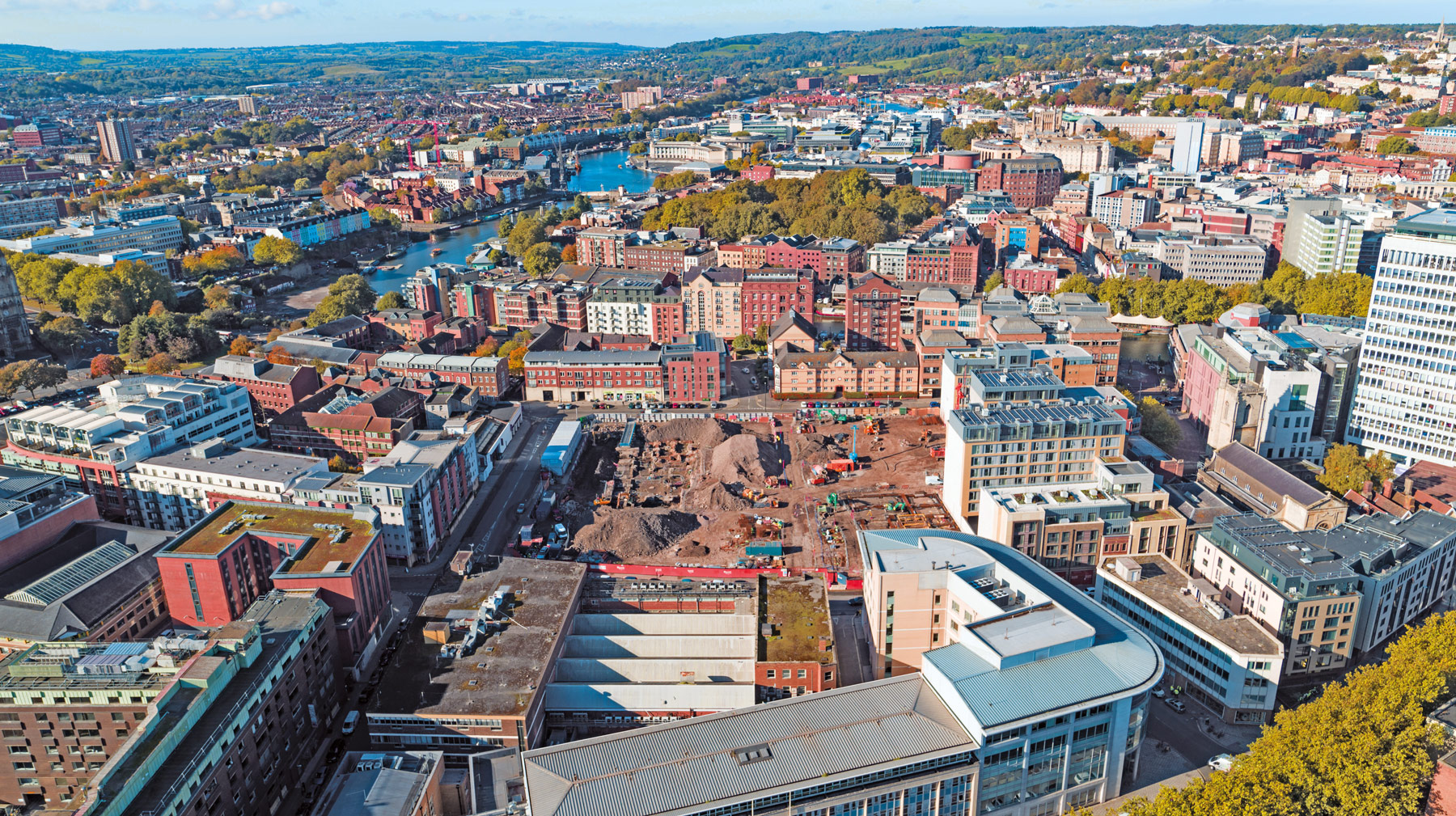
A fascinating new book detailing the story of Redcliffe through the centuries has just been published!
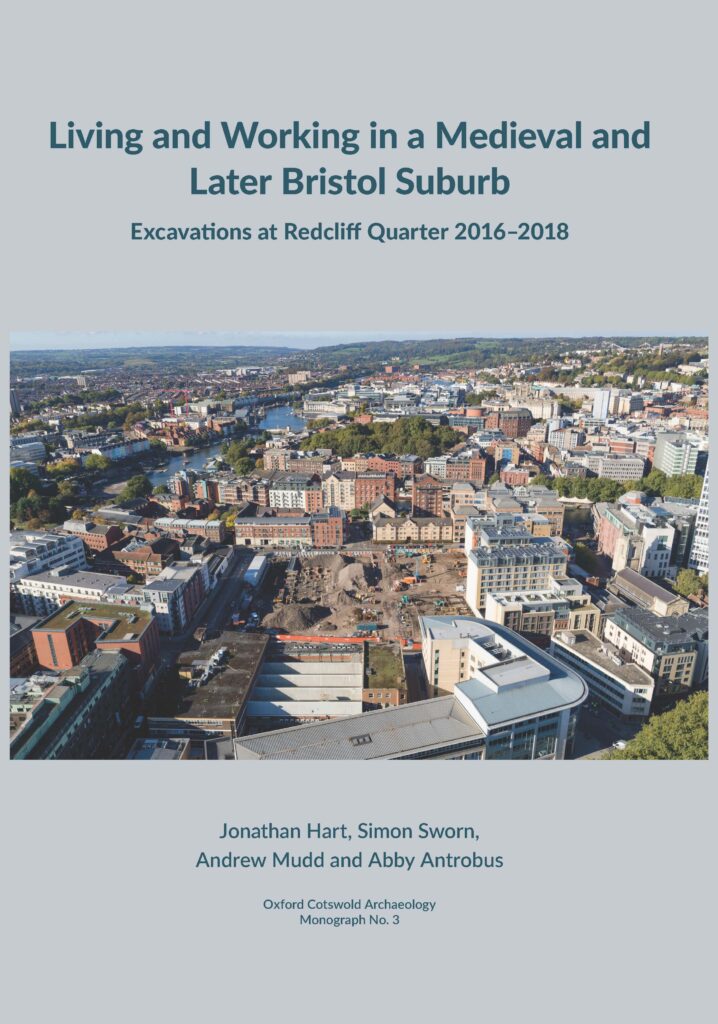
Back in 2016 and 2018 Oxford Cotswold Archaeology conducted excavations at the Redcliff Quarter in Bristol, on behalf of our clients Redcliff MCC LLP and Madison Cairn. The excavations uncovered important evidence for the changing character of life in Bristol, from the foundation of the suburb in the 12th century to the modern redevelopment.
On the bank of the Avon
Redcliffe lies just 200m south of Bristol Bridge, the only dry crossing of the Avon in medieval times and within the old parishes of Redcliffe and St Thomas. Excavations revealed the rear sections of tenements and yards that had fronted Redcliff Street and St Thomas Street, along with the long-lived boundary and drainage feature known as the Law Ditch

The Avon allowed seagoing ships access to the town, which during the medieval period grew to become the most significant English port outside London, with access to Continental and eventually Atlantic trade. The Redcliffe development was laid out systematically with tenement buildings fronting the streets, used as dwellings and commercial properties, and with long backyards extending back to the Law Ditch, where tanners and dyers undertook their trades.
A place of contrasts
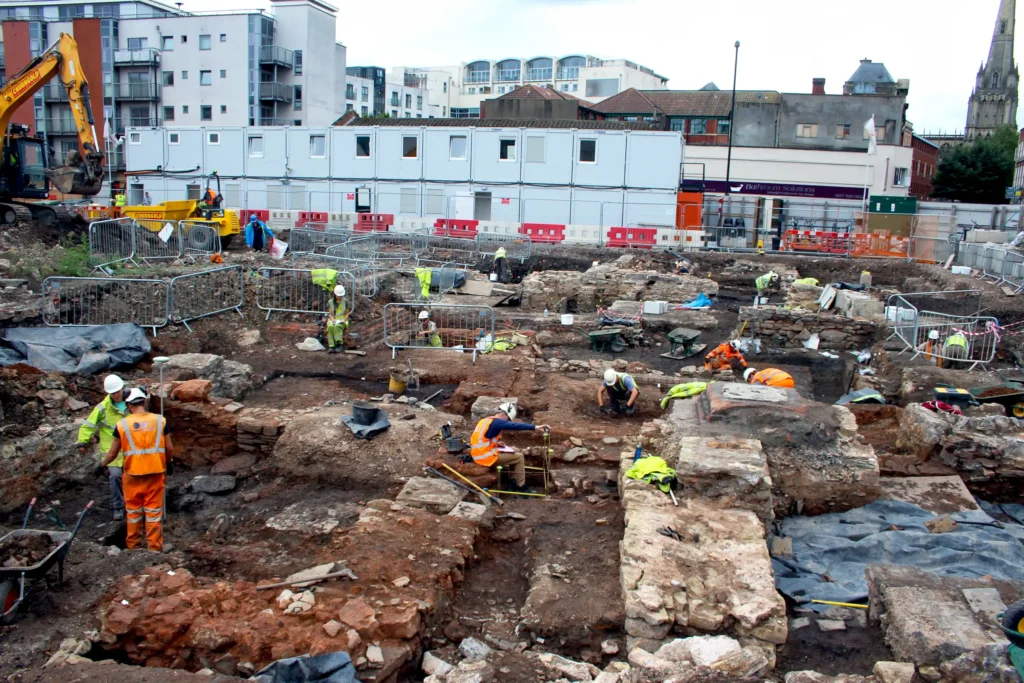
What emerged during the excavation was a picture of contrast. Along Redcliff Street, wealthy merchants occupied grand, ostentatious houses, even as trades such as tanning and dyeing took place in the backyards behind them. Closer to Bristol Bridge, an inn stood on the site from at least the post-medieval period, complete with what may have been an oven for brewing or distilling. Altogether, the evidence paints Redcliff Street as a bustling hub where prosperous traders involved in local, regional and international commerce lived with artisans and labourers.
Image: excavations at Redcliff Quarter
Across the Law Ditch, St Thomas Street told a different tale. Development here was slower and more fragmented, with craft and industry present but on a smaller scale. The economic crises of the 14th century appear to have struck this side more severely, leaving several tenements abandoned, repurposed for horticulture, or allowed to decay. Only in the later medieval and early post-medieval periods did St Thomas Street experience a revival, marking a quieter, less intensive pattern of growth than its more affluent neighbour.
What’s on the menu?
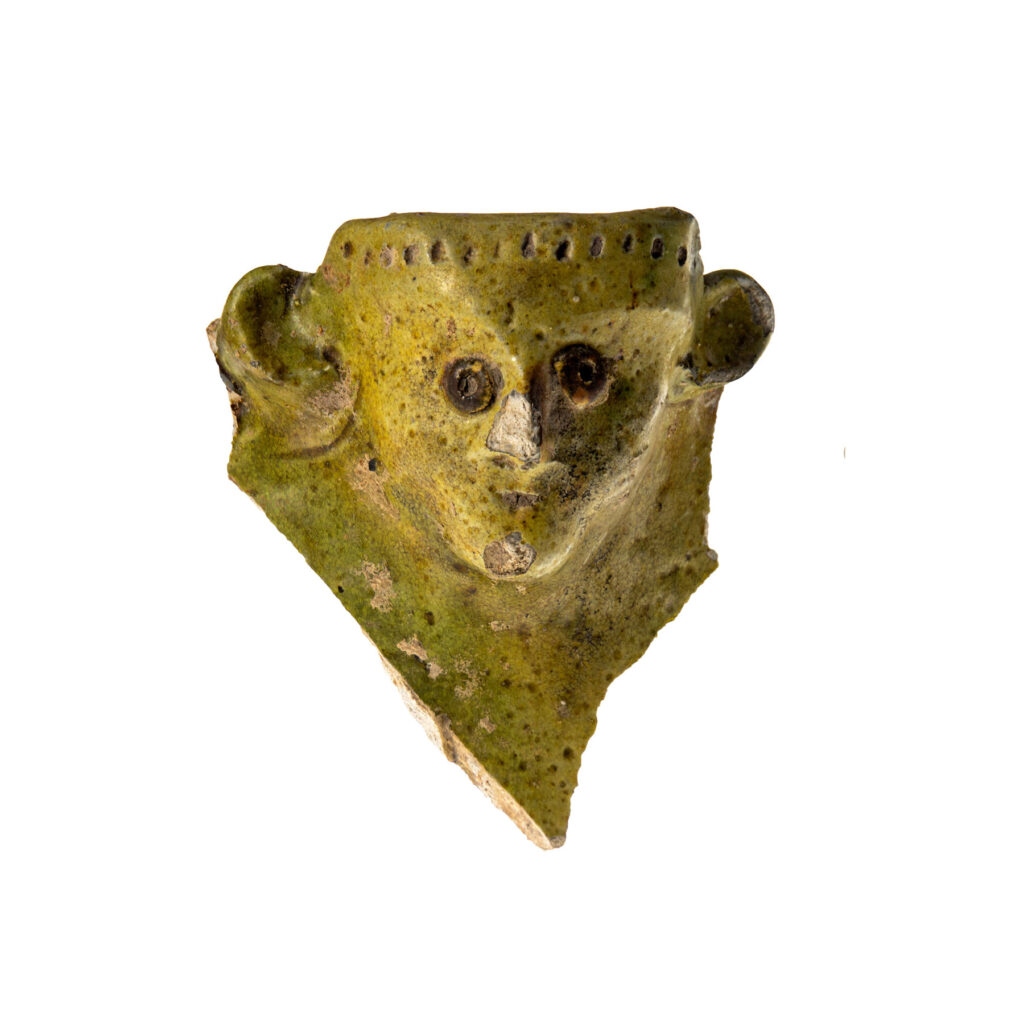
Evidence for dining habits suggests that meat supplied by butchers was eaten in roasted form by those with means, and in stews and pottages more generally. Fish were plentiful and varied, and there were fruits, nuts and vegetables, some imported, others gathered, and some no doubt grown in backyard gardens. A selection of the pottery was analysed for food residues, provided interesting results. Some French wine jugs had been reused to serve food, perhaps sauces to accompany the meat dishes in more affluent households.
Image: face jug fragment
Workshops to factories
From the Georgian period onwards, the character of Redcliffe changed dramatically. Residential houses and private commercial premises gave way to industry — first within converted buildings, and later in purpose-built factories, especially along Redcliff Street. On St Thomas Street, terraced houses of several storyes dominated, many of them likely divided between multiple tenants. This mixed pattern of industry and housing persisted well into the 20th century, until the latest wave of redevelopment offered archaeologists their chance to uncover the area’s long-hidden past.

A toast to the project
Today, some of the team are gathering in Redcliffe to celebrate the journey from excavation to publication. Cheers!