
Bristling with Tradition: Leather working at Redcliffe Quarter
Date Written
13 May 2024
Author
Abby Antrobus (Senior Publications Officer)
Projects
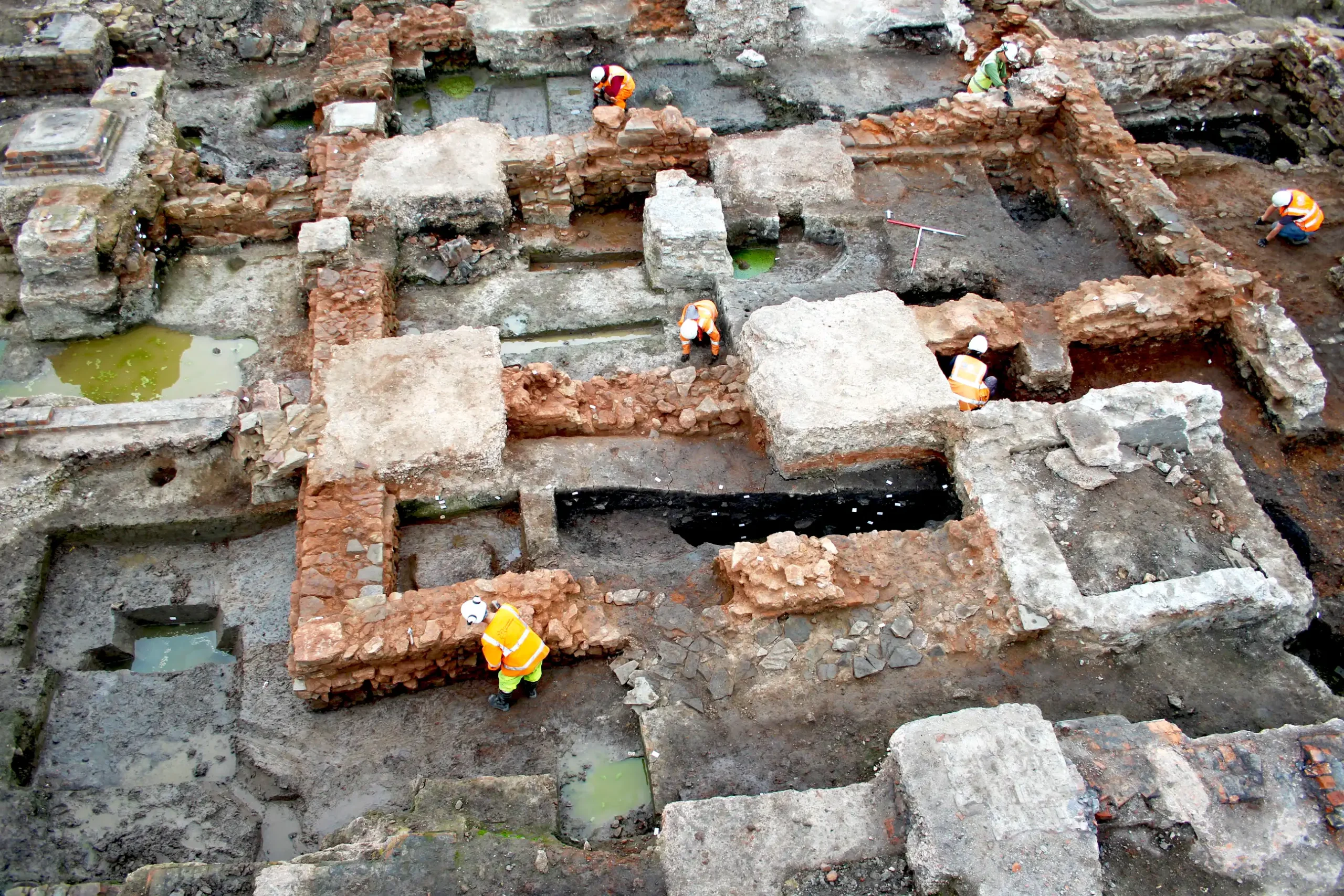
In 2016-2018, OCA excavated between Bristol’s Redcliffe and St Thomas Streets, ahead of the Redcliffe Quarter development. We discovered remains relating to the lives of those who lived and worked in Redcliffe during the eight centuries between the early 12th and the 20th centuries.
Our forthcoming publication pulls together the evidence and interpretations from our specialists. Here, we explore just one theme —the insights we gained into one of the noxious trades that was undertaken in the earliest days of the suburb.

Redcliffe suburb was laid out on the south side of the River Avon in the 1120s on low lying, wet land. It was a planned part of the town, and regular plots were laid out running back from the street fronts. Many of these plots survived into the 20th century. The properties on St Thomas Street and Redcliffe St were separated by a Law Ditch, which ran parallel to the streets, and many of the early property boundaries were ditches which ran into this.
Image: map of medieval Redcliffe
The sequence of archaeological remains on the site was complex, and many of the earlier remains had been impacted by later developments. However, within the plots there were hints of wooden buildings from the earliest dates of settlement, and ditches and pits which contained excellent organic remains due the level of waterlogging.
While studying the animal bones, Matilda Holmes, the animal bone specialist, uncovered compelling evidence indicating the processing of animal skins during the 12th and 13th centuries. This evidence was particularly prominent in certain plots within Areas B and E, sourced from pits, ditches, and soil layers.
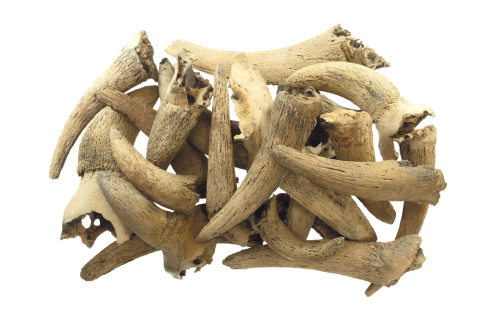
While there was limited evidence of skinning observed directly on the bones, a significant quantity of cattle, sheep, and goat horn cores, totalling 177 animals, was discovered, along with metapodials (foot bones) from 71 animals. These components would typically have remained attached to the animal skins to facilitate handling. Their presence in the waste suggests they were discarded during the initial stages of skin processing.
Image: cattle, sheep, and goat horn cores
Further valuable insights were gleaned from the insect remains. Enid Allison, a specialist in environmental archaeology, identified the parasites found at the site. In the earliest phases of the site, there were remains of sheep keds and the lice of sheep, horses, donkeys and cows. Some of these may have come from animals on the site, but there were also remains of species that feed on dry animal matter, such as the beetles Trox Scaber and Omosita Colon.

Within the excavations, we did not find classic tanning pits containing remnants of bark typically used in the tanning process. However, we did uncover pits on-site that might have served as soaking pits. The ditches were also lined with stakes and boards, suggesting they could have been utilised as water sources for washing and rinsing.
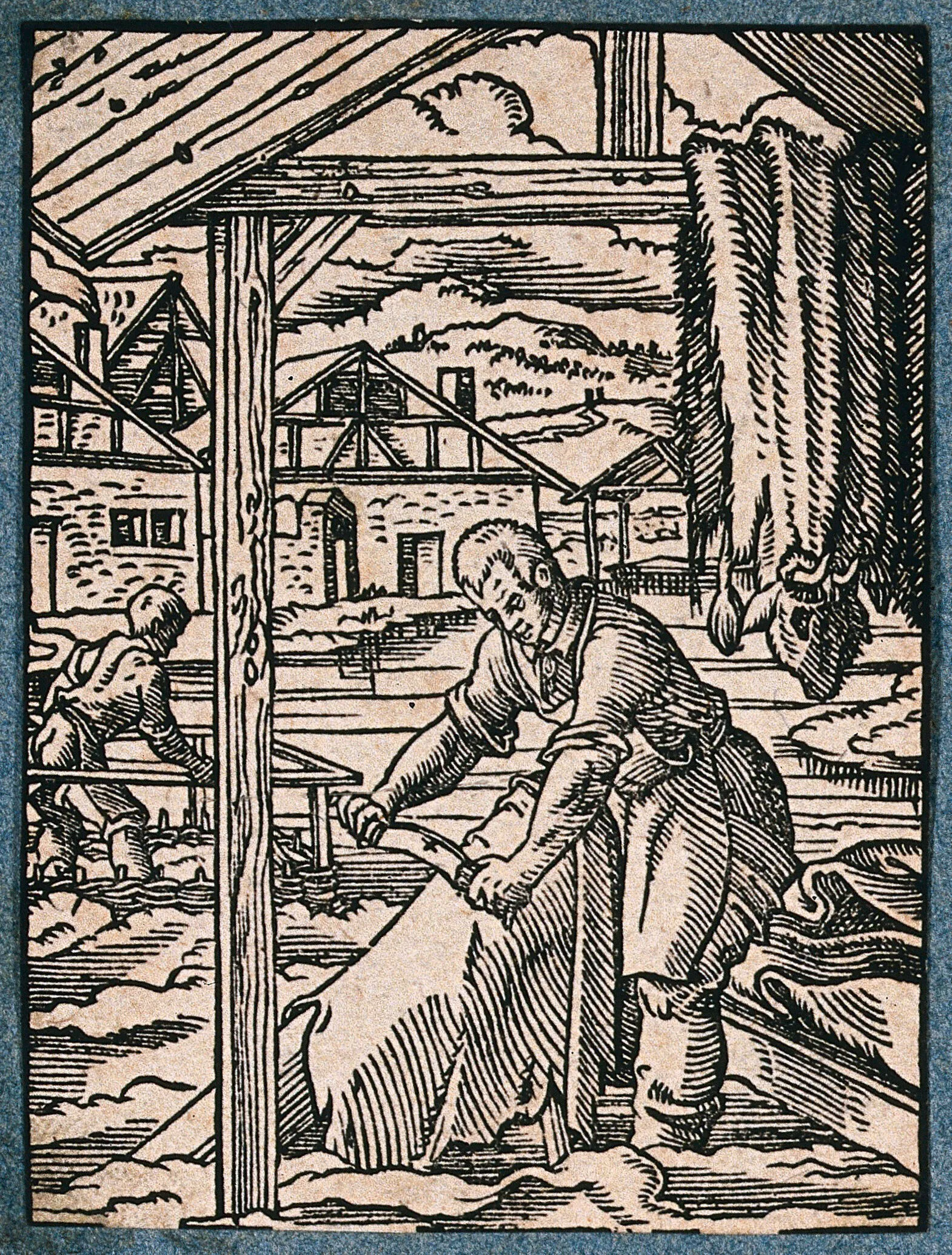
Therefore, we may have unearthed evidence pertaining to the initial stages of working with animal skins. During these stages, horns and feet would have been removed, and skins washed and soaked in preparation for tanning treatment or tawing, a process involving treatment with oil and alum.
Image: 16th century woodcut image of a tanner scrapping a hide
The work would have been smelly and messy, and the new Redcliffe suburb may have been an ideal location for it, away from the town but close to the river and also to animals coming into the town.
Excitingly, though, our project has revealed that the ditches were probably tidal, and some of the waste may well have been flushed away by the tide. Tom Hill’s analysis of diatoms, a type of algae, revealed that in earlier periods, the species present indicated regular inundation of the Law Ditch with tidal water from the Avon. The flushing may have been an accidental effect of the colonisation of the marshland, but may also have been a more sophisticated piece of urban planning, intended by Robert fitz Harding of the manor of Bedminster and the Knights Templars, on whose land the suburbs were laid out. It would be interesting to know if there are any other suburbs with flushed ditch systems.
The site also fits in with other excavations across the suburb where we have seen evidence for tanning, including at 1-2 Redcliffe Street and Dundas Wharf. No parts of animals would have been wasted and the overall impression is of organised trade between Bristol’s butchers, tanners, and horn workers
This was not the sole industry in Redcliffe. Excavations elsewhere have revealed additional trades, such as dyeing at Finzel’s Reach, along with cloth working, leather working, and cobbling. Throughout the centuries Redcliffe Street would have been a bustling environment, characterised by a mix of domestic and industrial properties.