
What’s in a pot? Lipid analysis reveals surprising pottery uses at Redcliffe Quarter
Date Written
23 October 2024
Author
Alejandra Gutiérrez (Senior Finds Officer)
Projects
The excavations at Redcliffe Quarter produced a large amount of medieval and later pottery, totaling more than 20,400 sherds (406kg)! Among the medieval pottery, jars and jugs were by far the most frequent vessel recovered. Jars are thought to have been used for cooking and storing food such as flour, whereas jugs are believed to have been used for serving ale or wine.
While studying the pottery some intriguing clues were observed which questioned some of these assumptions, so a selection of the vessel sherds were sent to Julie Dunne at Bristol University to conduct organic residue analysis that would help define what the pottery had been used for.
Lipids (fats, waxes and resins) survive well and are frequently recovered from archaeological contexts. They might survive preserved in situ (for example, as a mixed remedy to treat wounds, still in its container), as surface residues (burnt during cooking) or, more commonly, as absorbed residues in the vessel wall (usually not visible to the naked eye). Modern analytical techniques can identify this sort of residue, even when it is present only in very small amounts, and the results can give us evidence for the processing of animals and fish, as well as plant oils and waxes
A total of 41 vessels from the Bristol excavations were analysed. The lipid preservation was very good, which likely means that the pottery was used for long periods to cook items that contained animal fats. Two of the local Ham Green jars also showed that the animal products (most likely stews) were cooked at temperatures exceeding 300°C, which could explain the surviving burnt residues on the inside of the pot!
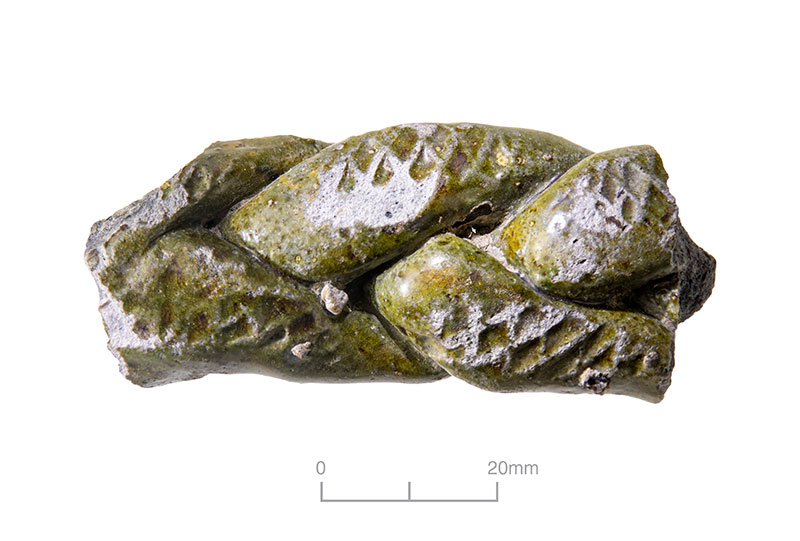
Image: Ham Green plaited handle from Redcliffe Quarter
Three vessels also returned indicators of plant processing (leaves or stems), and although the analysis was not able to identify the type of vegetable used, it was likely leafy plants, similar to cabbages or leeks. This evidence is interesting because during the medieval period meat and vegetables were cooked together in a stew-like way and the animal fats often ‘swamp’ the plant signal.
Most of the pots were found to have been used for cooking meat from cattle, sheep or goat, but at least one pot made in Minety (Wiltshire) was found to have been specialised in the processing of dairy products. A further five were utilised for cooking a mix of animal products, but predominantly pig. This included a ‘dripping pan’, a pottery tray that was placed under large roasting meats to collect fat, which in this case was pig fat.
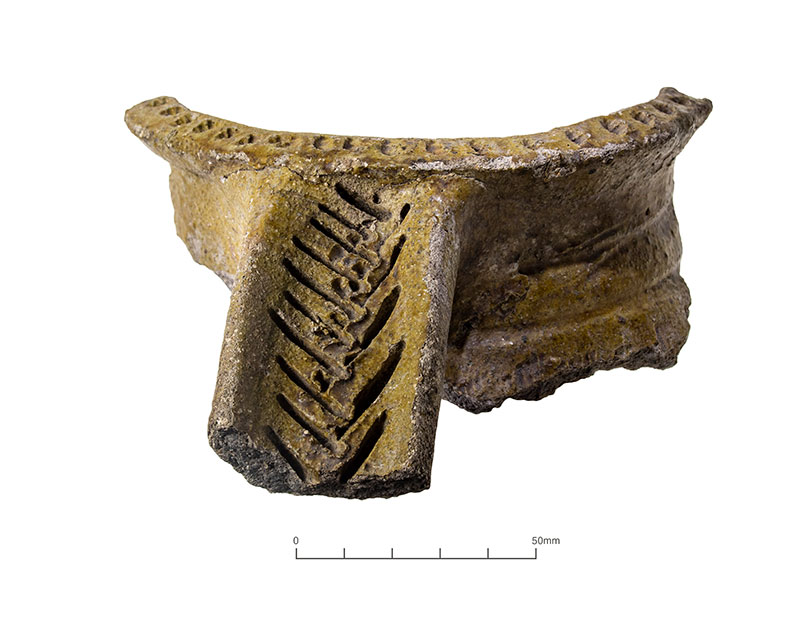
Image: Minety ware rim and handle from Redcliffe Quarter
Most surprising are the results from a French jug found with a burnt base. Although it is always assumed that these jugs were used to serve wine or ale at the table, in this case the jug had contained mixtures of animal and plant products. This suggests the serving of a liquid, possibly a broth or gruel. The relatively high lipid concentration suggests that the vessel saw significant use.
Interestingly, aquatic biomarkers were not found, indicating that the vessels were not used for processing fish, though it is likely fish would have been processed or consumed in other forms, i.e. salting, smoking etc.
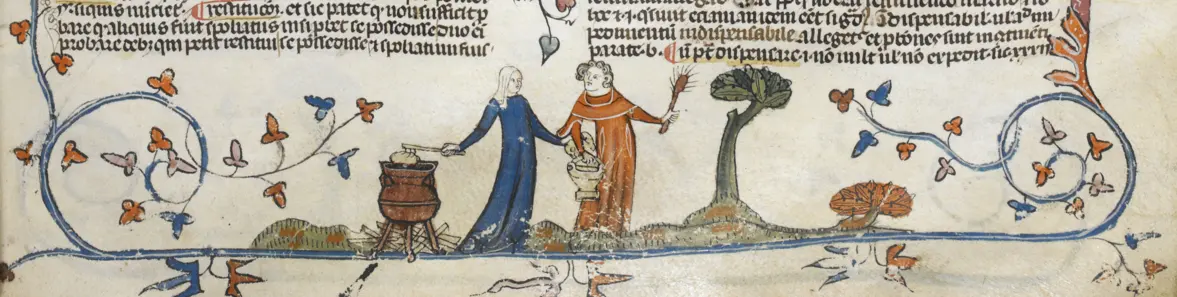
Cover image: a bas-de-page scene of a man and a woman with a cooking pot and a bucket. Source: Royal 10 E. IV, f.108