
Corn dryers, kilns and craftsmanship: uncovering Roman industry on the Suffolk coast

Oxford Cotswold Archaeology (OCA) archaeologists have been busy excavating and recording the Suffolk coastline as part of the works for the Sizewell C nuclear power station. As construction progresses across the project, the OCA Team are building up the history of the landscape using evidence uncovered from site. While much of the surrounding area has revealed prehistoric and Anglo-Saxon activity, a curiously concentrated pocket of Roman industry has emerged along the route of the new Sizewell Link Road, which will bypass the villages of Middleton and Theberton. The archaeology stands apart as a focused industrial zone, a place where people worked, produced, and traded, mirroring the modern-day landscape surrounding Sizewell.
The community living here during the Roman period made practical use of the gentle slopes to the south of the modern village of Middleton. Across this compact area, our archaeologists have uncovered corn dryers, kilns, metalworking surfaces, and possible settling tanks. Together, these features form a picture of a lively and evolving industrial landscape that remained important for several generations.
An unusual corn dryer
One of the most striking discoveries is a large, unusually designed corn dryer. Unlike the more common T‑shaped examples, this structure features a maze‑like layout with a central chamber and a looping flue that curves around before re‑entering the building. Several branching corridors would have been to ensure the heat was distributed evenly. These structures were essential for preparing grain for winter storage; maintaining the correct moisture levels was crucial to ensure that the grain did not rot. Corn dryers were also used as malting ovens, in which partially germinated grain was heated to produce malt, used as an animal feed and to make beer.
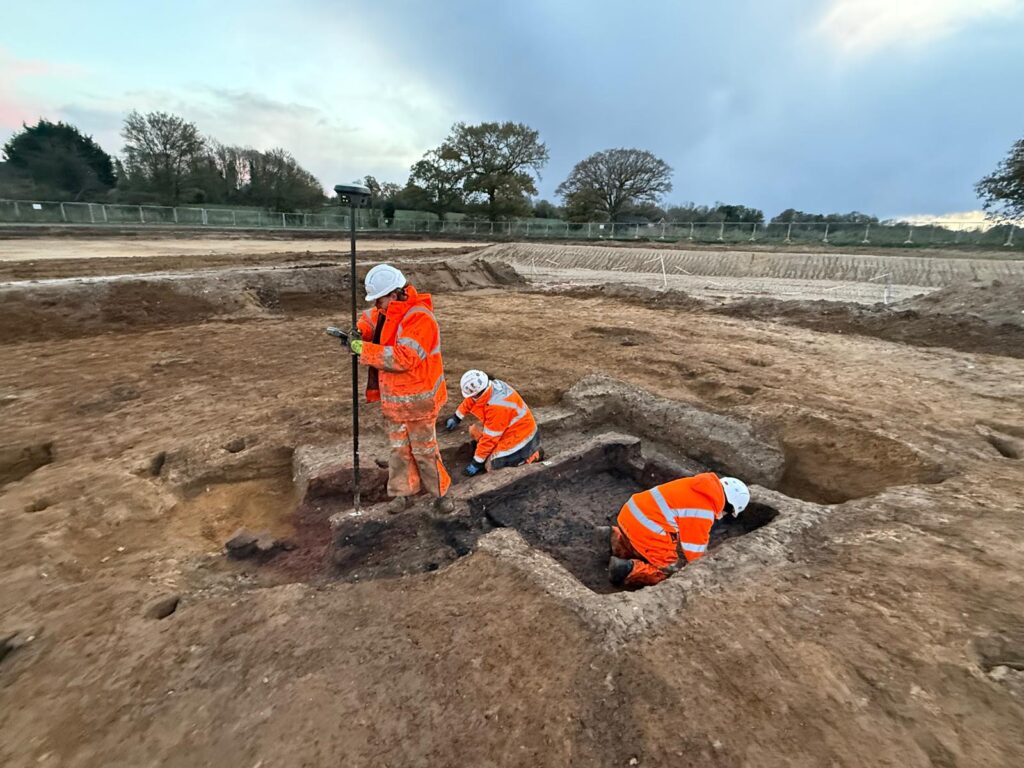
Inside the structure a wonderful mix of finds were recovered; these included Roman tiles, nails, lava stones, tiny snail shells, a complete sheep or goat skull and several large storage vessels, some of which were decorated. Our archaeology field team have taken various soil samples from the structure which will be analysed by our environmental specialists to help us identify exactly what grains were being processed here and for what purpose.
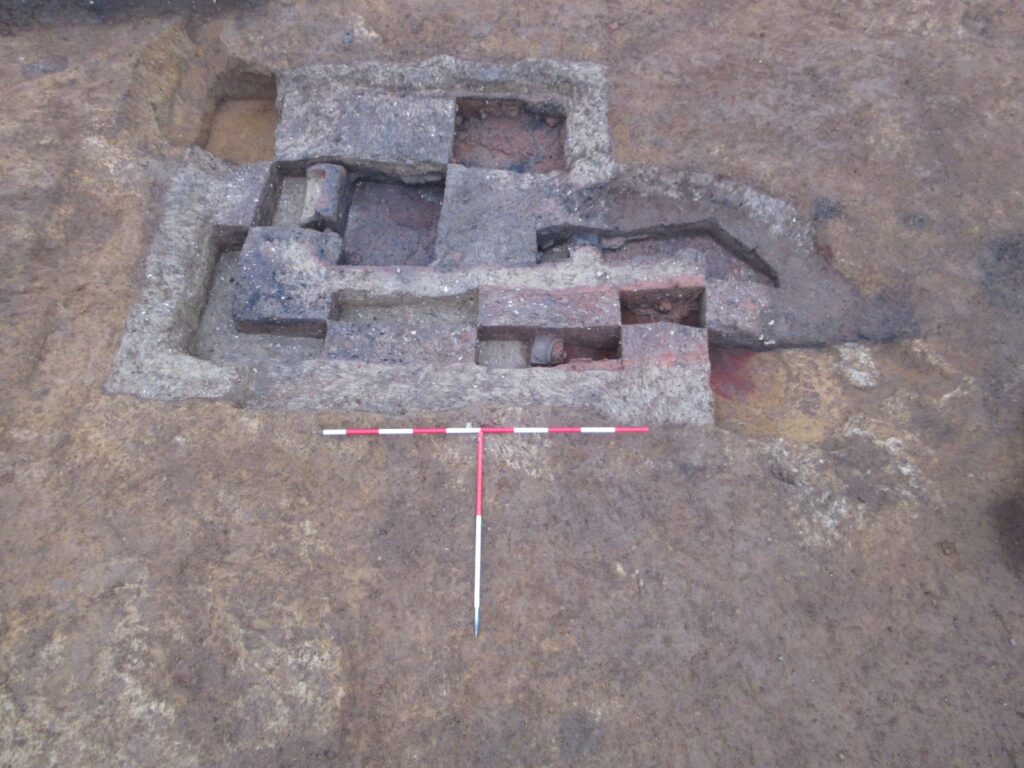
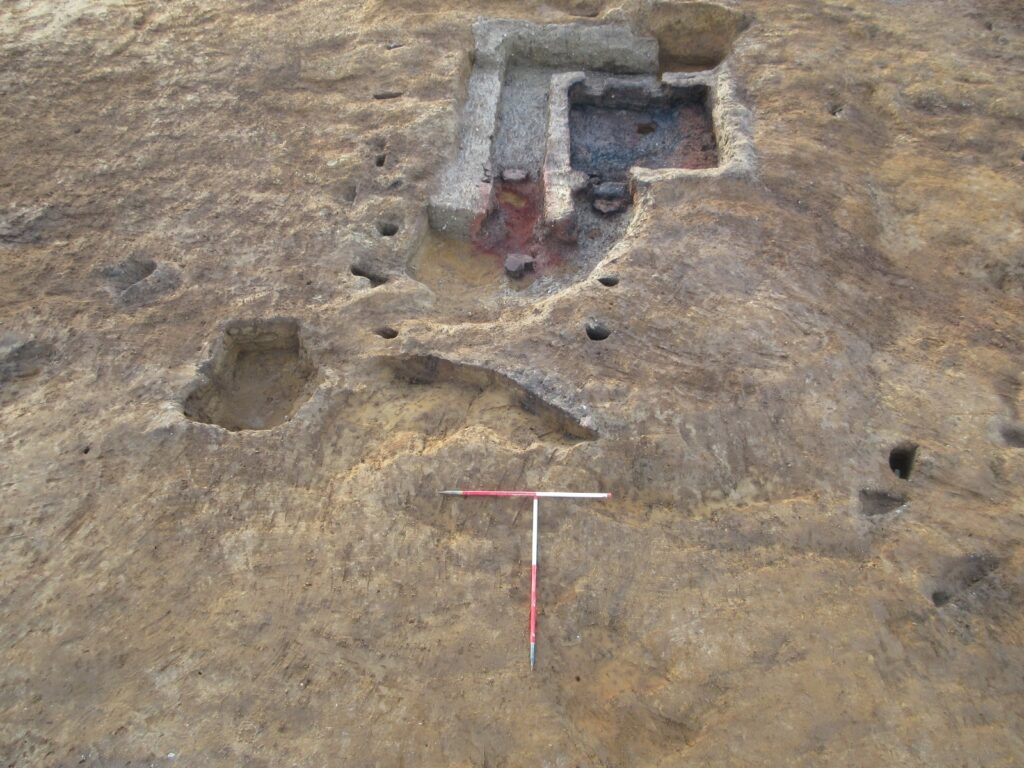
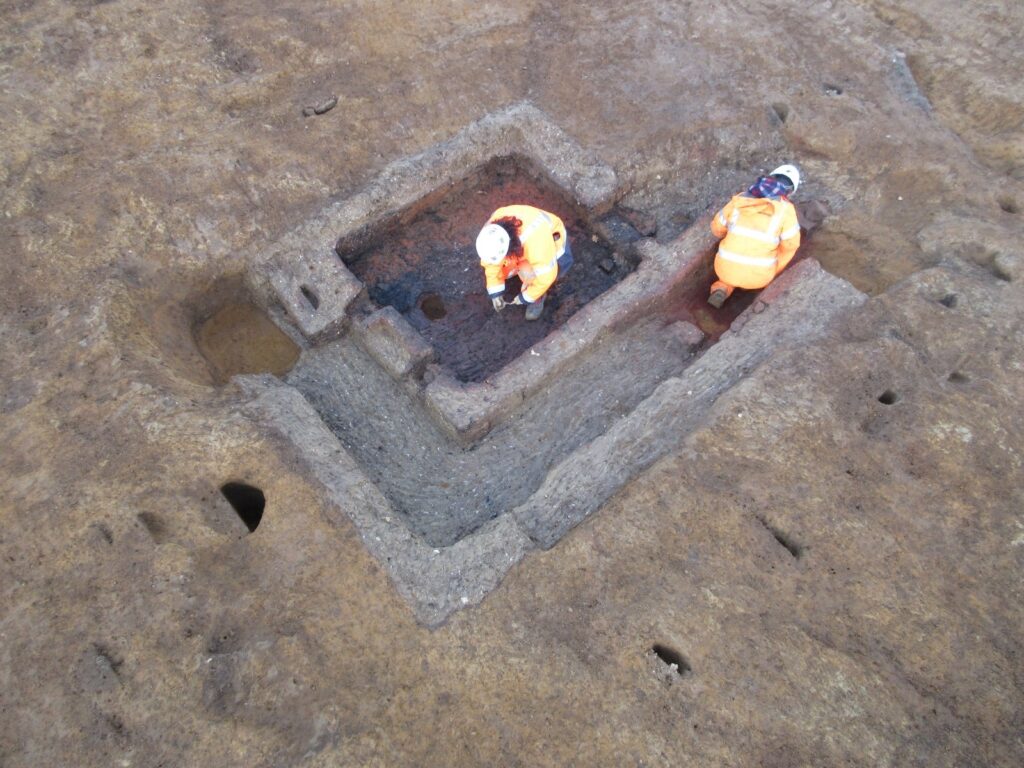
Images: the corn dryer at different stages of the excavation process
An earlier phase of construction was also identified, including two different floor surfaces and a ring of postholes suggesting the dryer once stood within a supported structure. Eventually it fell out of use, was levelled, and later built over but the wider area continued to be important to the people working here.
Pottery production
Nearby, a beautifully preserved horizontal‑draught pottery kiln adds further weight to the interpretation of this area as a thriving industrial centre. One of its two flues survived fully intact and the inner wall linings were exceptionally well preserved. Although no complete pots remained in situ, high‑quality pottery sherds were recovered and are now undergoing specialist analysis with our post-excavation team.
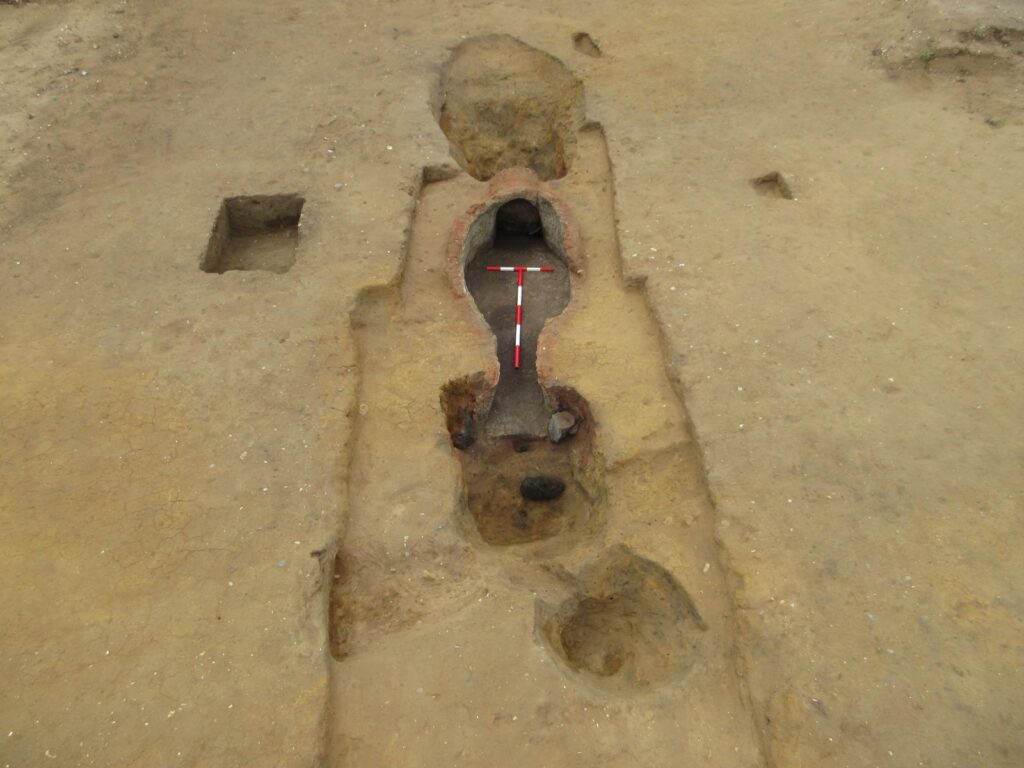
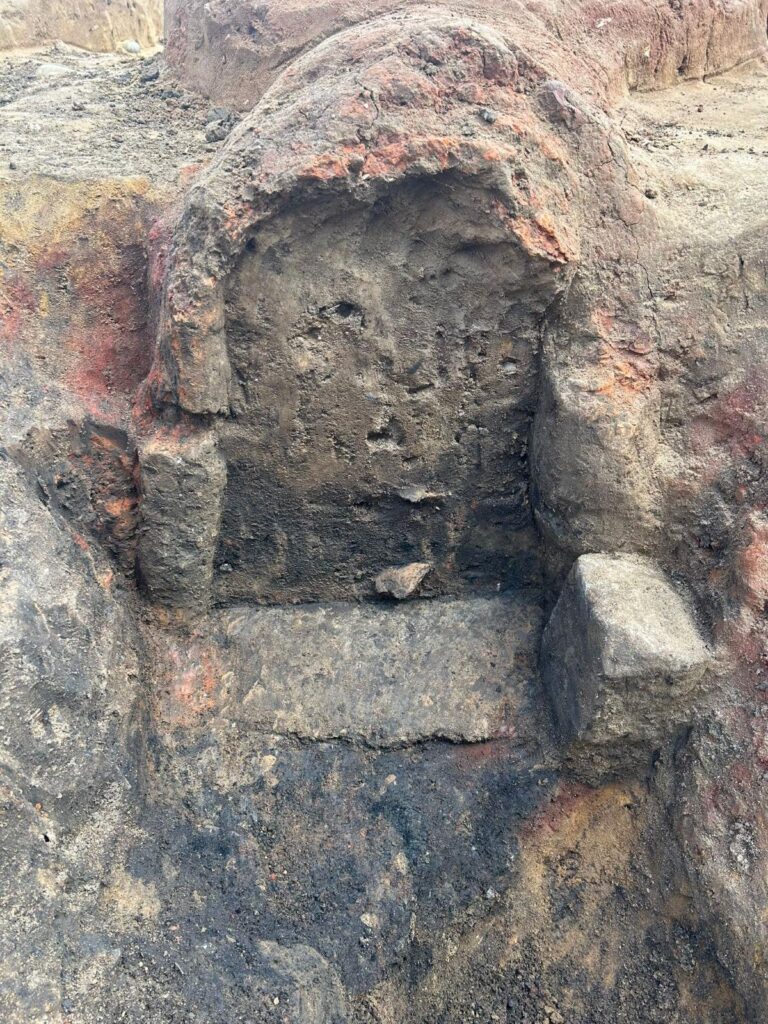
| Image: pottery kiln | Image: inner flue with pottery preserved |
A Roman coin found beneath the kiln floor issued during the reign of Emperor Gallienus (AD 253–268) provides a valuable dating anchor. Broken pots and other kiln waste had been dumped back inside after the kiln was abandoned, offering further clues to the types of vessels produced here. Some of these sherds closely resemble the decorated vessels found in the corn dryer, raising the tantalising possibility that the two areas were directly connected.
Metalworking
A beam‑slot building measuring at least nine by five metres adds another dimension to the industrial picture. On its eastern side lay a metalworking surface, indicating that the building may have been a smithy where all sorts of iron objects were made and repaired. Our archaeologists found hammerscale and slag, some of which had even been used as packing within the postholes. The smithy, using imported iron bars and scrap metal, would have served the surrounding communities and its products may also have been traded more widely. The building also shows evidence of at least one earlier phase dating to the early to mid‑Roman period, demonstrating that this area remained important over several generations.
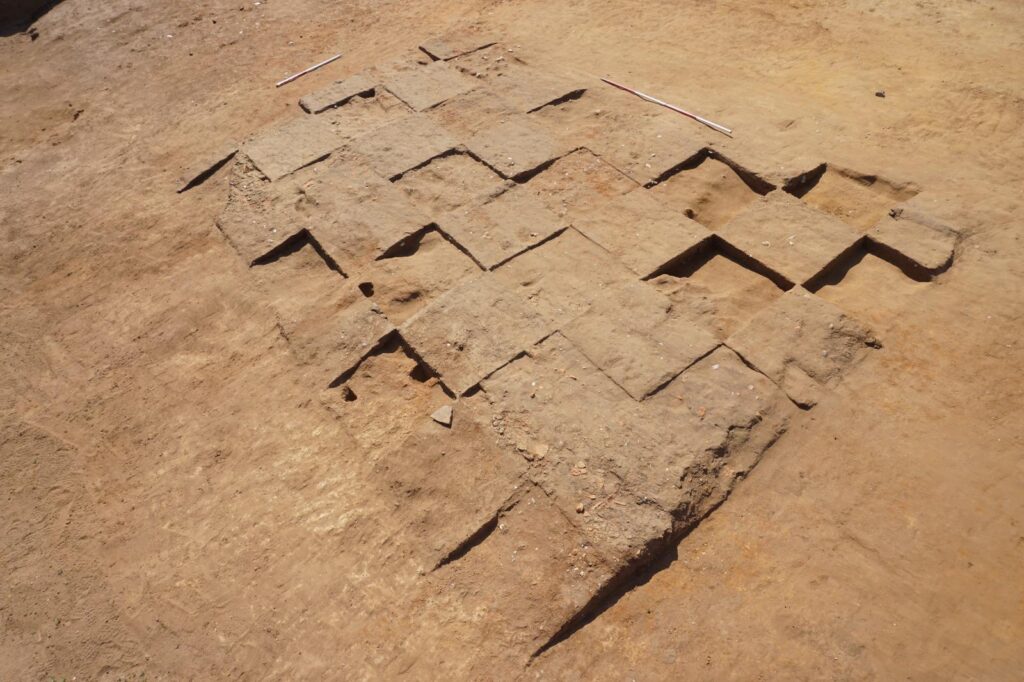
Image: metalworking surface excavated in quads
Connections and movement
The presence of samian ware from Gaul (France), amphorae from other parts of the Roman world, and a metalworking area that relied on imported metal, all point to connections beyond the immediate landscape and the existence of nearby trade routes. A short distance away, a trackway was identified running roughly northeast to southwest between the pottery kiln and a medieval boundary ditch. Although finds from the trackway range in date from the Bronze Age to the medieval period, and include scrapers and brooches, the mixed dates suggest that most of these objects were intrusive. The alignment matches that of the medieval features nearby, making a medieval date for the trackway most likely. Even so, its presence shows how this landscape continued to be used and reshaped long after the Roman industrial activity had ended.
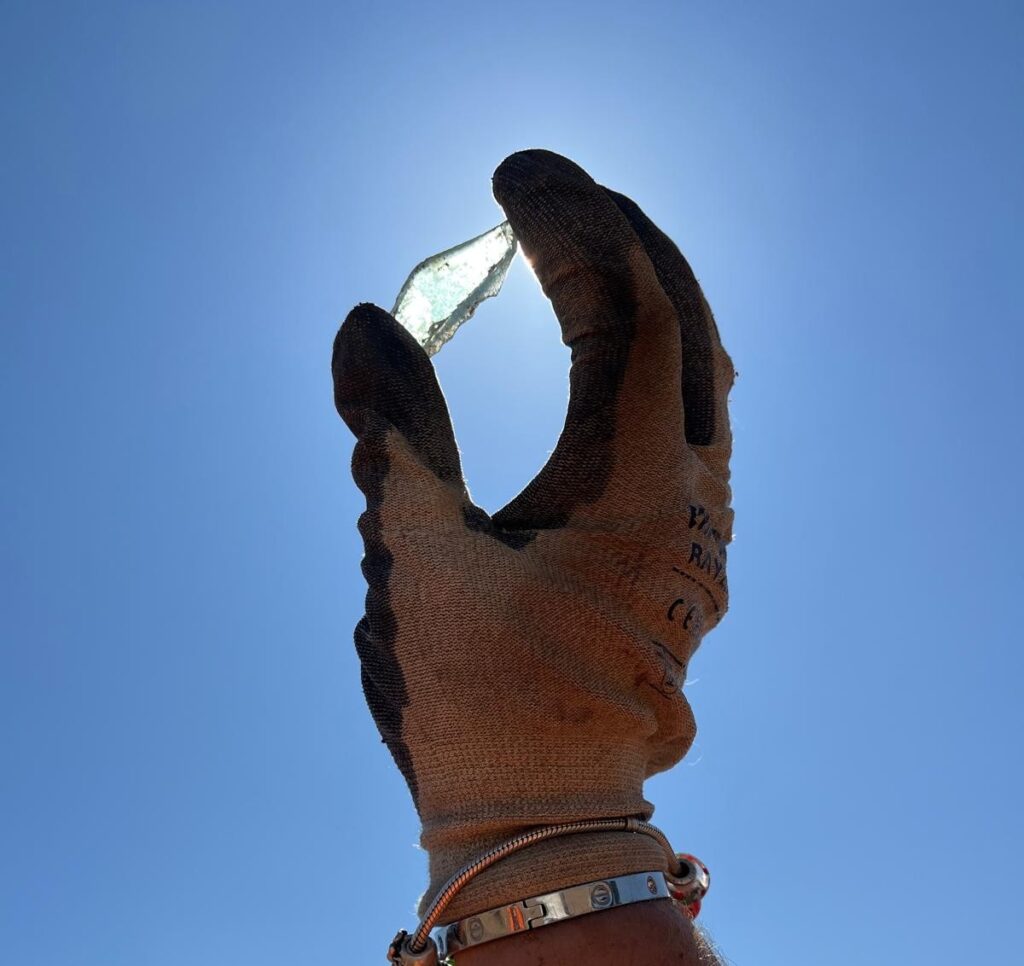
Image: Roman glass found on the area
Unusual features
Two spreads of heat‑affected flint add an element of mystery. One measures around sixteen metres long, the other ten, and both are surprisingly shallow. Their upper layers were packed with burnt flint, beneath which lay a thin band of charcoal‑rich silt. Although the current theory links them to Roman industrial activity, flint used in this way is unusual on Roman sites. Post‑excavation specialists are now working to understand their purpose.
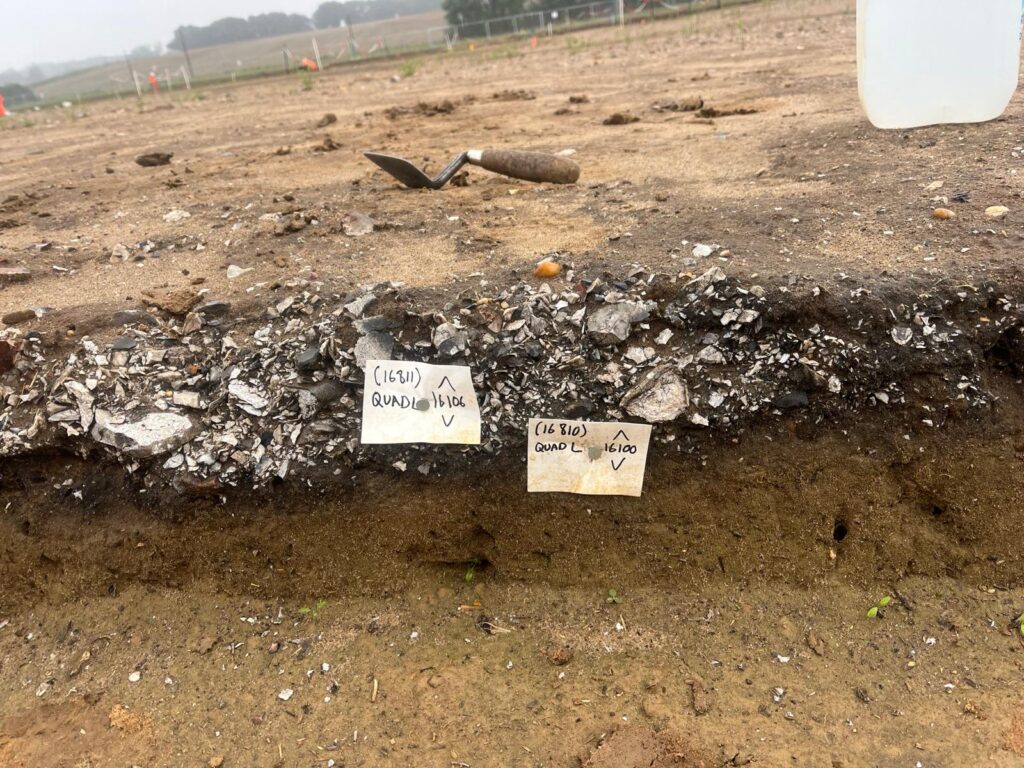
Image: section of quad containing burnt flint
This has been one of OCA’s most intriguing sites during the Sizewell C project, and the discoveries reveal a concentrated and sophisticated Roman industrial landscape. What has been uncovered shows that this quiet corner of Suffolk was once a thriving workplace, alive with grain drying, pottery firing, metalworking and trade, in many ways echoing the bustling activities seen throughout the construction of the new Sizewell C power station today.