
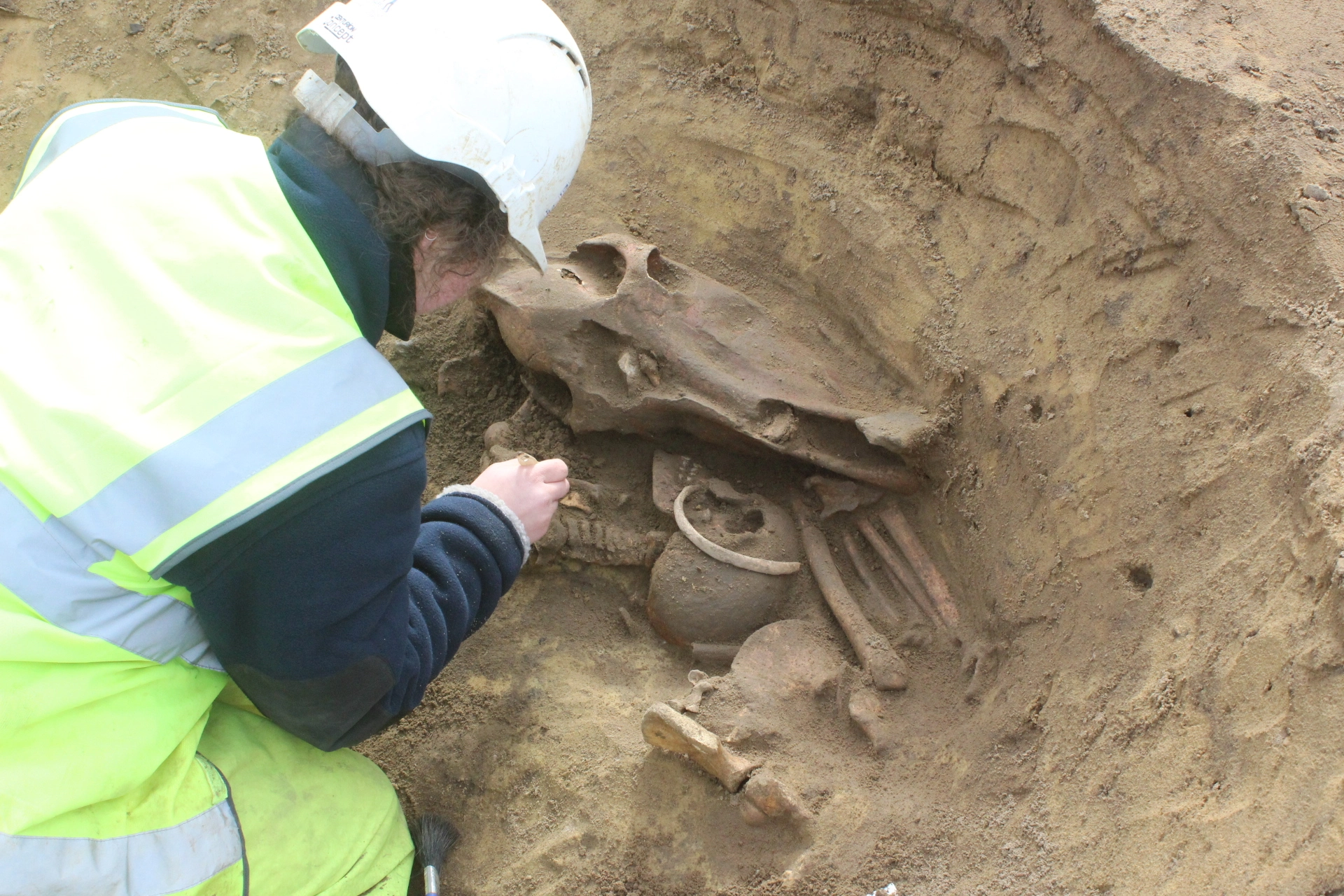
Amongst the exciting multi-period archaeological landscape at Oxford Road, Thame there was evidence of the funerary activities of the people who had once lived and died in the area.
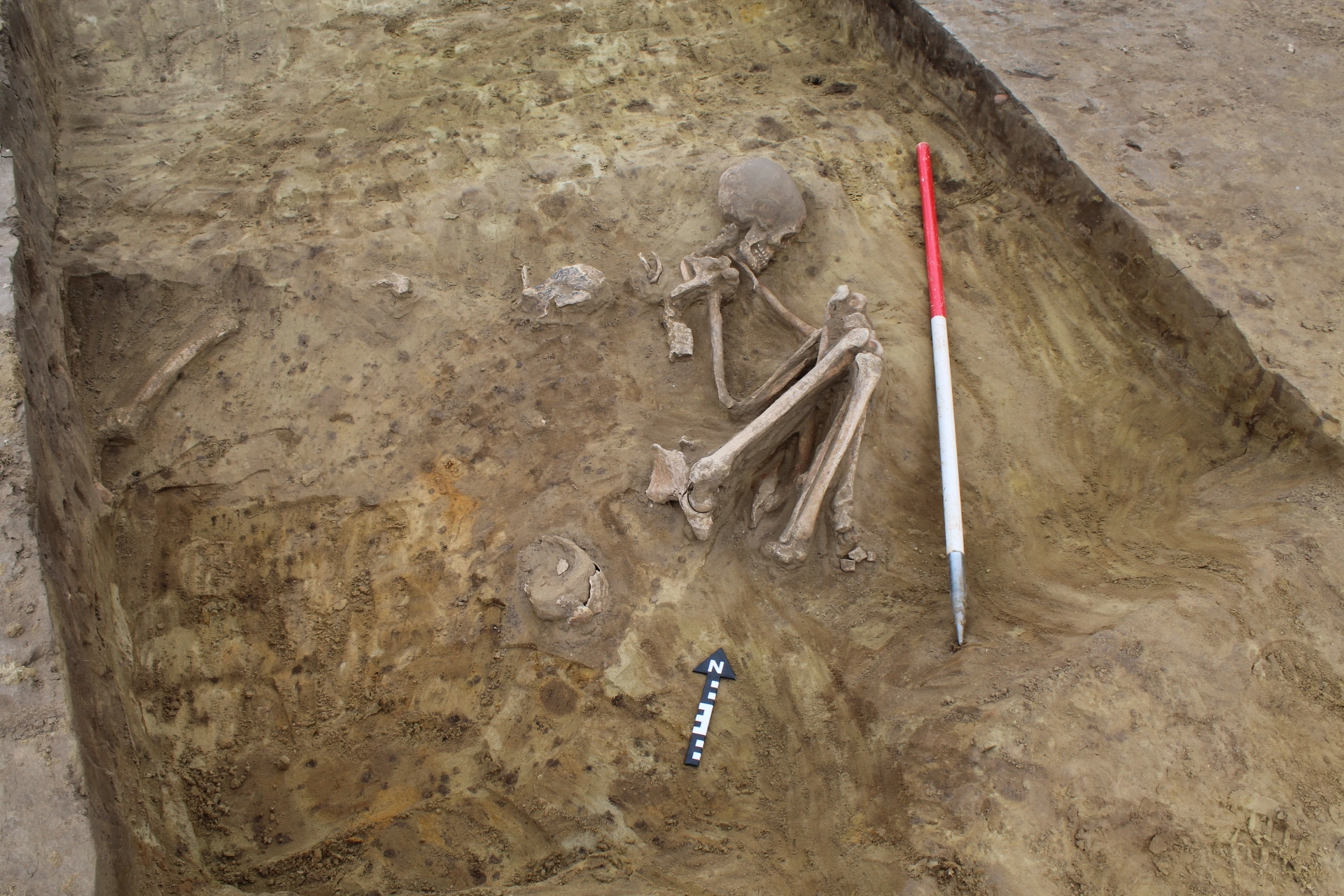
Human remains (skeletal and cremated) were recovered dating from the Neolithic to the Saxon periods, with the majority dating to the Iron Age (up to 3000 years ago). At least 13 individuals were recovered from an Early to Middle Iron Age c. 400 – 200 BC ‘cemetery’. The graves were sited on the north-western side of a shallow dry valley, which ran up onto a ridge from the floodplain of the River Thame.
One of the grave pits contained an adult female who had been laid in a crouched position on their left side with their head to the north. Also in the same grave were disarticulated bones from another adult and a child, Early Iron Age pottery and some animal bone.
Image: adult female burial buried in a crouched position
Another burial was of a female, approximately 36–45 years of age, and approximately 155cm (5 feet 1 inch) tall. Her spine showed some degenerative changes — wear and tear — which often happens as we age. She had also lost some teeth in life, had periodontal disease (often the result of poor gum health), and signs of dental caries (i.e. tooth decay). In addition, her teeth had lines and grooves (dental enamel hypoplasia). These show that the tooth formation was interrupted, probably when she was between 4.5 and 5.5 years old, probably due to a serious illness or poor diet (following which her teeth continued to form normally).
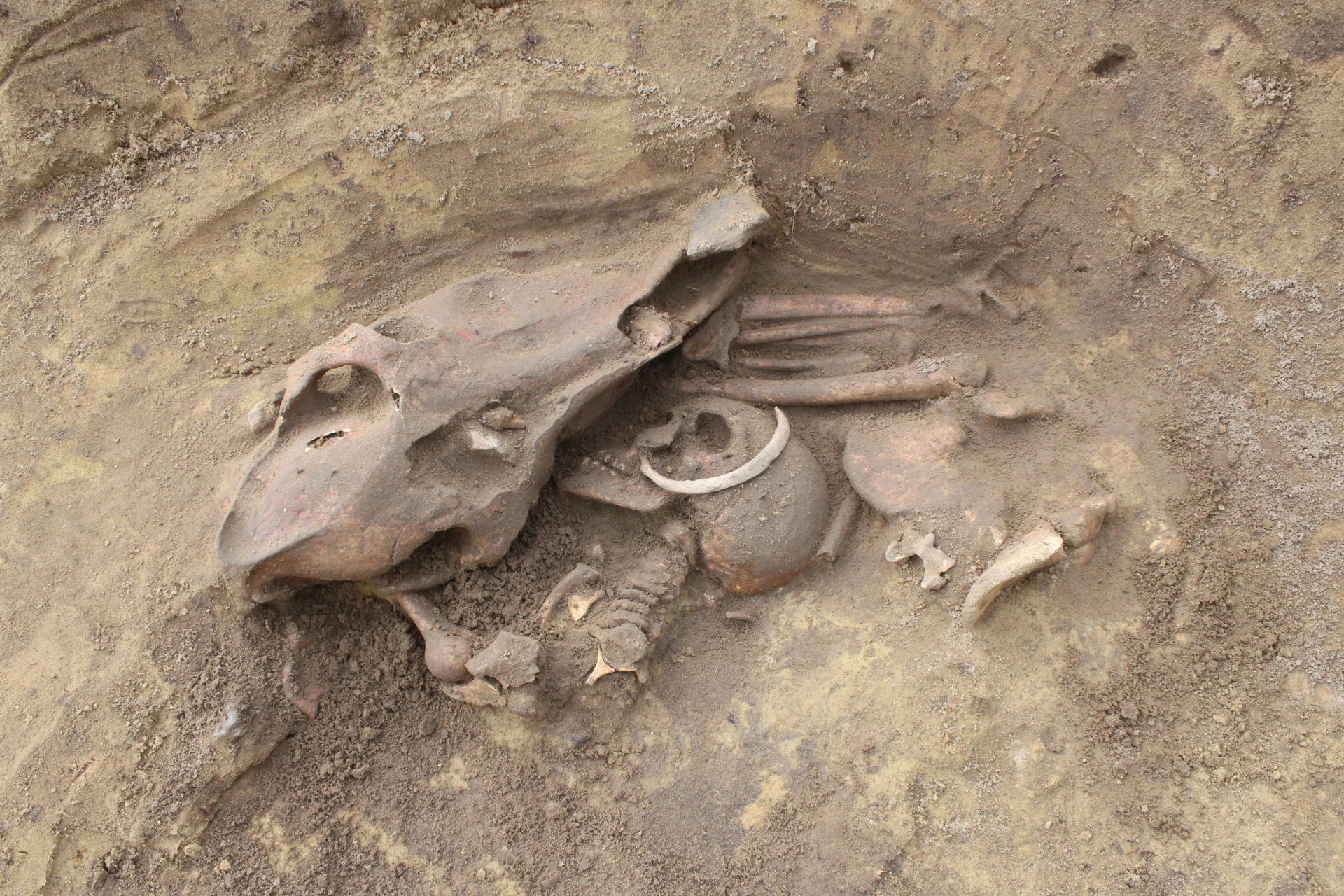
In another grave pit a third individual was laid crouched on their right side with the head to the north-east. This individual also had poor dental health with dental caries, a periapical cavity (at the end of the tooth root, often caused by an abscess) and inflammation of the mandible. After they were laid in the pit, an adult male horse skull was placed on top of the left shoulder adjacent to the head. A relatively large collection of animal bones (mostly pig) also came from the grave pit, including an articulated spine and ribs and the articulated remains of a dog’s foot.
A partial horse skeleton was found in another pit close by, with the tantalizing possibility that this was the same animal from which the skull (head) had come. Horses (part or whole) are rarely associated with human burials in Britain during the Iron Age. More commonly human burials are found with joints of meat, which have been interpreted as food for the journey to the otherworld.
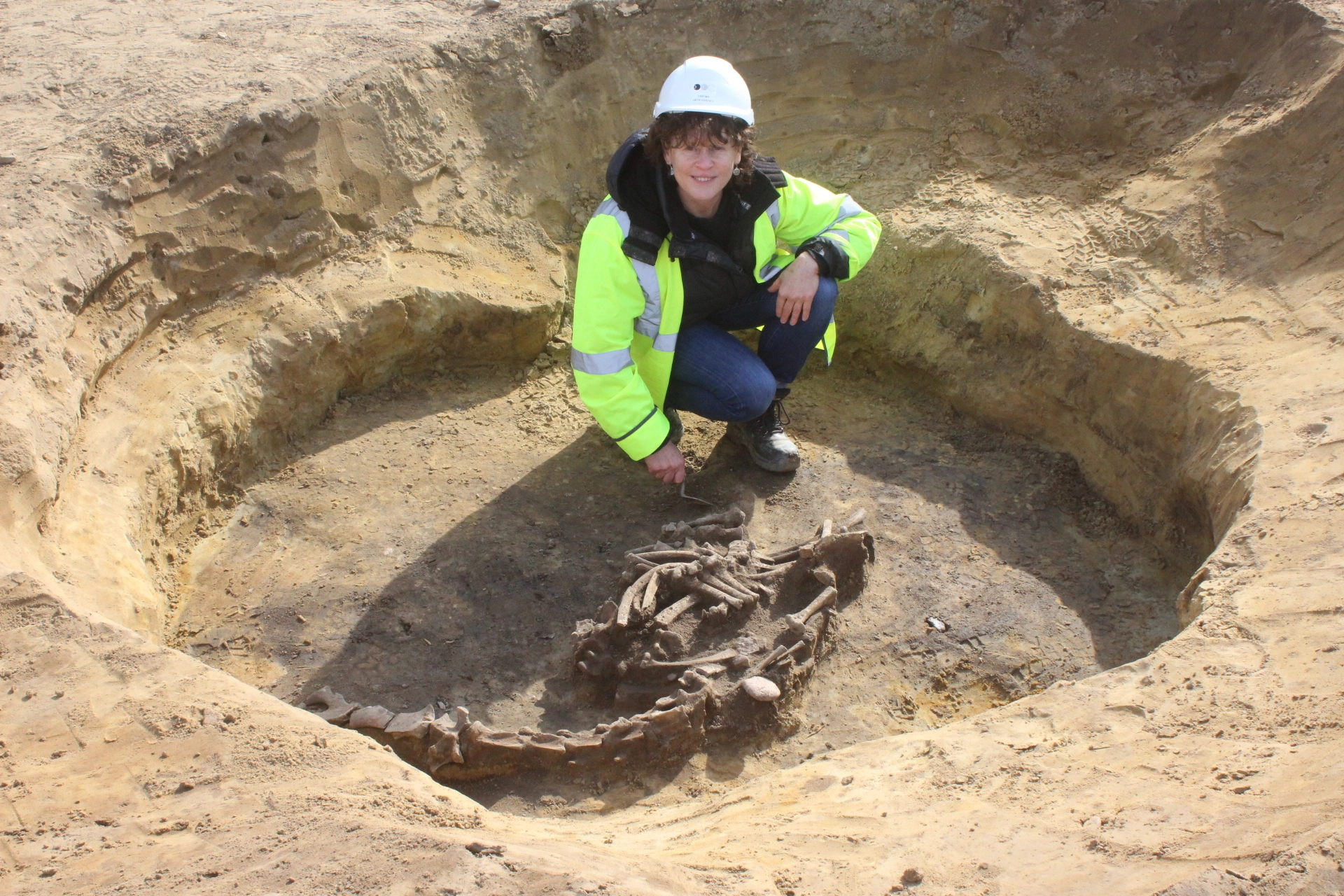
Although it is clear that not all of the dead were buried during the Iron Age, (as opposed to cremation or other funerary modes), the placing of the dead into pits or shallow grave cuts is a commonly seen practice in Oxfordshire, as known from other sites. At Yarnton (Hey et al. 2011) two clusters of burials, including ten and fifteen individuals, were mostly laid in a crouched position without grave goods. The radiocarbon dates from Yarnton suggest that the burials may have been contemporary with those at Thame. Near Letcombe Regis (Guarino and Barclay 2023), Oxfordshire, Middle Iron Age (4th and 3rd centuries BC) burials of three non-adults and one adult were recovered from three pits.
Image: Gill Hey with some of the remains from Yarnton
The discovery of human remains spanning millennia at Oxford Road, Thame have provided a poignant glimpse into the funerary practices of the area’s ancient inhabitants, offering invaluable insights into their lives and rituals.