
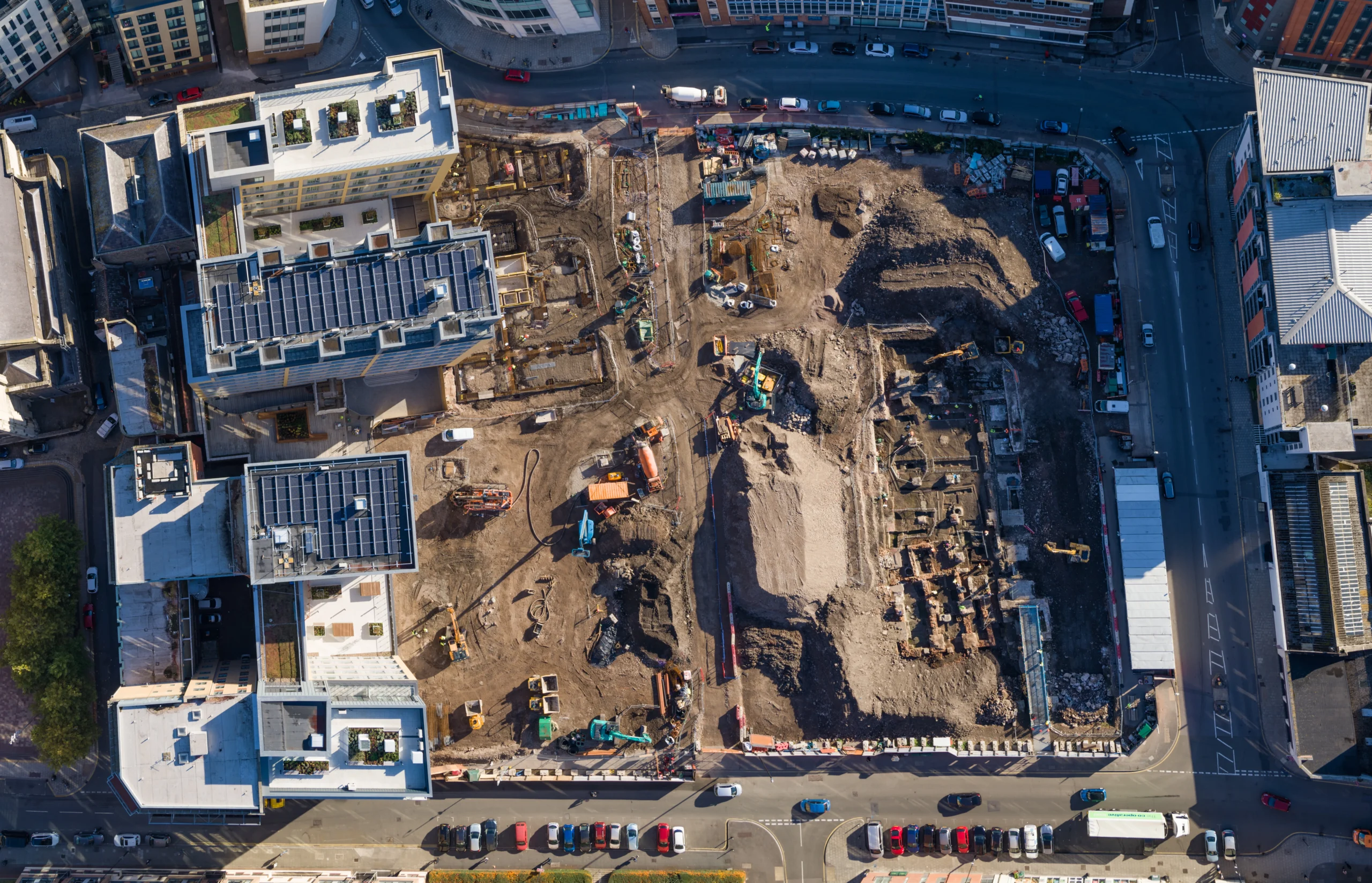
Redcliffe Quarter
Phase 2
Start Date
April 2016 - May 2024
Location
Bristol
Time Period
Medieval,
Client
Redcliff MCC LLP,
Phase 2 is divided into selected areas, each revealing layers of history dating back to the 12th century. Within these areas, a diverse array of organic materials and artifacts indicative of various industries and trades, from wattle work to metalworking. The evidence, supported by documentary research, paints a vivid picture of Redcliffe’s evolution from a hub of cloth manufacture and trade to a bustling center of diverse economic activities, offering insights into the daily lives and trades of its past inhabitants.


Area A
Here we found the remains of medieval and Post-medieval buildings and walls, as well as gardens and a gravel path. Industrial structures, possibly bases for dye-vat or tanning pits, were also discovered in the backyards of the buildings.
Area B
The north part of this area was not initially built on during the establishment of the suburb of Redcliffe in the early 12th century. Instead, large cess pits were excavated, which contained human waste and other materials, including leather shoes and wooden objects. A late medieval, high-status stone building was later built on elaborate arched supports across the cess pit area. The building later had a decorative tiled floor.
Image: the base of a dye vat
Area C
The main discovery in this area is the 12th century Law Ditch. We have discovered that the majority of earlier ditches marking out plot boundaries on St Thomas and Redcliff Street also acted as drains, feeding into the Law Ditch. Originally just a ditch, it was later replaced by a stone-built culvert, which in its final phase had a ceramic pipe inserted.
Area D
In this small area, we found a succession of hearths or dye-vat bases, dating from the early 13th to the late 14th century.
Image: the medieval Law Ditch and later stone culvert

Area E
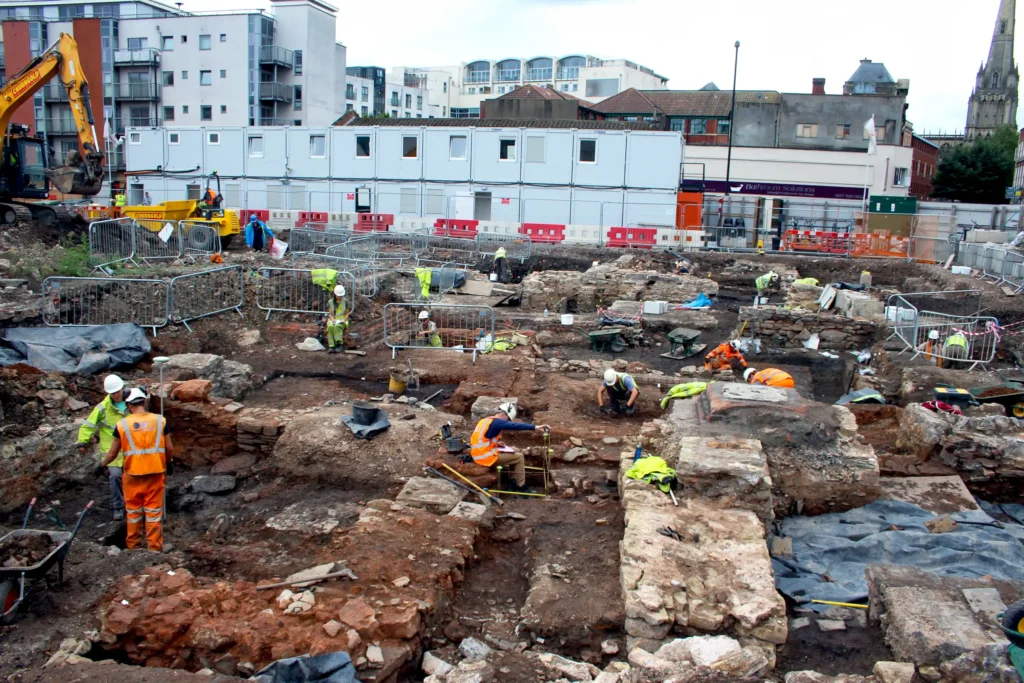
Here we explored several tenements, with building remains across the periods. We found the very rear of early 12th century wooden buildings, with ditches and pits behind. A higher-status stone structure was built across two of the plots, with a dendrochronological date of 1215 from a timber in the foundation. There was further rebuilding in the early post-medieval period, and we also recorded the remains of an industrial site, probably a 19th century enamelled slate works.
Image: archaeologists working in Area E