Redcliffe Quarter
Phase 1
Start Date
January 2016 - April 2016
Location
Bristol
Time Period
Medieval,
Client
Redcliff MCC LLP,
Our archaeologists revealed two medieval plots extending from the Thomas Lane, with rear gardens bounded by a large ditch, the ‘Law Ditch’. Thomas Lane was a small connecting lane between Redcliff Street and St Thomas Street.
Redcliffe in the 12th Century
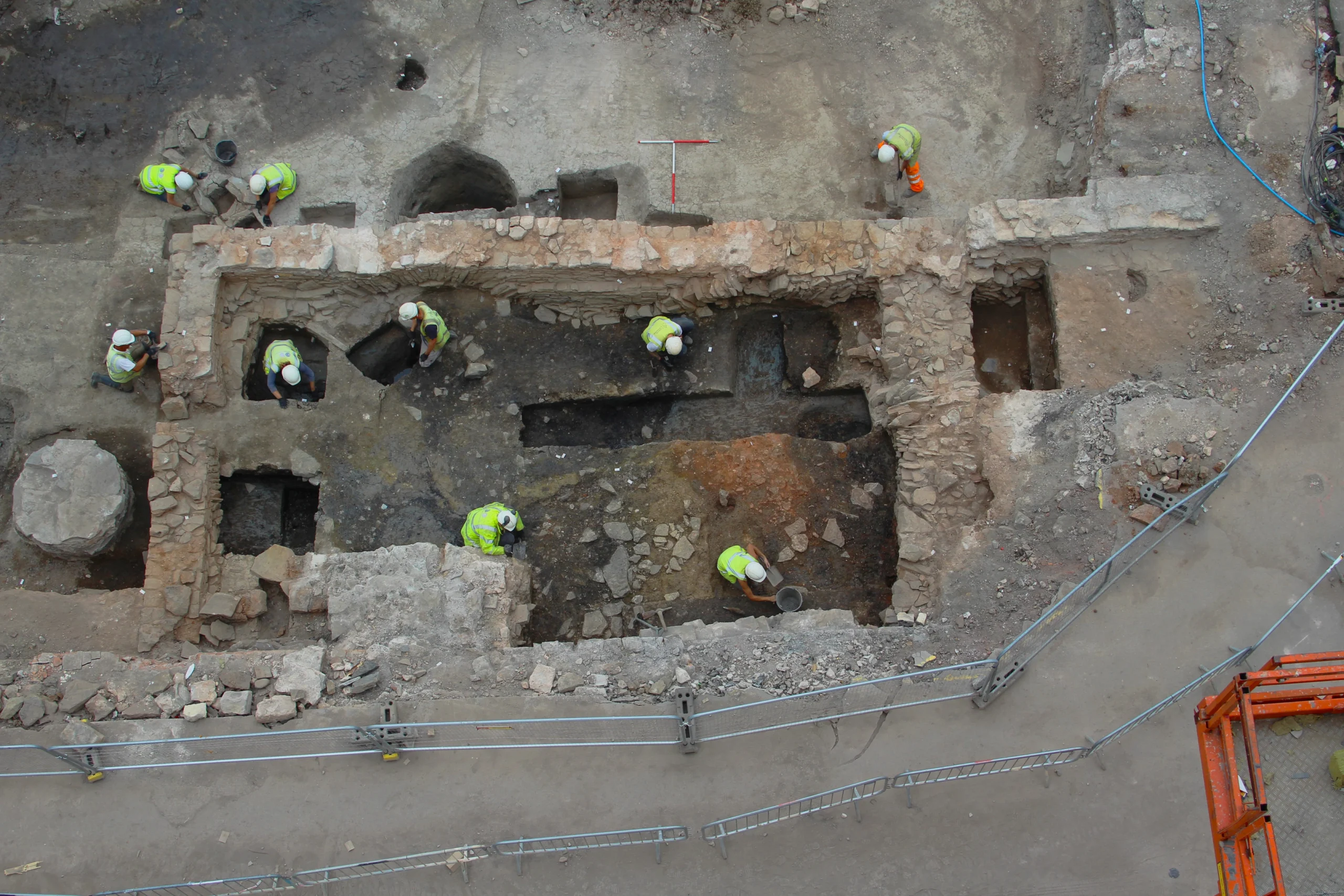
The earliest medieval buildings would have been located partially beyond the site, under Redcliff Street to the west, but, some of the rear parts survived within our excavation area, which were as early as 12th-century in date, survived within our excavation area. The site has been redeveloped many times over the centuries, but the later walls generally followed the original property boundaries. The original stone or timber buildings were missing, only fragments of original walls and floor surfaces remaining, along with possible hearths and extensive charcoal layers.
To the rear of the properties fronting Thomas Lane, in Area 1, were garden plots extending eastwards towards the ‘Law Ditch’, located below the cobbled surface of the 19th-century Queen’s Head yard. The Law Ditch defined the legal boundary between properties along Redcliff Street (to the west) and St Thomas Street (to the east), and was probably established in the 12th century. Running down the centre of the excavation area was a sequence of east/west boundaries that had been re-established over time. The most recent of these was marked by a ceramic pipe which had been dug through an earlier (possibly very late medieval) stone drain.
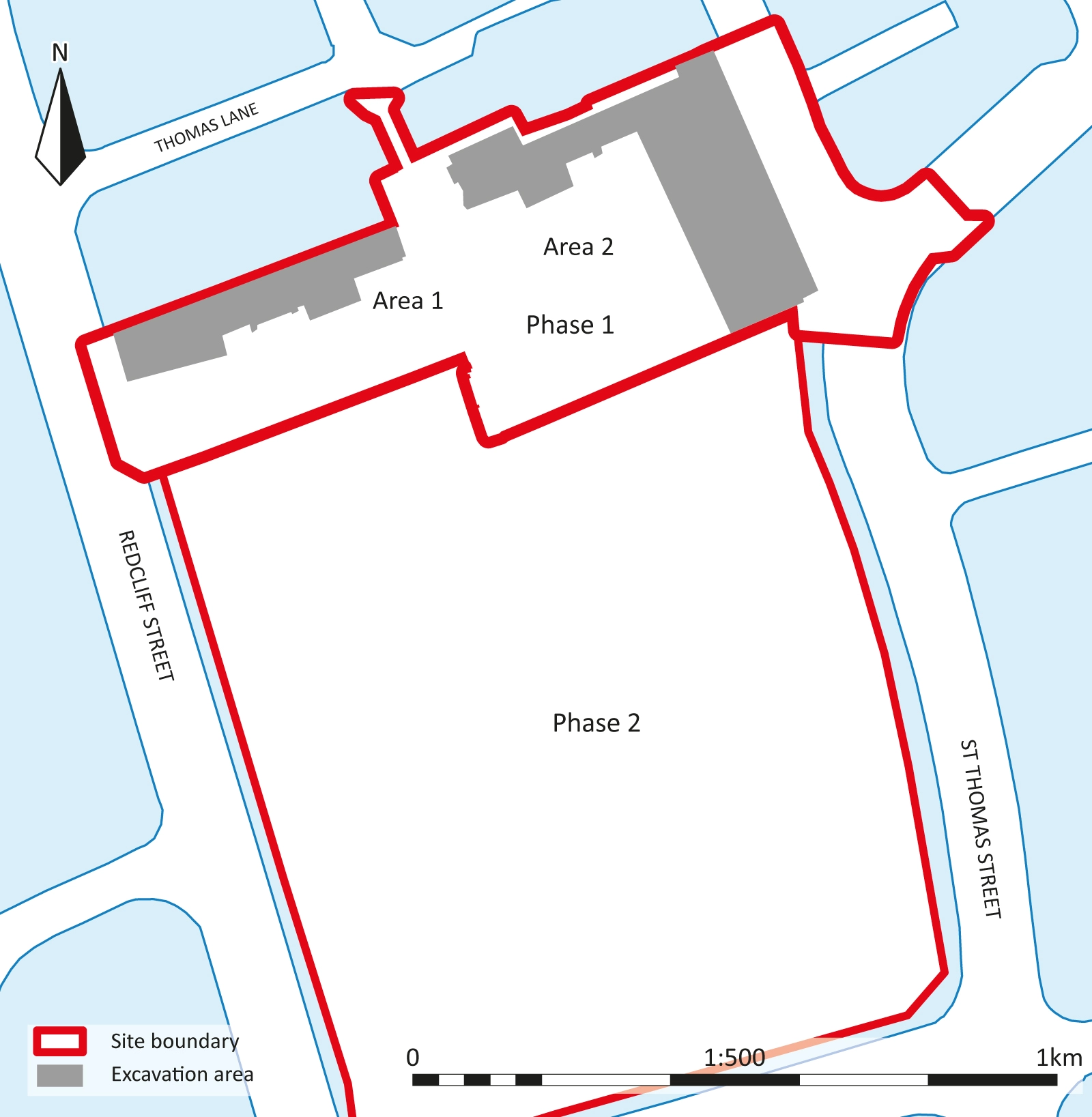
Image: plan of Phase 1
A single feature crossed the east/west boundary, a single small north/south wall. This wall potentially marked a limit, separating a higher concentration of activity to the rear of the former buildings from a sparser area to the east, nearer to the Law Ditch. The area immediately behind the properties likely saw the most activity, with waste pits and the probable presence of domesticated animals causing the ground to become heavily disturbed.
When the garden soils dating to the 15th century were removed, earlier pits, a well and ditches were revealed. These have been dated to the 12th to 13th centuries and are likely to represent activity relating to the earliest phase of occupation of the site.
A large, steep-sided ditch ran east/west along the alignment of the later drains and formed a property boundary between Nos 25 and 26 Redcliff Street, but also acted as a drain taking excess water into the Law Ditch. This ditch had been lined with wattle on either side to prevent the steep sides from collapsing. The ditch had been re-excavated and maintained over a long period of time.
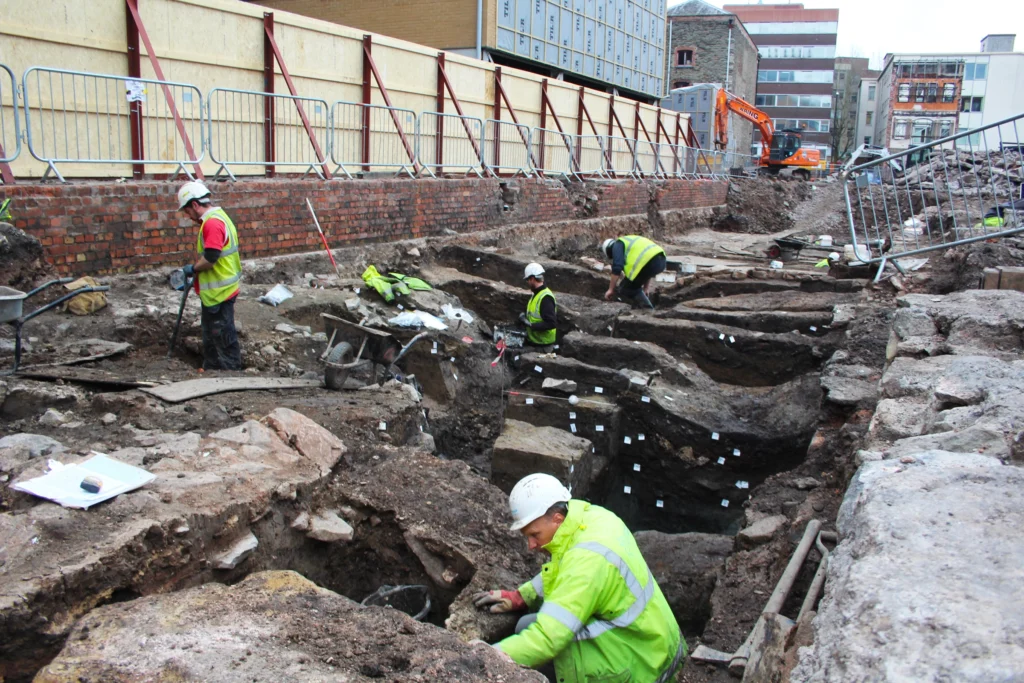
Image: archaeologists working in Area 1
A second ditch, located just north of the wattle-lined ditch, appeared to be even earlier. This ditch also had nearly vertical sides, steep enough to have held timbers, though no evidence of timbers was found. Within the ditch and its backfill, there were extensive waterlogged remains, such as worked wood and leather objects, including shoes.
To the western edge of the gardens, nearer the original properties, were a number of intercutting pits likely to have been for the disposal of domestic waste. These contained large quantities of pottery, bone, metal objects (including knives), an early medieval token and organically rich material.
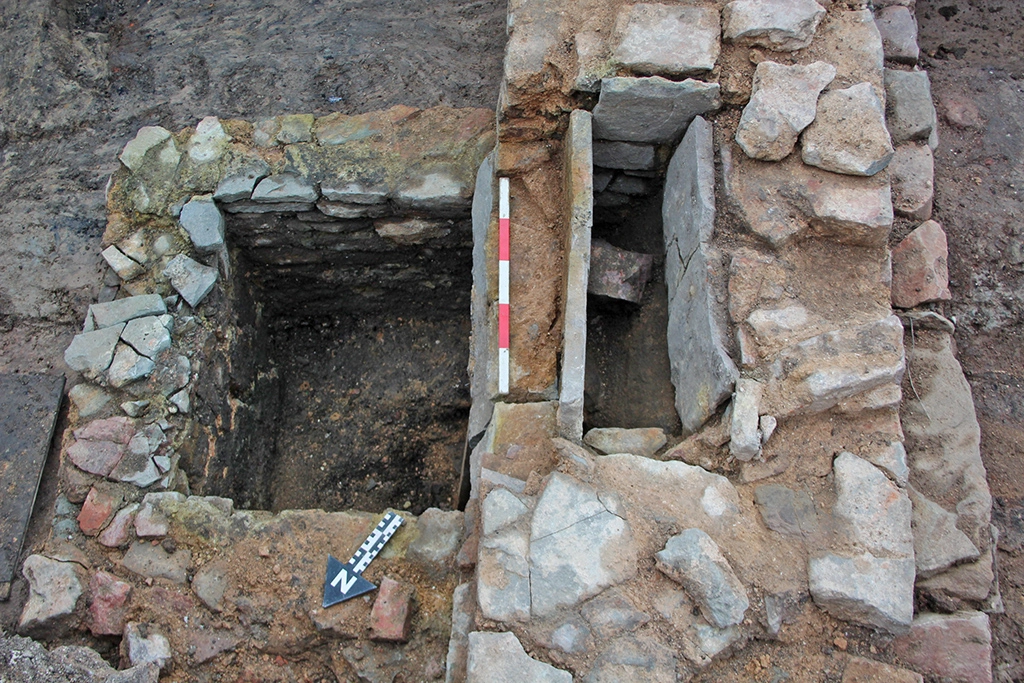
In Area 2, were medieval plots with building footings from structures that originally had their frontages on Thomas Lane (a small connecting lane between Redcliff Street and St Thomas Street). One dwelling had a garderobe (medieval toilet) with a chute that fed into an external stone-built cesspit.