A417 “Missing Link”
Area 4
Location
Gloucestershire
Time Period
Iron Age,
Client
National Highways,
The archaeological discoveries at Area 4 are significant, providing evidence of prehistoric occupation in close proximity to the Iron Age hillfort at Crickley Hill. Some social, economic, religious or political links between these sites seem likely. As our work continues into the post excavation stage, we hope our analysis will help to demonstrate these relationships.
Iron Age settlement
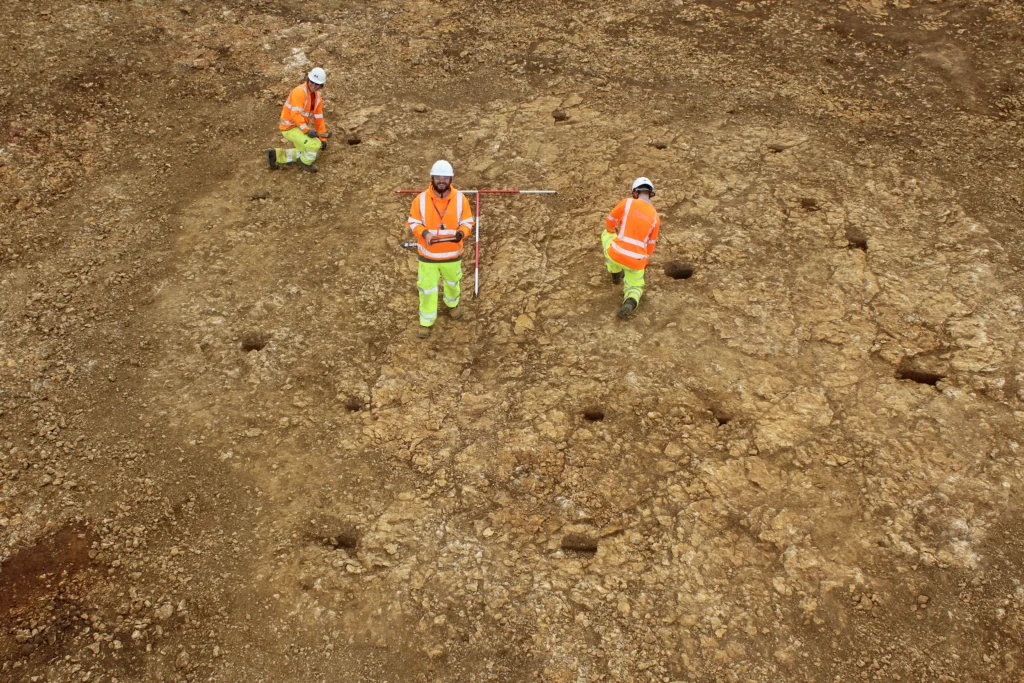
Four roundhouses were revealed within the Iron Age settlement. These were circular, single room timber dwellings, probably built using wattle and daub, with thatched roofs and a central hearth. However, all that remained of the houses were the postholes that had held the supporting wooden posts of the building.
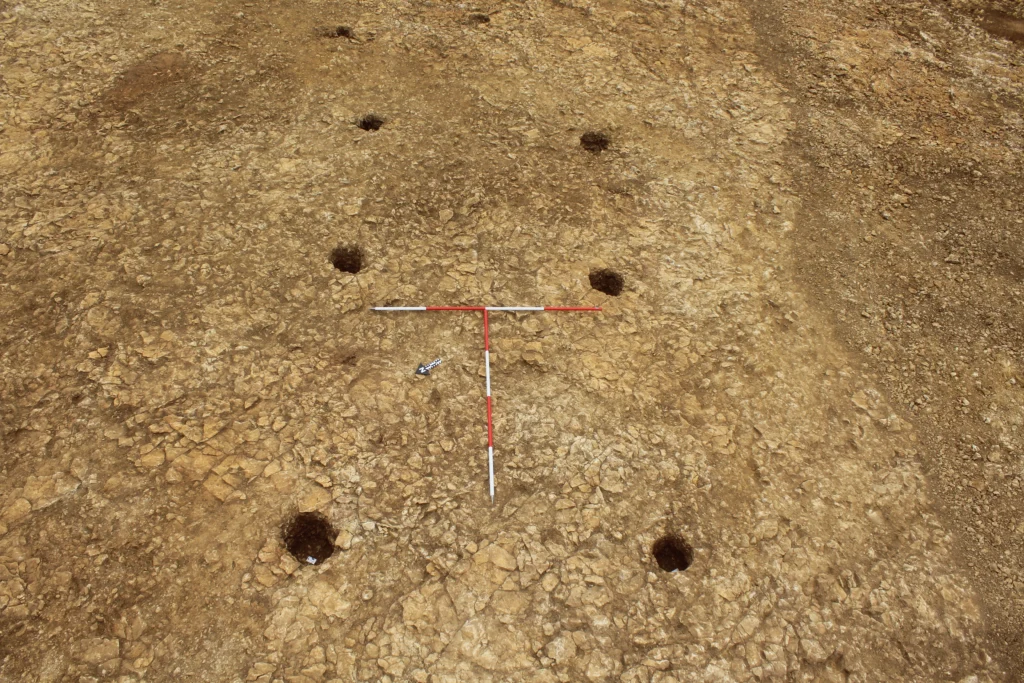
Alongside the houses, were 20 small, square or rectangular structures. Typically these survived with four postholes (but occasionally more) arranged to form the corners of a structure. The postholes would have held wooden posts that supported small, raised granaries used to store crops such as spelt (wheat). Lifting the granary above the ground allowed for ventilation and helped to protect the crops against pests.
Image: photo of a roundhouse, Area 4
Further to the south of this settlement were more pits and postholes dating to the Iron Age. They could represent a continuation of the settlement in Area 4 or be part of a separate settlement. Two pits excavated at this site were used as subterranean grain stores.
We think that grain needed day to day was stored in the raised granaries found next to the houses in Area 4. For longer term storage, grain was kept in airtight underground pits. Storing the grain underground would help prevent it from rotting and stop it from germinating.
Image: remains of granary building
Banjo enclosure
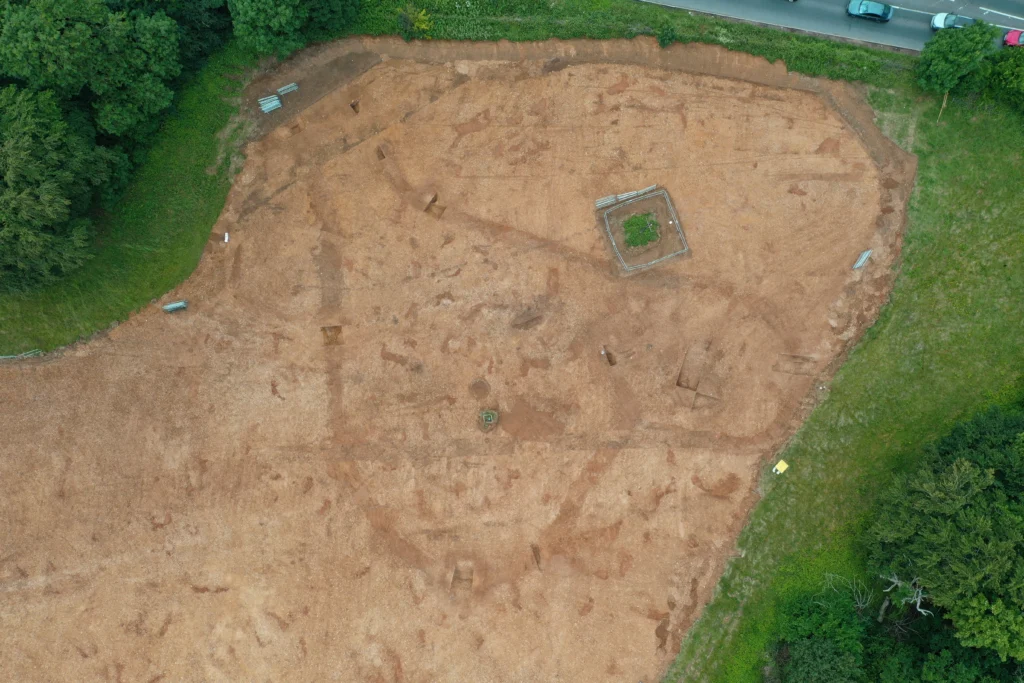
Featured on BBC’s Digging for Britain, a ‘banjo enclosure’ was discovered opposite the Leckhampton junction, close to the A436 – A417 roundabout.
Dating to the Middle Iron Age (400 – 100 BC), this feature is so called because it is shaped like a banjo, or perhaps a frying pan, with a 20m long entrance-way, leading to a circular enclosure formed by a low bank and ditch.
Banjo enclosures would have taken a large amount of coordinated communal effort to build. They must have had a purpose for Iron Age people, but exactly what this was is up for debate. The funnel-shaped entrance may have been used to corral animals in the centre. It’s also possible that ceremonies were held at the enclosure including community celebrations and rituals.
Image: overhead drone photo of ‘banjo’ enclosure
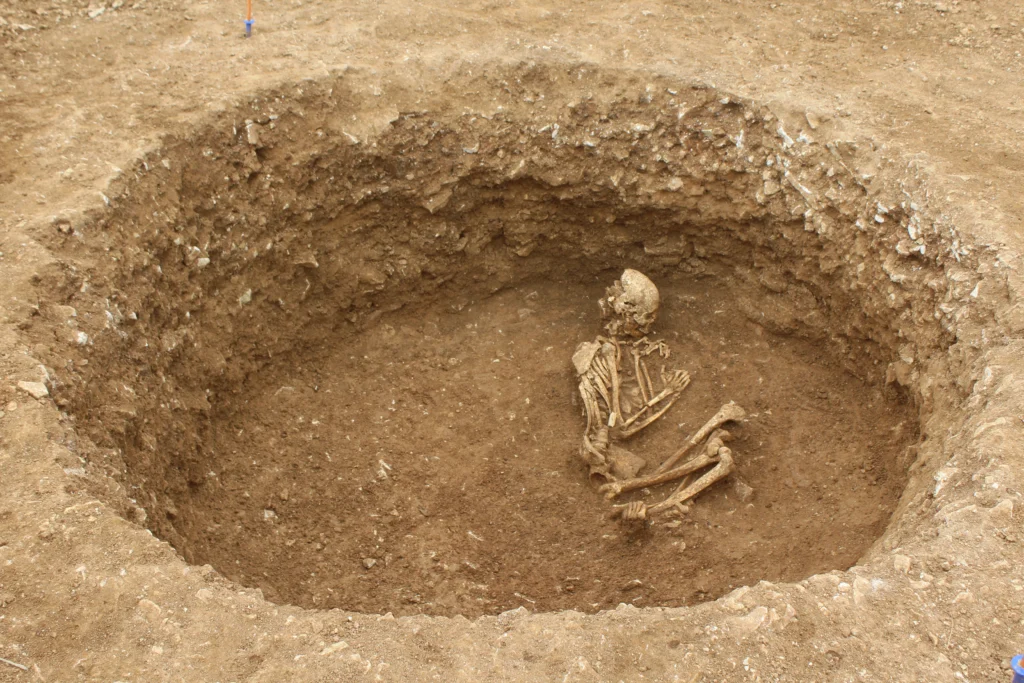
The crouched burial of a young man was found within a pit in the central enclosure. Likely aged between 17 -20 years old, we are not able to tell how he died, but he did have a deformity at his right hip.
During the Iron Age, mortality rates were high among the very young and the old. In this instance, the individual died in the prime of his life. He might have been a person of some standing in his community as he was singled out to be buried within this communal space. His burial indicates a possible ritual purpose for the enclosure.
Image: crouched burial within a pit located centrally the ‘banjo’ enclosure
Finds recovered from within the banjo enclosure and its enclosing ditch offer an insight into how this communal space was used. Over 1000 pottery sherds, mostly pot rims of locally made coarse ware jars were found on a terraced platform. Are these evidence of communal feasting at the site?
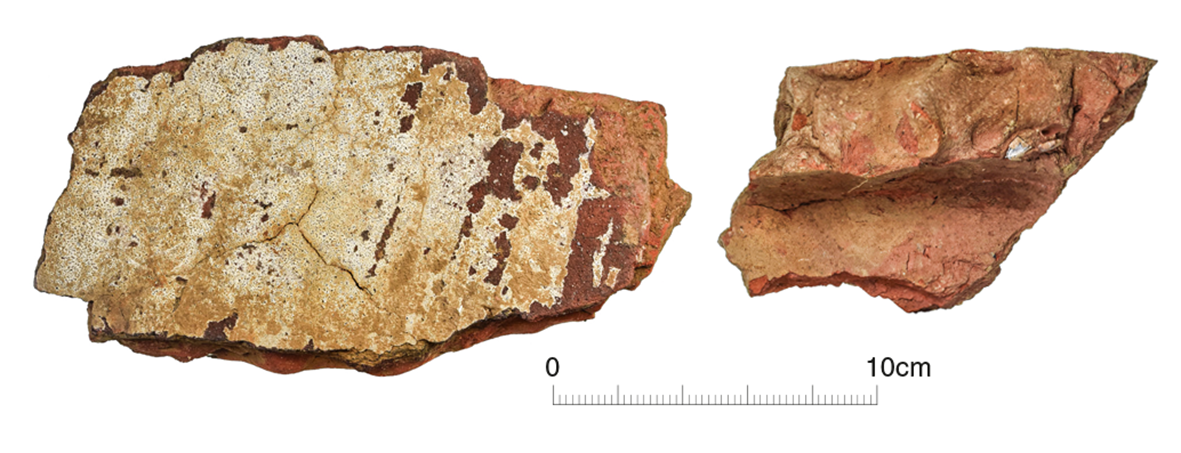
Over 70 fragments of a particular type of ceramic material known as briquetage were also recovered. These thick-walled, vase-shaped ceramic vessels were used to manufacture and then transport salt from the brine springs at Droitwich, Worcestershire. The briquetage is evidence of the trading networks in place across the Severn-Cotswolds area in the Iron Age and highlights the importance of salt to preserve and flavour food during this time.