
A417 “Missing Link”
Areas 22 and 23
Location
Gloucestershire
Time Period
Roman,
Client
National Highways,
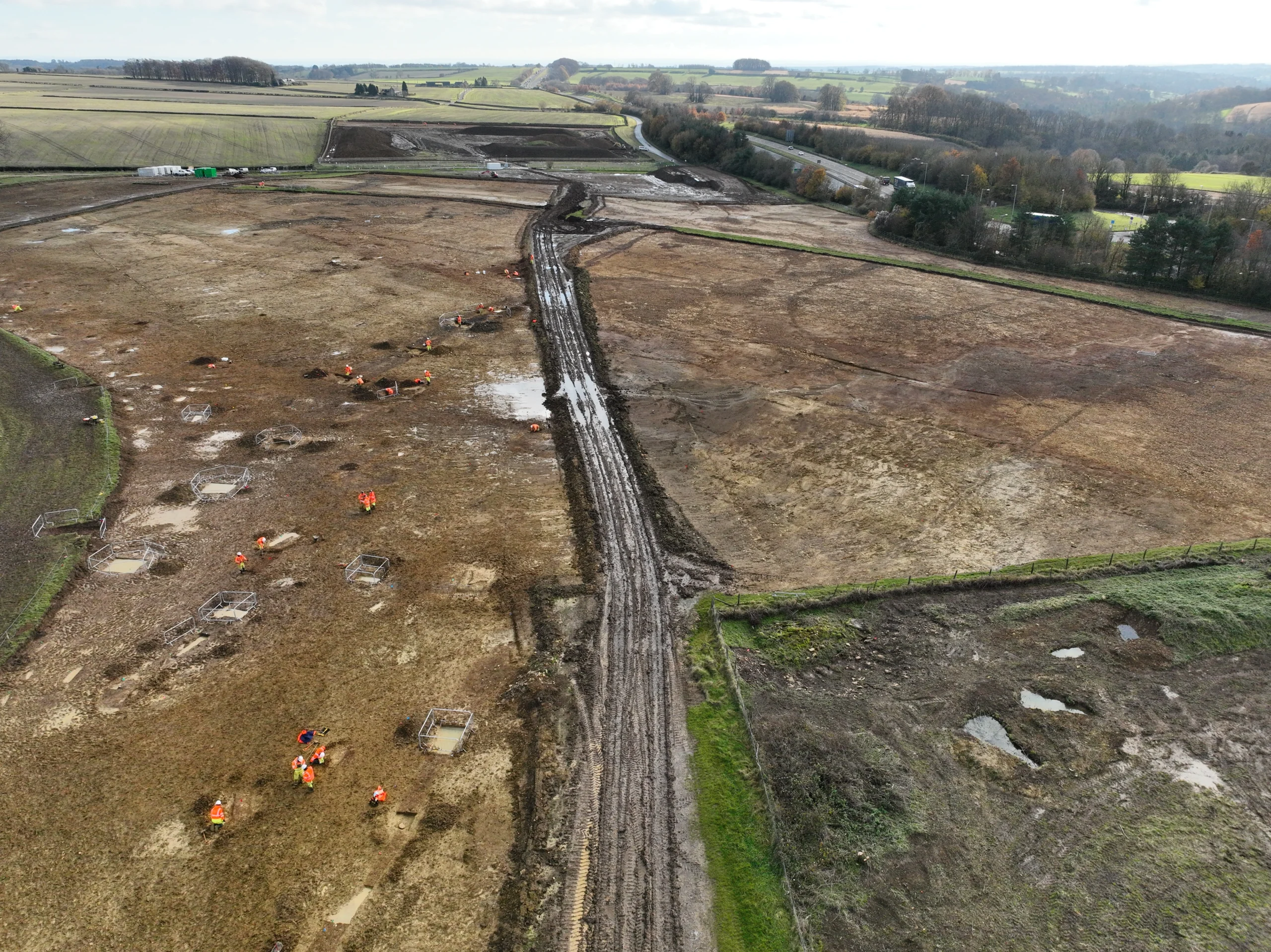
Archaeologists have recently been working to excavate Areas 22 and 23, which span over 8.7ha (87,000m2) in area. They have revealed 100s of metres of Roman ditch-type features, 100s of postholes and pits, a well, two crop-drying ovens and numerous quarry pits. The quarry pits are likely related to the construction of nearby Roman Ermin street. Over 225 Roman coins, brooches, rings and other metal artefacts were retrieved from within the features, as well as over 20kg of Roman pottery.
Previous Archaeological Work
During the Roman period, large settlements were established at Gloucester and Cirencester. The line of the Roman road connecting these, Ermin Street, ran to the south-west of the Air Balloon roundabout through Birdlip where the archaeological remains of Roman roadside activity had been recorded previously.
Excavations in the 1990s, in advance of the construction of the Cowley roundabout found evidence of a Roman settlement adjacent to Ermin Street. The settlement was originally formed by circular wooden buildings which were gradually replaced by circular, and eventually rectangular, buildings with stone foundations. The excavations also revealed pits, ovens, wells, and a ditched trackway. The settlement began around AD 160-180 and appears to have been occupied into the 4th century AD.
The geophysical survey and trial trenching works undertaken at the start of the A417 project identified the possible continuation of this settlement into Areas 22 and 23 along the route. Since excavations began at this location, archaeologists have found evidence of boundary ditches, pits, wells and stonebuilt structures as well as large quantities of Roman artefacts.
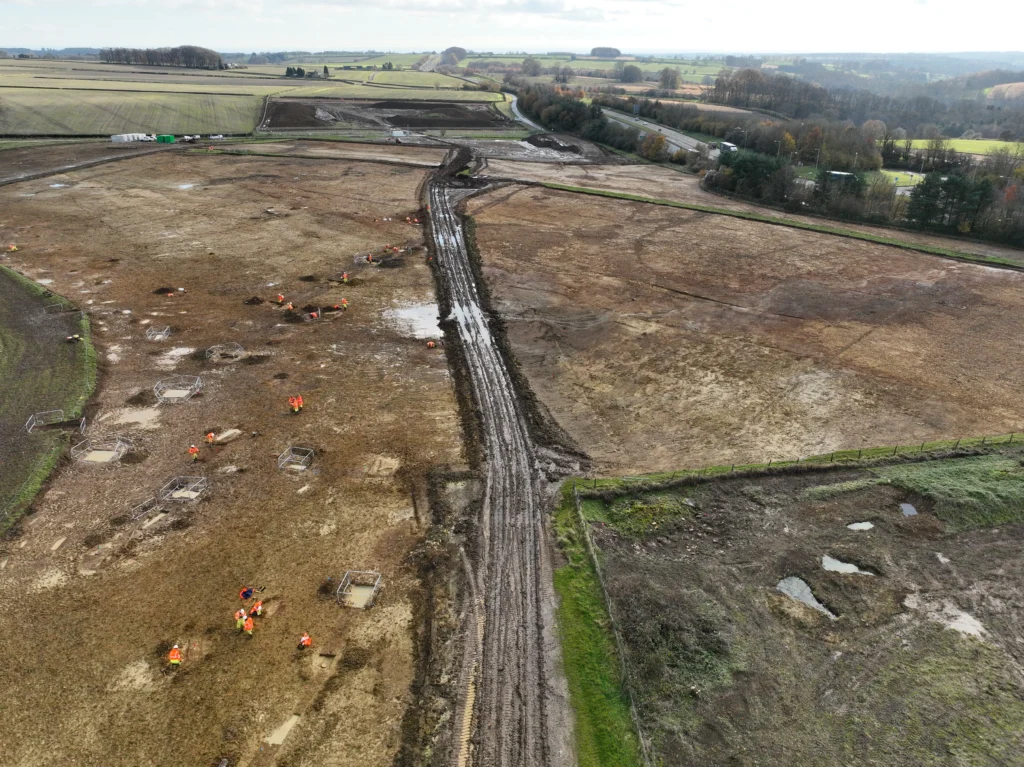
Image: Area 22, overview of site with Cowley roundabout
Roman Settlement
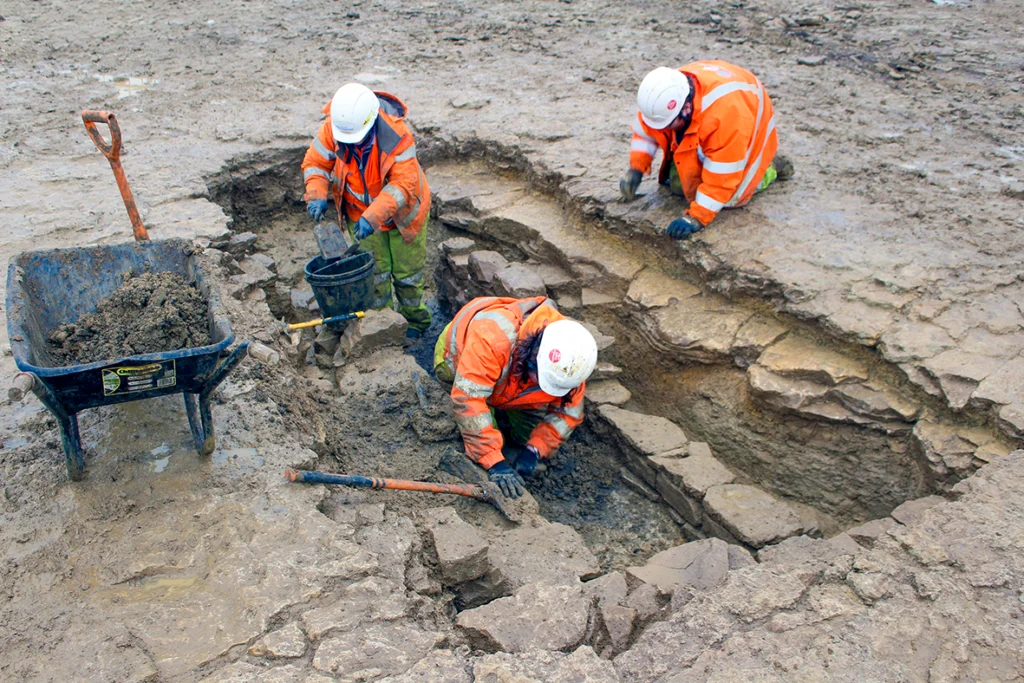
Crop-drying ovens (or corn dryers) are a feature archaeologists often find on Roman agricultural sites. Such ovens would have been used to dry crops that had recently been harvested for storage, as well as to harden stored crops, like wheat, before the grains were ground up to make bread.
In the south-western part of the site archaeologists discovered a well. This stone-built structure produced finds in its lower deposits of pottery, animal bone, a hobnail shoe, bone hair pins, a ring and a copper-alloy hair pin. All will be recorded and cleaned, before being studied to provide us with insights into everyday life in the Roman period.
This period of the site also revealed a Roman mutatio or ‘horse-changing station’, and you can read more about that in this Current Archaeology article.
Image: archaeologists excavating a Roman corn dryer
Cupid figurine
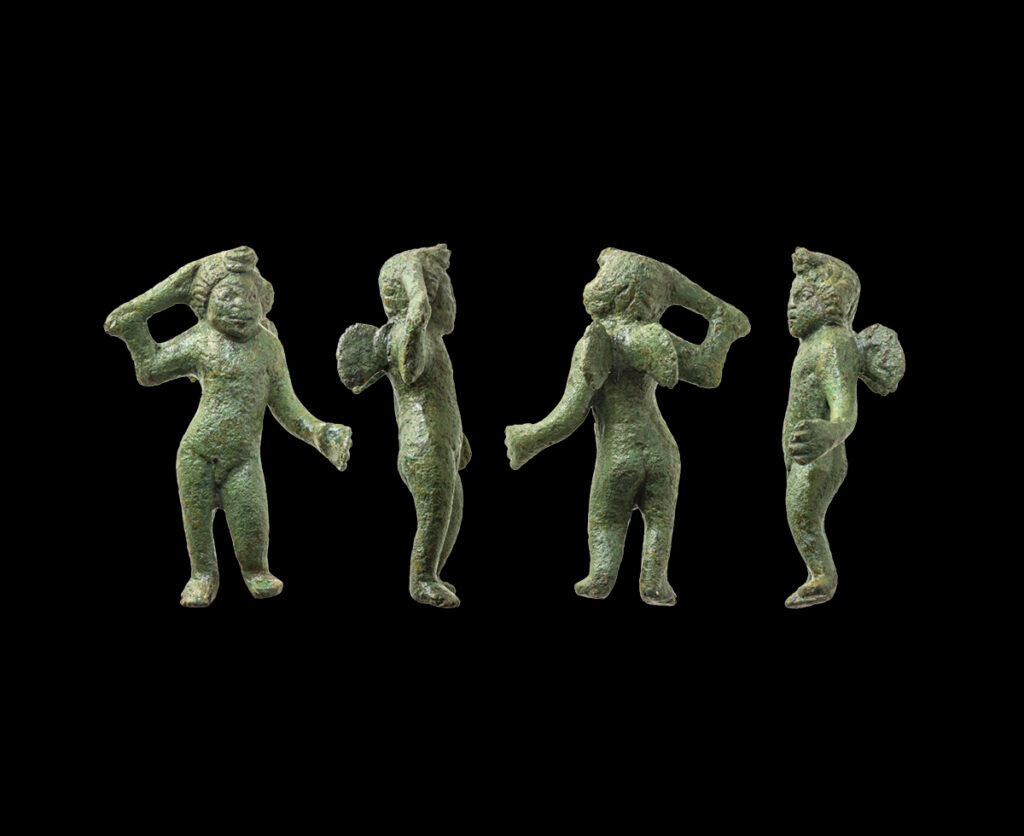
An exciting find during the evaluation phase of the project was of a rare Cupid figurine. Standing 60mm in height and cast in copper-alloy, the nude Cupid has short, stubby wings on his back. He has a chubby face with hair in ringlets, and what looks like a topknot. His right hand is raised and instead of the usual bow and arrow, he is holding a club.
Originally, he may have also had something draped over his left hand, now lost. Archaeologists think the lost item could have been a moulded metal representation of a lion skin. Cupid is sometimes depicted with a club and a lion skin to mimic Hercules. Originally a figure in Greek myth, Hercules was adopted by the Romans and a figurine of ‘Cupid as Hercules’ is said to represent the idea of love felling even the mightiest of heroes.
Image: Cupid figurine
The overall nature of the Roman settlement found by our excavation remains unclear, but possibly its location beside Ermin Street would have made it a popular stopping place for weary travellers. We hope our post-excavation analysis of all the finds and archaeological features will help us understand more about the lives of the people who made it their home almost 2,000 years ago.