A417 “Missing Link”
Area 12
Location
Gloucestershire
Time Period
Bronze Age,
Client
National Highways,
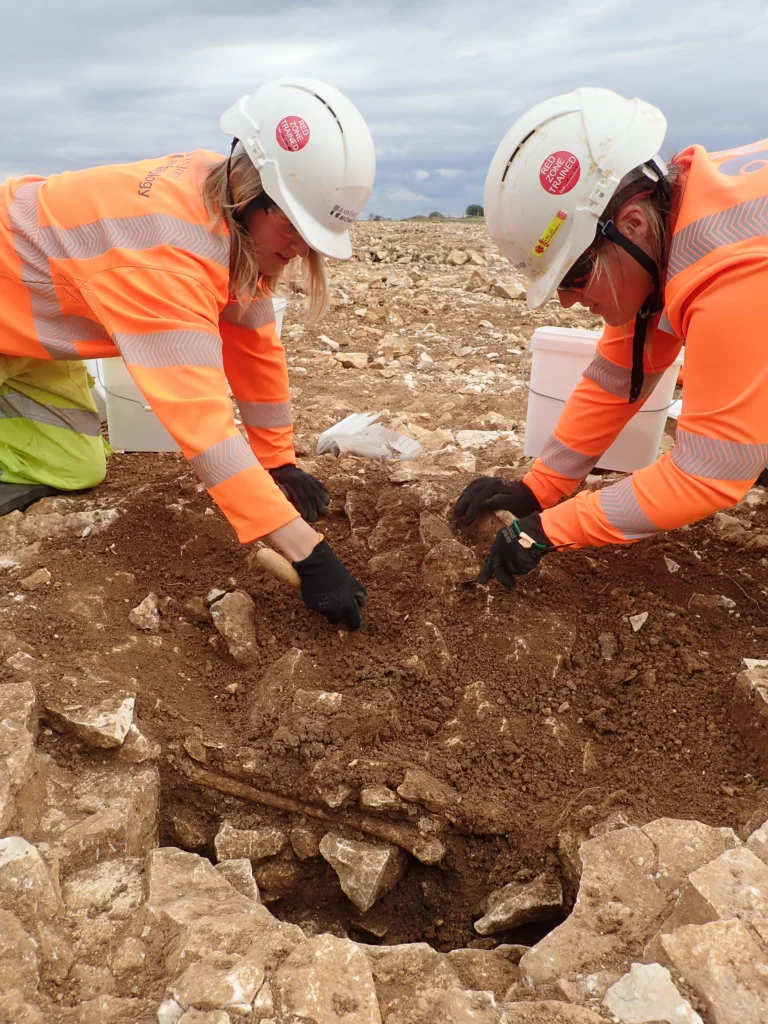
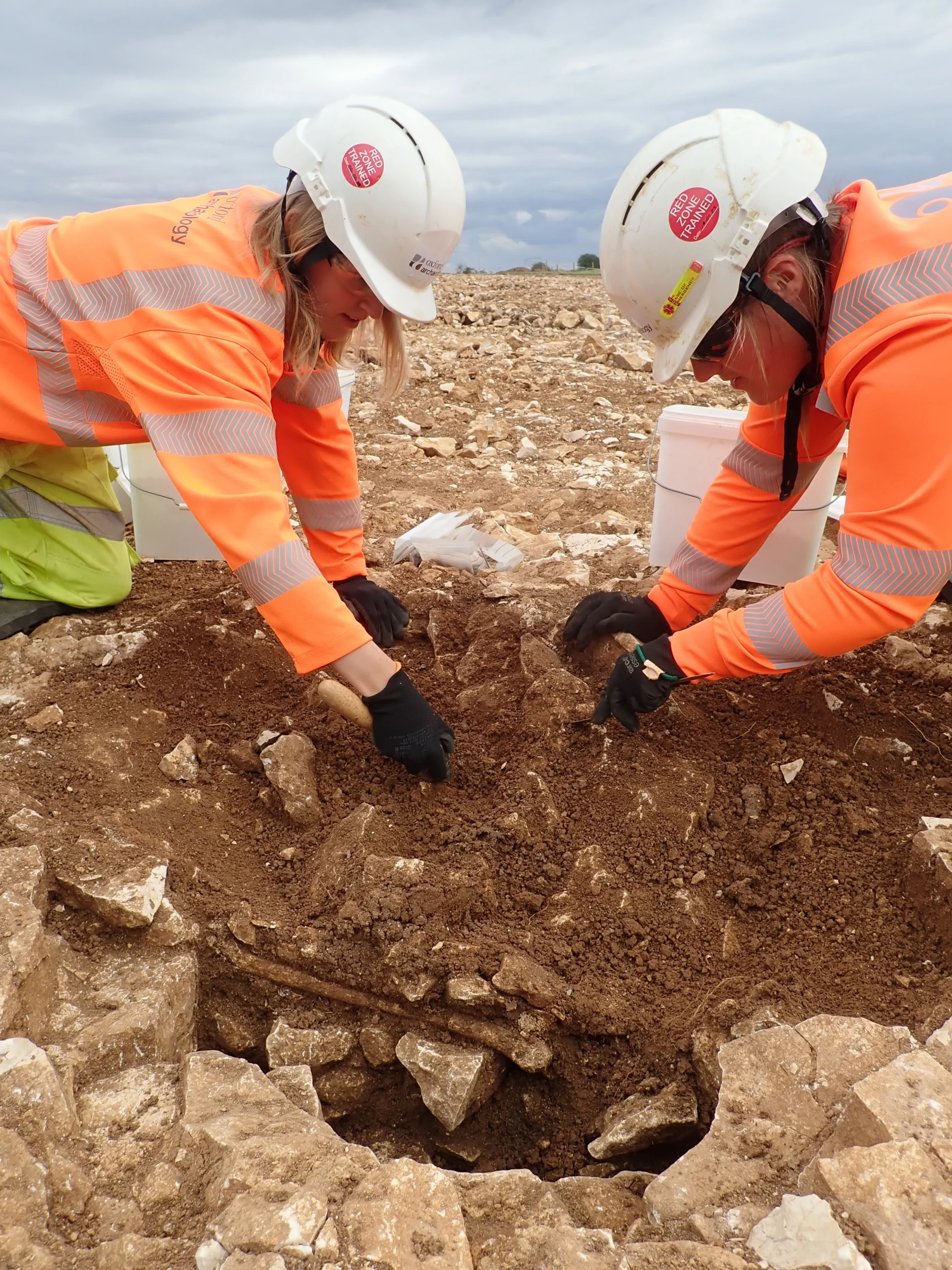
Only one archaeological feature of interest was located in Area 12. Beneath the topsoil, archaeologists discovered an oval pit measuring 1.4m by 0.85m. As the pit was excavated, it soon became clear it contained the remains of a single crouched human skeleton. The adult had been lain on their right side and was buried with a single tiny bead, a selection of worked flint tools (including scrapers for processing animal hides) and over 50 fragments from a ‘Beaker’ pot, decorated with parallel, incised lines. This pot would have been intact when it was originally buried and may have been filled with food or liquid to accompany the individual into the afterlife.
Dating from the early Bronze Age (c. 2,400 BC – 1,900 BC), Beaker burials are so-called because of the distinctive bell-shaped, pottery beakers that accompany the dead. These pots were often decorated with complex patterns incised or impressed into the clay with cord or bone comb tools. Beaker burials are usually single individuals placed in the ground and covered by an earthen mound or barrow and surrounded by a ditch. In this instance, there was no trace of a surrounding ditch or barrow, but these features may not have survived later ploughing.
Recent DNA studies have shown that the Beaker people were migrants from Europe. Their arrival about 4,400 years ago marked the beginning of the age of metalwork in Britain with copper, then bronze, used to make adornments, knives and axes. The Beaker people also brought new burial practices, pottery types, and domesticated horses to Britain.
It is unlikely that every individual in Beaker society was afforded such a prestigious burial as the one recovered here, and this person was probably someone of importance in their community.
Image: Area 12 grave under excavation