
From trenches to TV: The story behind the A66 Roman cemetery
Date Written
20 January 2026
Our Oxford Cotswold Archaeology (OCA) team has been involved in undertaking one of the more substantial scientific excavations of a Roman cemetery found in Britain in recent years, revealing extraordinary insights into life and death during the Roman era. This remarkable discovery, showcased on the BBC’s Digging for Britain, includes hundreds of cremation burials, intricate grave goods, and evidence of fascinating funerary practices.
From excavating cremations with meticulous care to revealing intricate artifacts which have been buried for centuries, the site team share why this dig is an unforgettable experience for everyone involved, and what it takes to record all this important information.
Our on-site archaeology supervisor Camille Guezennec explains:
“We excavated the cemetery associated with the Roman Fort and settlement at Brougham, near the northern border of the Roman Empire, in Cumbria. We knew it had the potential to be an exceptional, once-in-a-career site, after parts of it were dug during the previous works on the A66 in the 1960s.”
“Anticipation was very high as we stripped the ground to expose the delicate archaeology, and one burial after another came to light! We were not disappointed: we discovered a large number of graves, both cremations and inhumation burials. Although very little bone was preserved, some inhumation graves were quite spectacular, as they were lined with beautiful local red sandstone stone (forming a box-like structure known as a “cist”). But it is the large number of cremation burials that made the site very special.”

Image: OCA archaeologists working on Roman cemetery site while filming with Digging For Britain
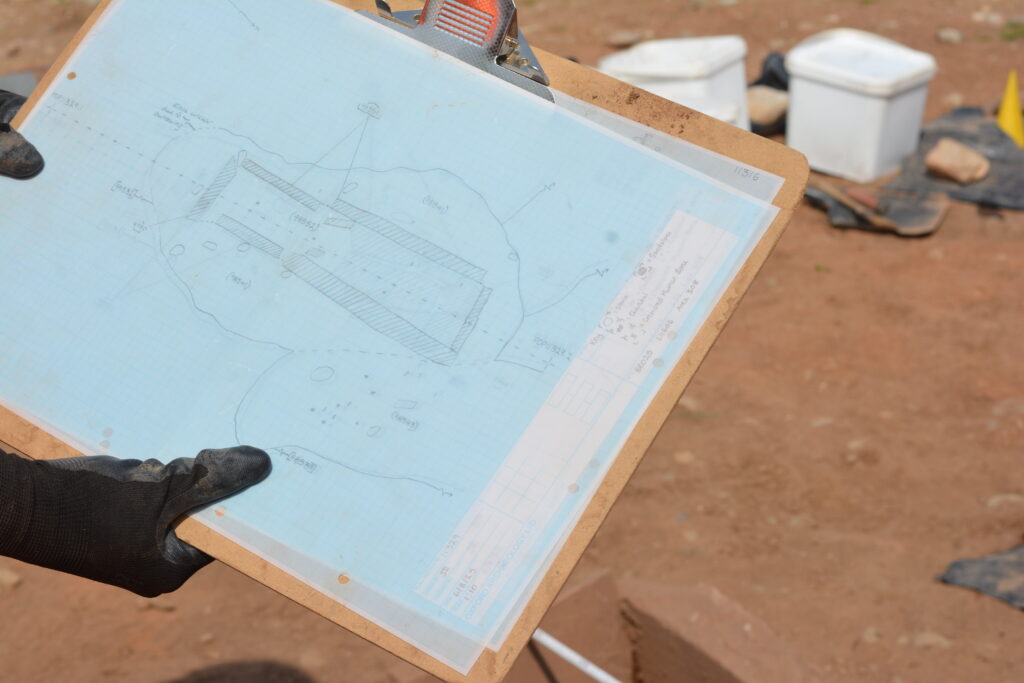
Image: hand drawn plan of a stone-lined cist burial
“Cremations can vary greatly in type and aspect, which makes them so interesting to dig. This site had it all: a pyre on which the deceased had been cremated; graves with remains placed in beautifully decorated urns or boxes, or simply in plain ground; pits to put the ashes and charcoal left from the pyre; and more. Some cremations were simple, but some were more richly built (in stone cists) or furnished, with vessels made of glass, pottery and bronze, jewellery and even elements of military equipment and weapons.”
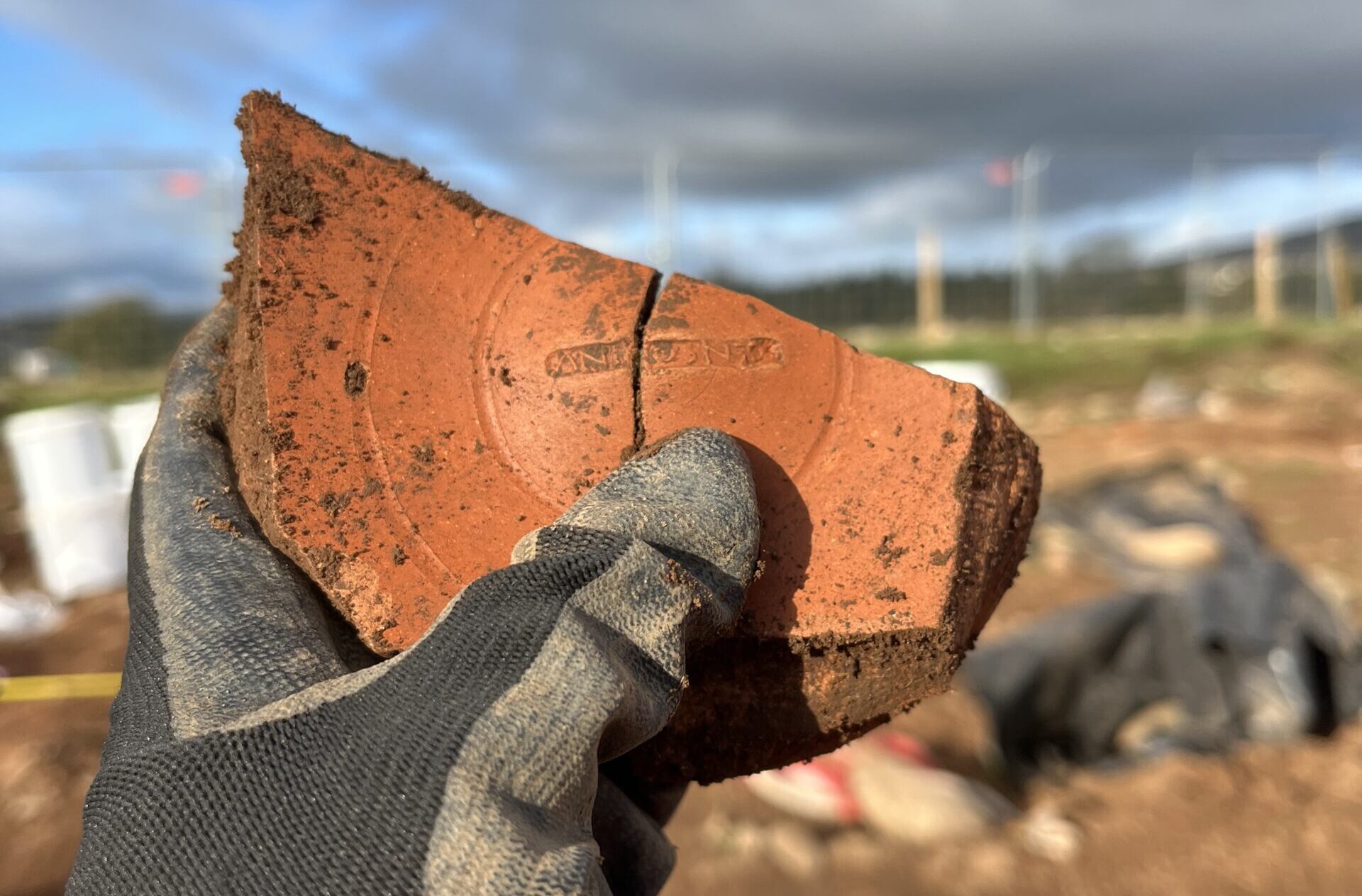
“We found beautifully decorated pottery and even complete glass cups (see below), the likes of which you see in museums. One type of find that the whole team loved was little flat fragments of decorated animal bone, used to embellish things like wooden boxes, caskets or biers. Not a usual discovery at all!”
But how do we uncover these extraordinary discoveries? Mark Gibson one of the project officers and osteoarchaeologists comments on the excavation process:
“Before any soil is removed from a cremation burial, we record what we can see on the surface using photographs and drawings. This is so that we have a record of any disturbance to the burial before excavation.”
“Once this is done, we take the soil out of half of the feature in layers using trowels and small tools such as dental picks and lolly pop sticks. We leave in place any pots, or grave goods, such as jewellery, statues and brooches. All the soil removed is placed in sealed buckets to be wet sieved later. This is to recover any loose burnt bone or small finds such as glass beads which may have been missed. The soil within burial urns and accompanying vessels is not removed at this stage.”

Image: Joe Robb (archaeologist) holding small winged figurine of Cupid – the symbol of love – with arrow, a rare find in Britain
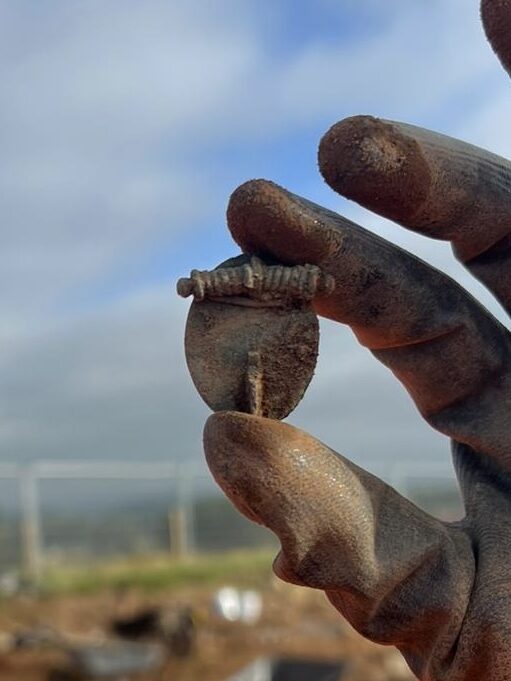
Image: metal brooch found within cremation burial
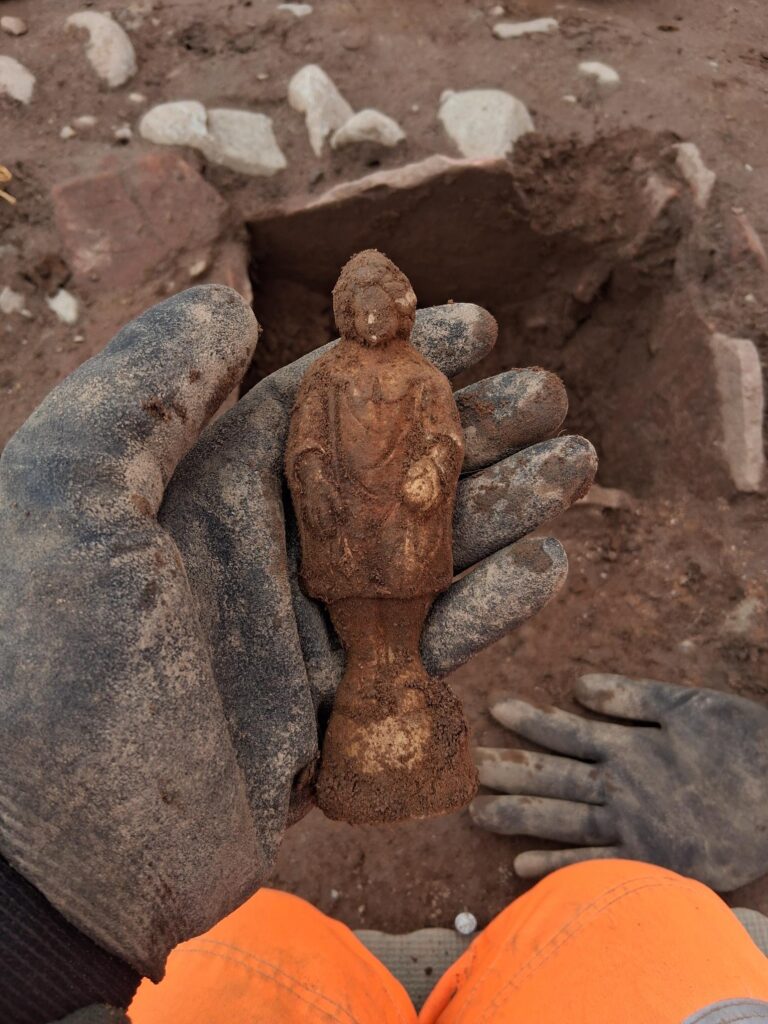
Image: pipeclay figurine depicts a male youth wearing a tunic, cloak, and a Phrygian cap, and holding a round item, perhaps a ball or piece of fruit
“Next the burial is photographed and drawn again. Following this the soil from the other half of the feature is excavated, again leaving any finds in place and saving the soil for wet sieving.”
“Another round of drawings and photographs is then undertaken and the locations of the pots and finds recorded using GPS. A detailed written record of the burial is made, describing the shape of the feature, the composition of the soil and all of the finds.”
“Once this is done any grave goods are carefully lifted and placed in protective boxes for later analysis. The pots are wrapped in layers of clingfilm and bandage before they are carefully lifted in their entirety.”
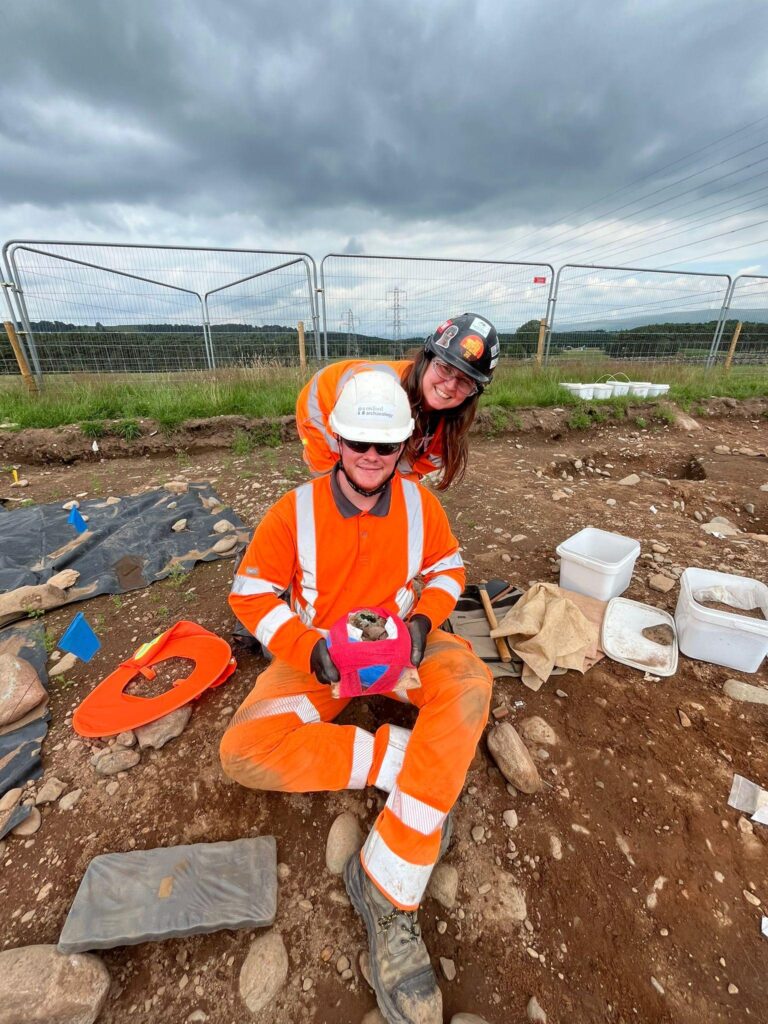
Image: Ash Harrington (supervisor) and Lewis Jones (archaeologist) posing with wrapped and lifted cremation vessel
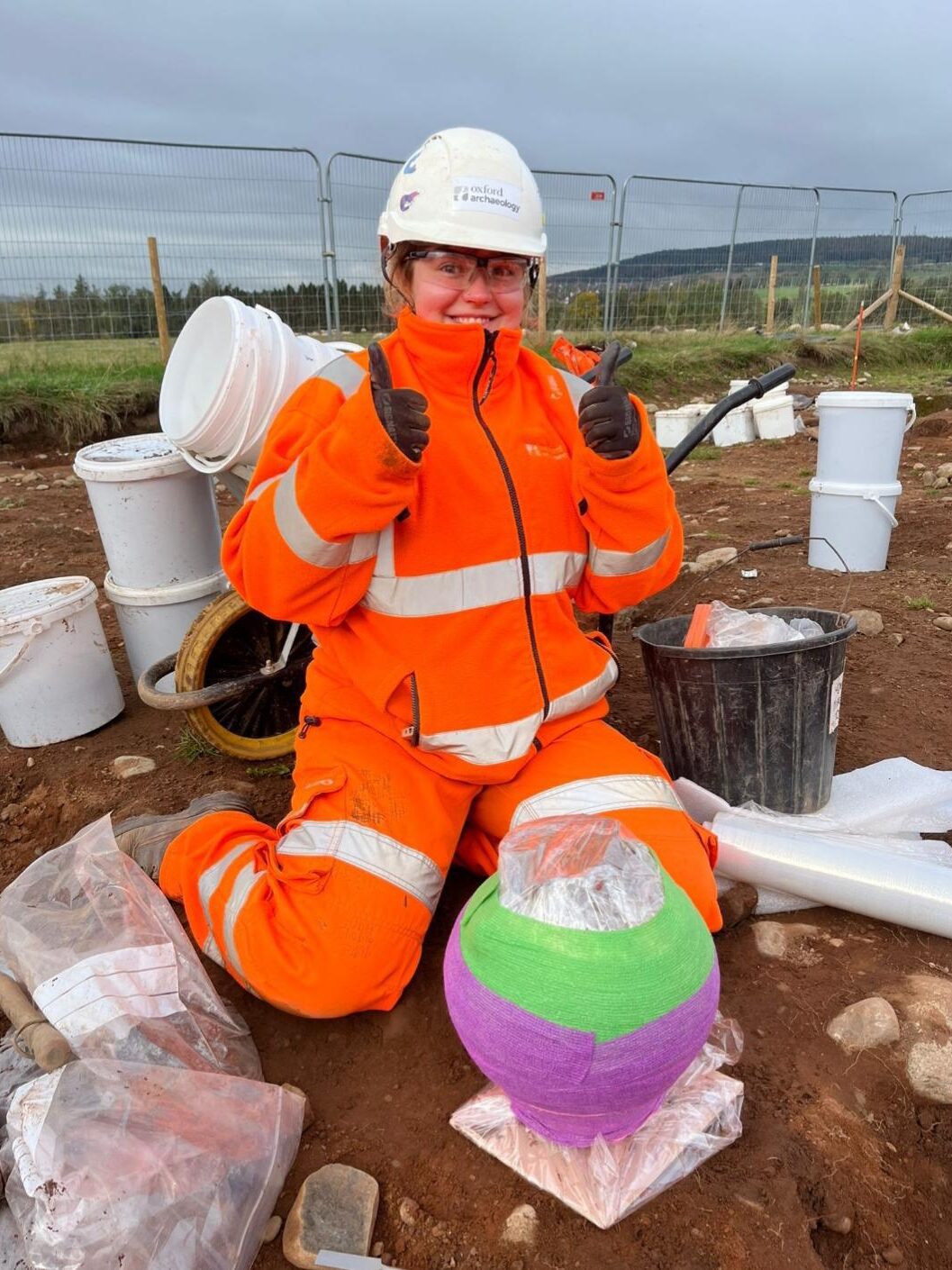
Image: Emily Topliss (archaeologist) posing with wrapped and lifted cremation vessel
Our osteoarchaeologist Dr. Lauren McIntyre explains:
“Once all the vessels have been block lifted, they come back to the laboratory. This means that we can excavate each one in small layers under controlled conditions, to discover and record what is inside in lots of detail. Doing this in the laboratory also means we don’t have to worry about things like bad weather!”
“The contents of each pot are excavated in 2cm layers. We record the position of all the things that we find inside, using photography and by making a written record for each layer. Each layer is called a “spit”. Everything from each spit, including the soil, is sampled.”
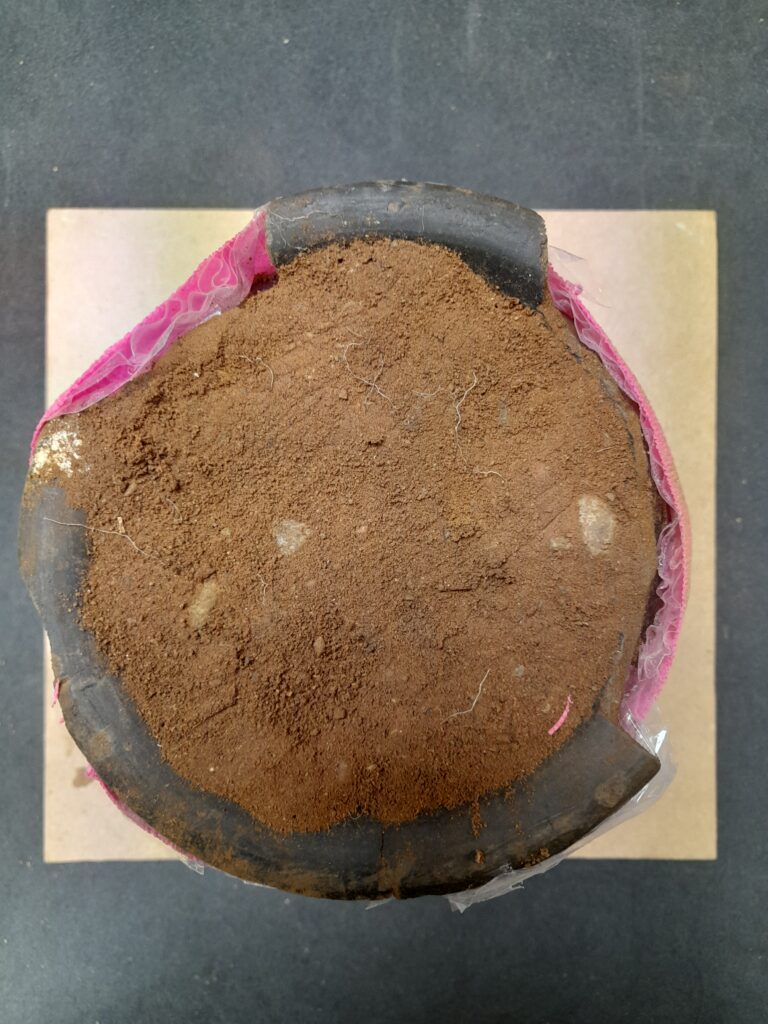

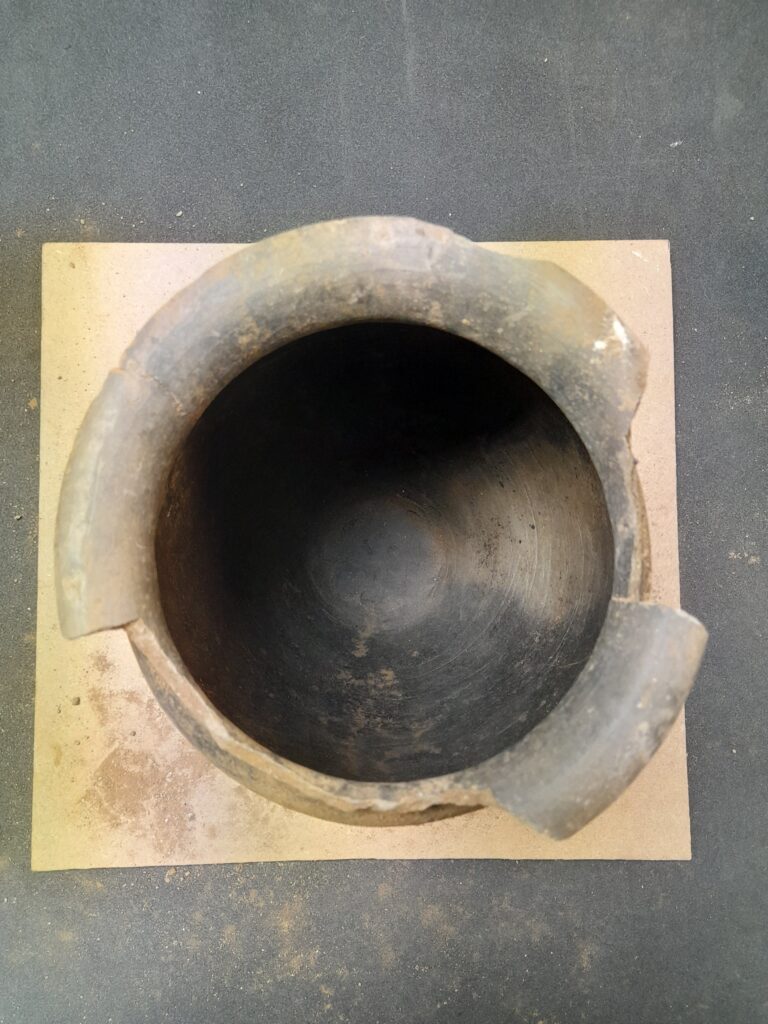
Images: show before, mid and after excavation of a cremation vessel from the A66 Roman cemetery
This black burnished jar was made in Dorset between the 3rd and 4th century. Normally used as cooking pots but in this case used as an urn, these types of pots are found across the Roman military zone in Northern Britain. This may be evidence of a military contract between Dorset potters and the Roman military.
“Some of the pots contain cremated bone fragments. We can examine these for evidence of age, sex, and disease. Sometimes we also find burnt metal or glass fragments mixed with the bones – these are usually pieces of objects that would have been cremated on the pyre with the deceased.”
“When the pot excavation is finished, each sample is sent to our Environmental team to be wet sieved. After wet sieving, the bone fragments are slowly dried. Any stones are removed, and the bone fragments are brought back to the osteologists for analysis.”
“Other pots don’t contain any bones, just soil. If there are no bone fragments, we know that these pots were placed in the grave as an offering. They might have contained food or something else that hasn’t survived in the ground. These were gifts given to the deceased when they were buried.”
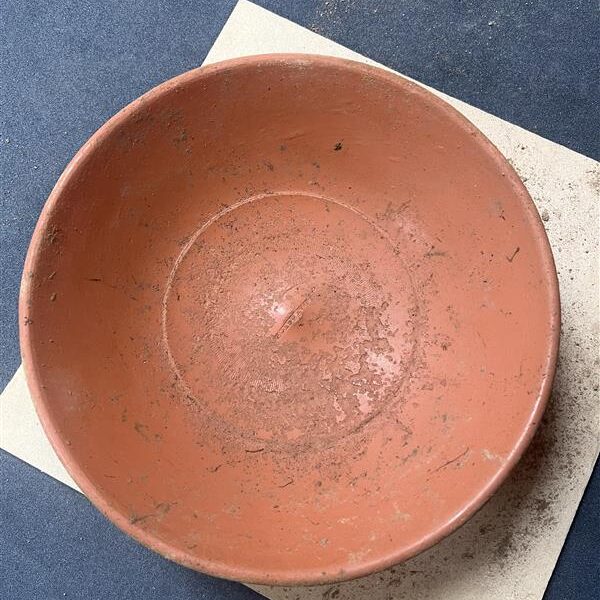
Image: intact samian bowl with makers mark
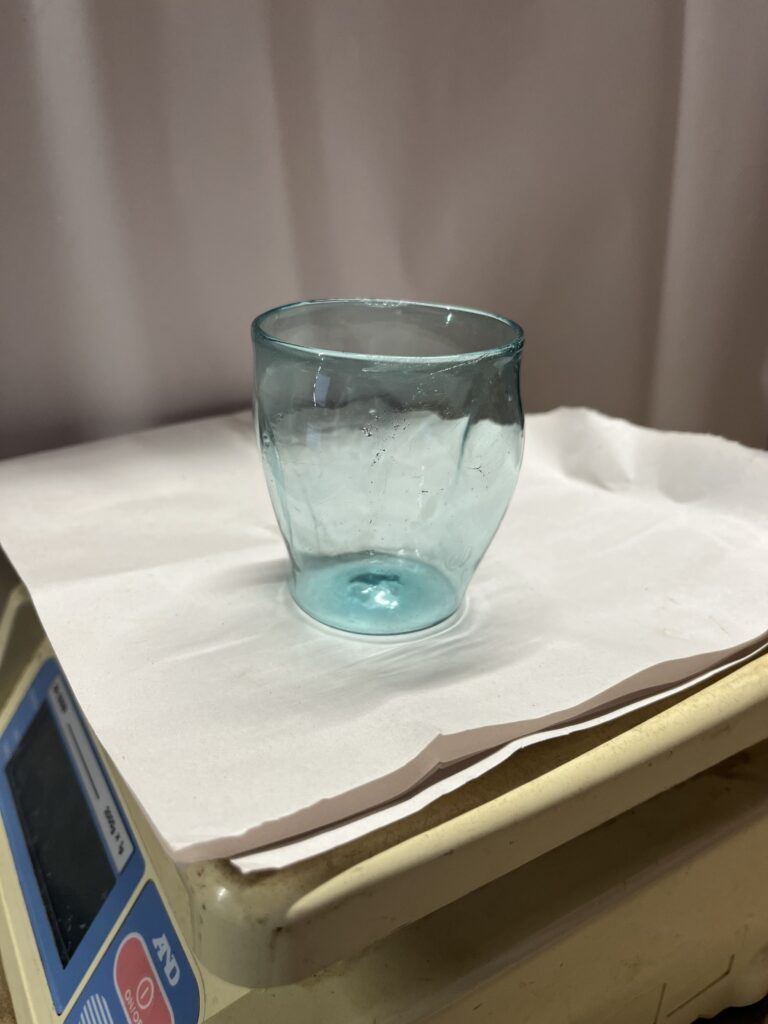
Image: indented blue-green glass cup, 3rd/4th century AD
It is with projects like the A66 Northern Trans-Pennine Project where archaeologists get the opportunity to uncover such important sites, that through analysis and time, will continue to provide an insight into the past. For many archaeologists these kinds of sites are a once in a lifetime opportunity, a privilege to be a part of, and an incredible experience for all involved. .
Catch up on our findings on the latest season of Digging for Britain on BBC I player, Season 13 Episode 1.