
Time travel on the A66
Date Written
16 September 2025
Author
Maria Bellissimo

Through extensive archaeological excavations, we’re reconnecting with the people who shaped this landscape thousands of years ago and rediscovering how their stories still echo through these places.
The A66 Northern Trans-Pennine road has been a vital route across the north of England for far longer than people think. Since prehistoric times, a long-distance route along the footprint of the modern A66 has been etched into the landscape, linking meeting places, connecting people, and supporting livelihoods.
As National Highways works to upgrade this key stretch of road between Penrith and Scotch Corner, another journey is taking place just below the surface: one that’s revealing the deep history of the communities who lived here long before us, their connections to other regions far away, and their interactions with a landscape that has changed a lot over millennia.
Ancient pioneers in changing landscapes
Earlier this year, the OCA field teams began carefully investigating parts of the route before construction begins in full. Our archaeologists are uncovering remarkable traces of life stretching back over 12,000 years, from some of the earliest groups of people to walk these hills at the end of the last Ice Age, to Roman soldiers and civilians who once lived beside the road we still use today.
These excavations follow the evaluation phase in 2024, which, with more limited trenches, allowed us to pinpoint the areas with the highest concentration of archaeology. This means we can uncover the full story of this beautiful area, while also reducing the risk of future delays during the construction phase.
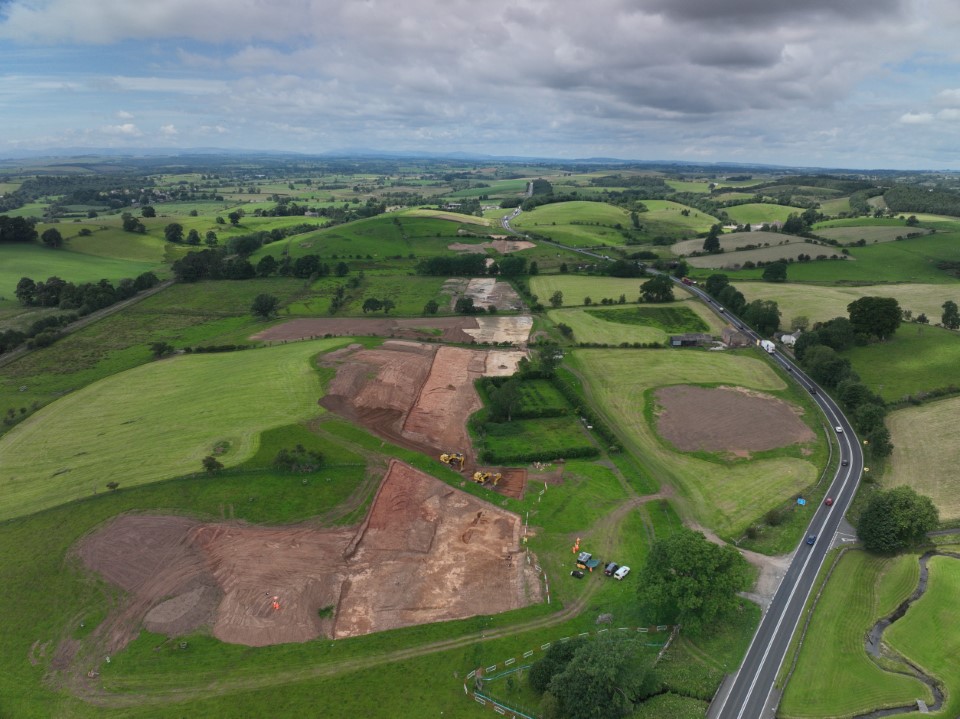
Image: drone footage of Roman road alongside modern A66 within Cumbrian landscape
Near Brough at the foot of the North Pennines, stone tools from the end of the last Ice Age are revealing the stories of ancient pioneers. As the glaciers retreated opening up tundra-like areas in Cumbria and beyond, groups of hunter-gatherers were exploring this land, finding food, building shelter, and laying the first human footprints on the post-glacial Pennines. At the time, Britain was still linked to Continental Europe by Doggerland, a land made of marshes, hills, and forests that extended between Denmark and northern Britain. The stone tools we found -flint blades and spear points- show that the people exploring and settling in this area probably came from Doggerland or even Denmark itself.
And more discoveries nearby take us forward a few millennia, to another very important time in the development of communities in northern Britain. Finds of stone tools dating to around 6,000 years ago help us understand the lives and movement in the landscape of people that lived through the transition from hunting and gathering lifestyle to the first communities that adopted farming.
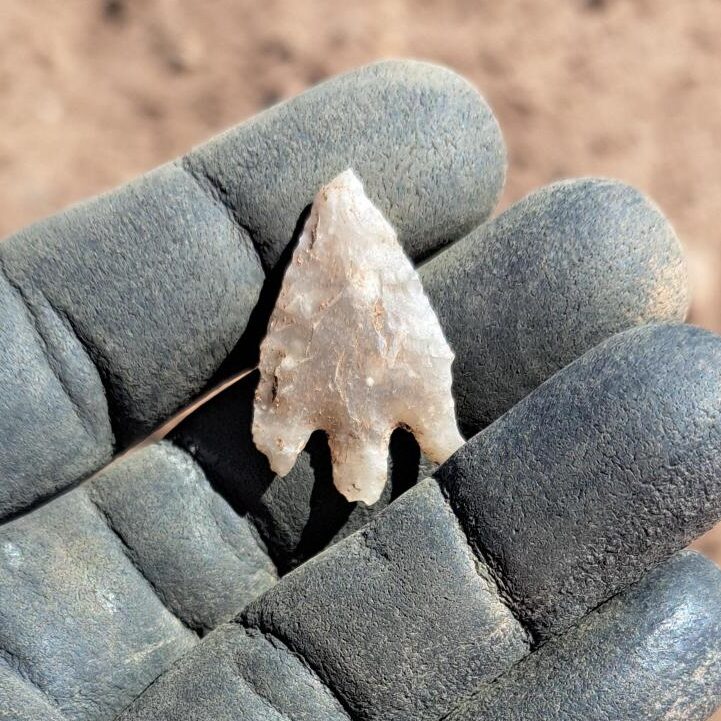
Image: Bronze Age arrowhead
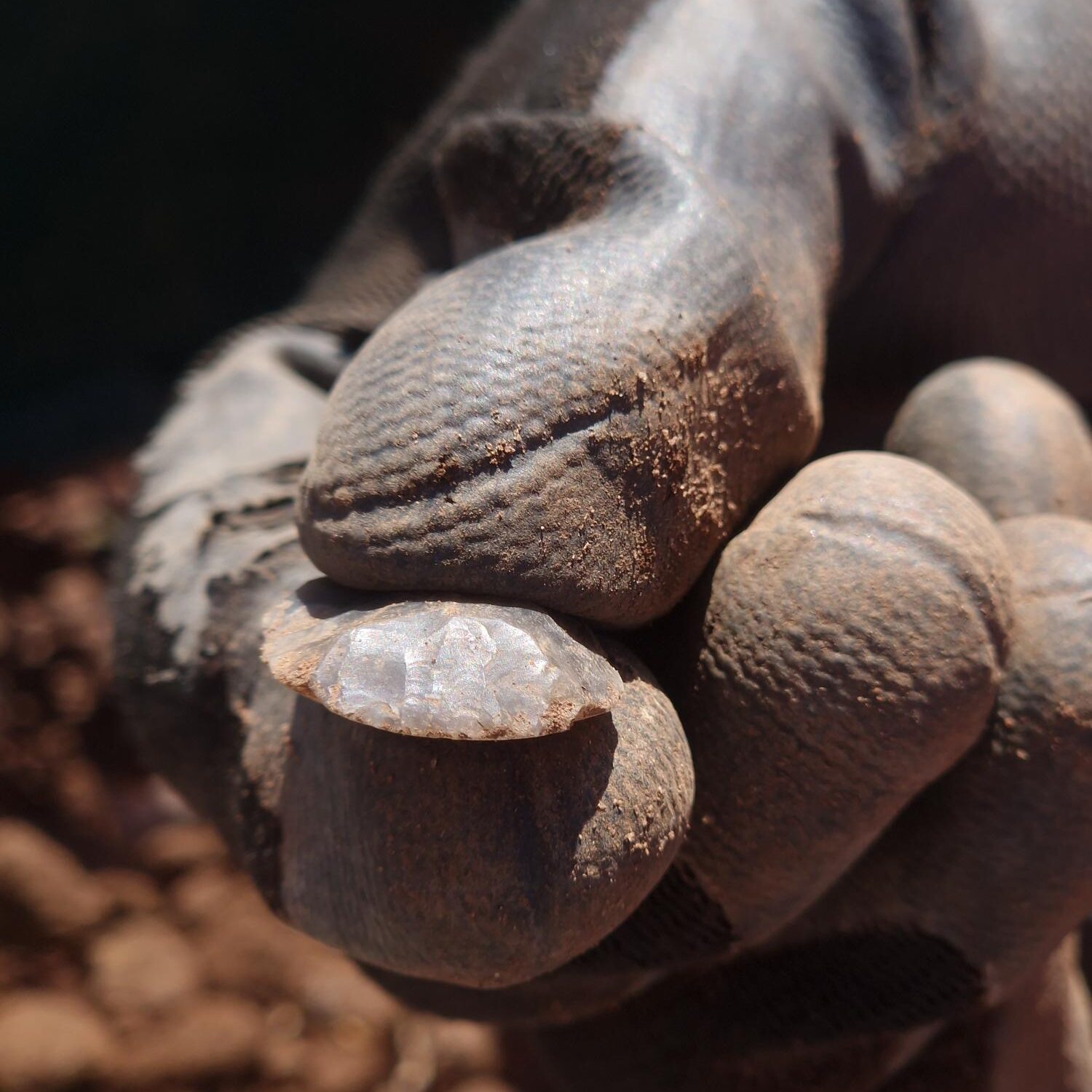
Image: prehistoric flint scraper
More than just Hadrian’s Wall
The exciting discoveries continue into the Roman period. The existence of a Roman fort at Brougham was already well known. Thanks to the improvement works, OCA archaeologists are uncovering parts of a Roman civilian settlement known as a vicus.
Building remains, a beautifully preserved wicker-lined pit, and everyday objects like leather shoes and pottery are all bringing into sharp focus the people who lived, worked, and raised families here nearly 2,000 years ago. The presence of finer objects like Samian pottery (think the best dinner set for special occasion, rather than the IKEA one) from what was then Gaul (now France) reveal just how well-connected this part of Roman Britain was to the wider Empire.
The excavations are showing just how deep the roots of the A66 are. The improvement works are taking us on a journey all the way to its origins at the end of the last Ice Age.
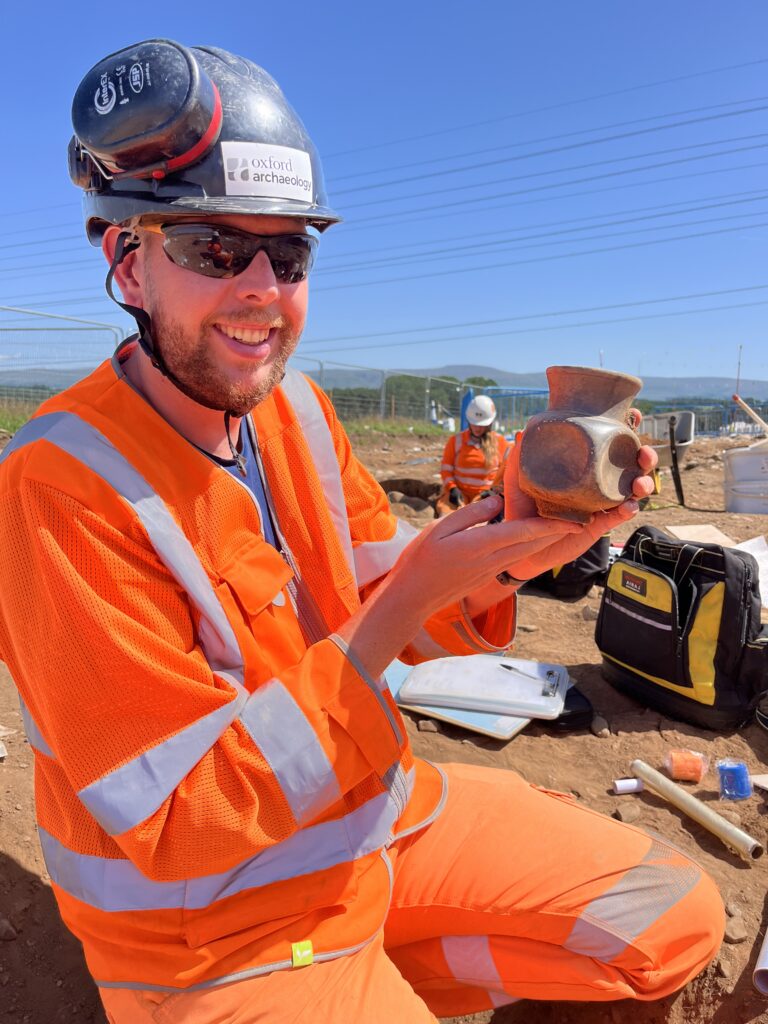
Image: archaeologist Dan holding Roman cremation vessel
What’s next?
Whether you live nearby or are just passing through, we hope these glimpses into the past will help you see the A66 not just as a road, but as a thread that through beautiful Pennine edge landscape has linked communities for thousands of years.
We will keep sharing our discoveries throughout the project. Follow us on #OCAArchTeam via @oxfordarchaeology and @cotswoldarchaeology to stay up to date with the latest discoveries from the A66 and to connect to its ancient people and landscapes.
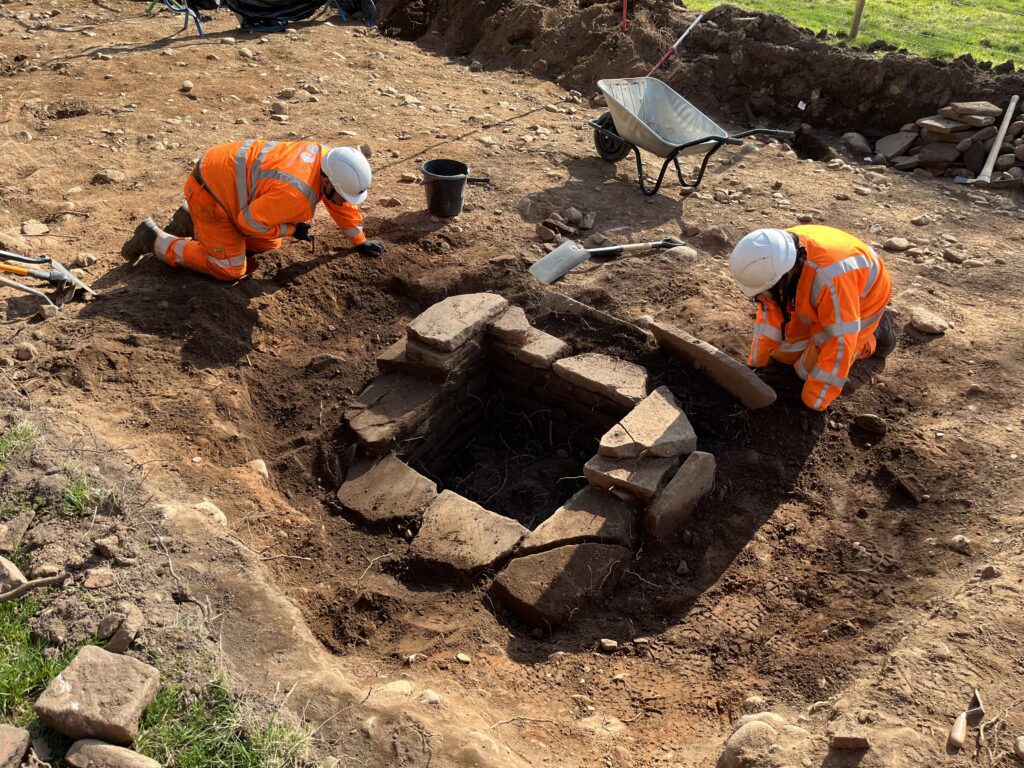
Image: archaeologists excavating a stone-lined Roman well